
Introduction
The internet has gone through massive transformations since its inception. From simple static web pages to highly interactive social platforms, each phase has reshaped how we communicate, work, and live. Now, a new evolution is underway—Web3. You may have heard this term associated with blockchain, cryptocurrencies, and NFTs, but what exactly does it mean?
In simple terms, Web3 refers to a decentralized version of the internet where users have more control over their data, identity, and digital assets. Unlike today’s internet, dominated by large corporations, Web3 aims to shift power back to individuals.
This article will give you a complete understanding of Web3, how it works, why it matters, and what the future might look like.
The Evolution of the Internet
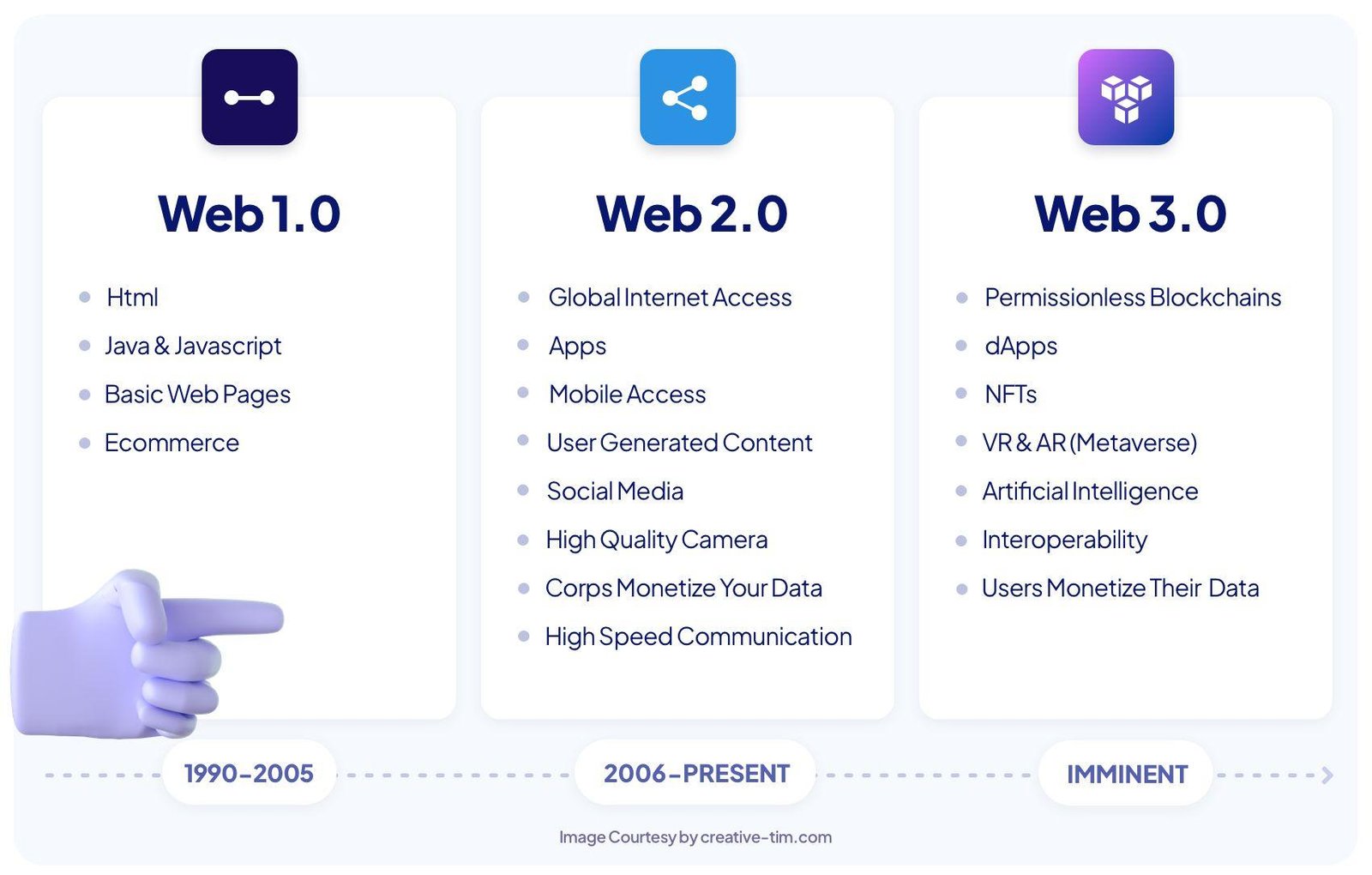
To understand Web3, we need to first look at how the internet has evolved:
1. Web1 (1990s – Early 2000s): Read-Only Web
- Static websites
- Limited interaction
- Content created by a few, consumed by many
Example: Personal websites or early news portals.
2. Web2 (2000s – Present): Read-Write Web
- Social media, blogs, apps
- Users create content (YouTube, Instagram)
- Controlled by big tech companies
Example platforms: Facebook, Google, YouTube
While Web2 made the internet interactive, it also created issues like:
- Data privacy concerns
- Centralized control
- Monetization controlled by platforms
3. Web3 (Future): Read-Write-Own Web
- Decentralized platforms
- Users own their data and digital assets
- Powered by blockchain technology
Key Technologies Behind Web3
Blockchain
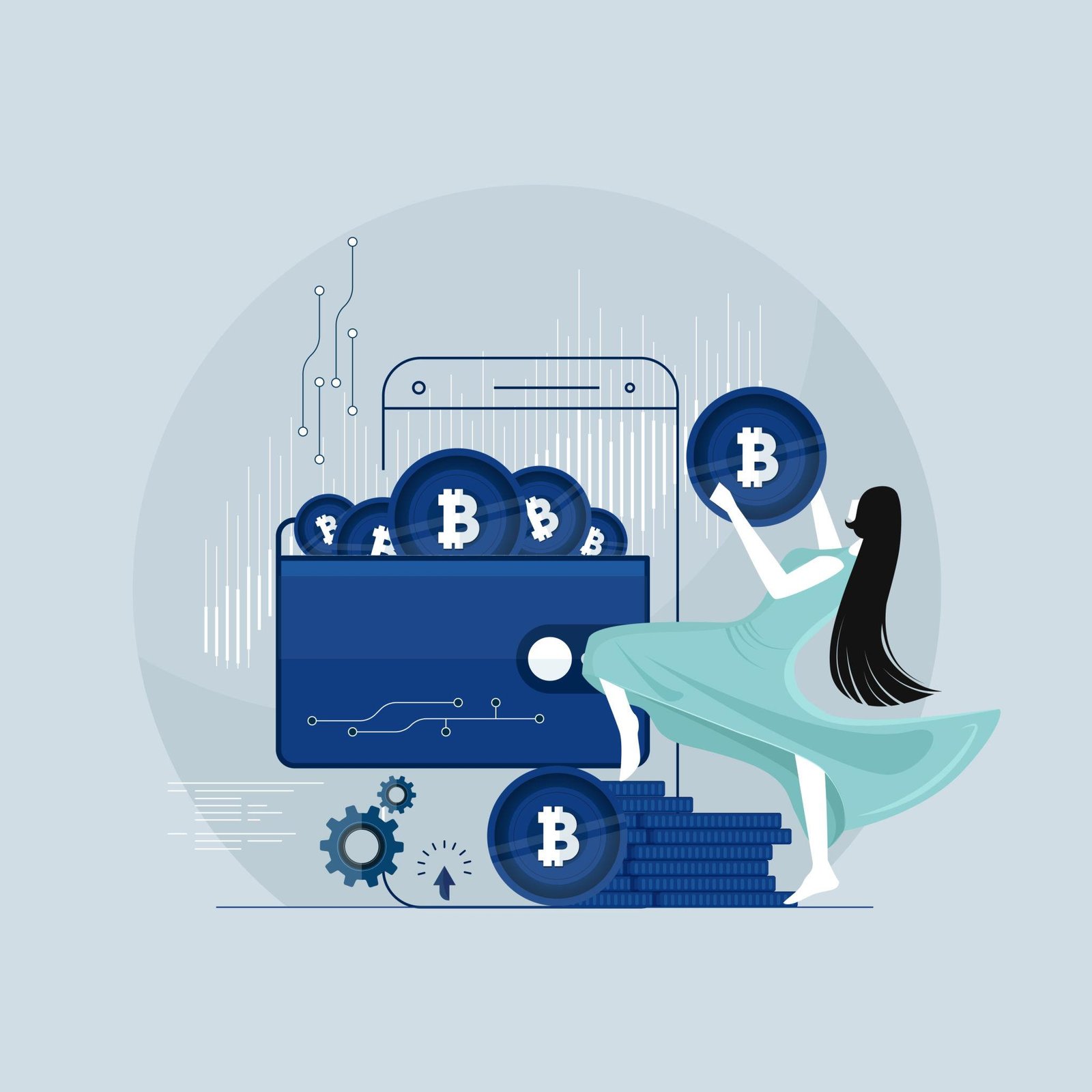
A blockchain is a distributed digital ledger that records transactions securely and transparently. Once data is added, it cannot be easily altered.
Popular example: Bitcoin
Smart Contracts
Smart contracts are self-executing programs stored on a blockchain. They automatically run when certain conditions are met.
Platform example: Ethereum
Cryptocurrencies
Digital currencies that allow peer-to-peer transactions without banks.
dApps (Decentralized Applications)
Apps that run on blockchain instead of centralized servers.
How Web3 Works
In Web2, when you use an app, your data is stored on company servers. In Web3:
- Data is stored on a blockchain
- Users interact through crypto wallets
- No central authority controls the system
For example:
Instead of logging into a website using email/password, you might use a crypto wallet like MetaMask.
Key Features of Web3
- Decentralization → No single entity controls the network. Data is distributed across multiple nodes.
- Ownership → Users own their digital identity, assets, and content.
- Transparency → All transactions are visible on the blockchain.
- Permissionless → Anyone can join without needing approval.
- Trustless → You don’t need to trust a company—the system is governed by code.
Real-World Applications
DeFi (Decentralized Finance)
Platforms that allow lending, borrowing, and trading without banks.
Example: Uniswap
NFTs (Non-Fungible Tokens)
Digital ownership of art, music, and collectibles.
Marketplace: OpenSea
DAOs
Communities governed by smart contracts and token holders.
Web3 Gaming
Players can own in-game assets and trade them.
Advantages of Web3
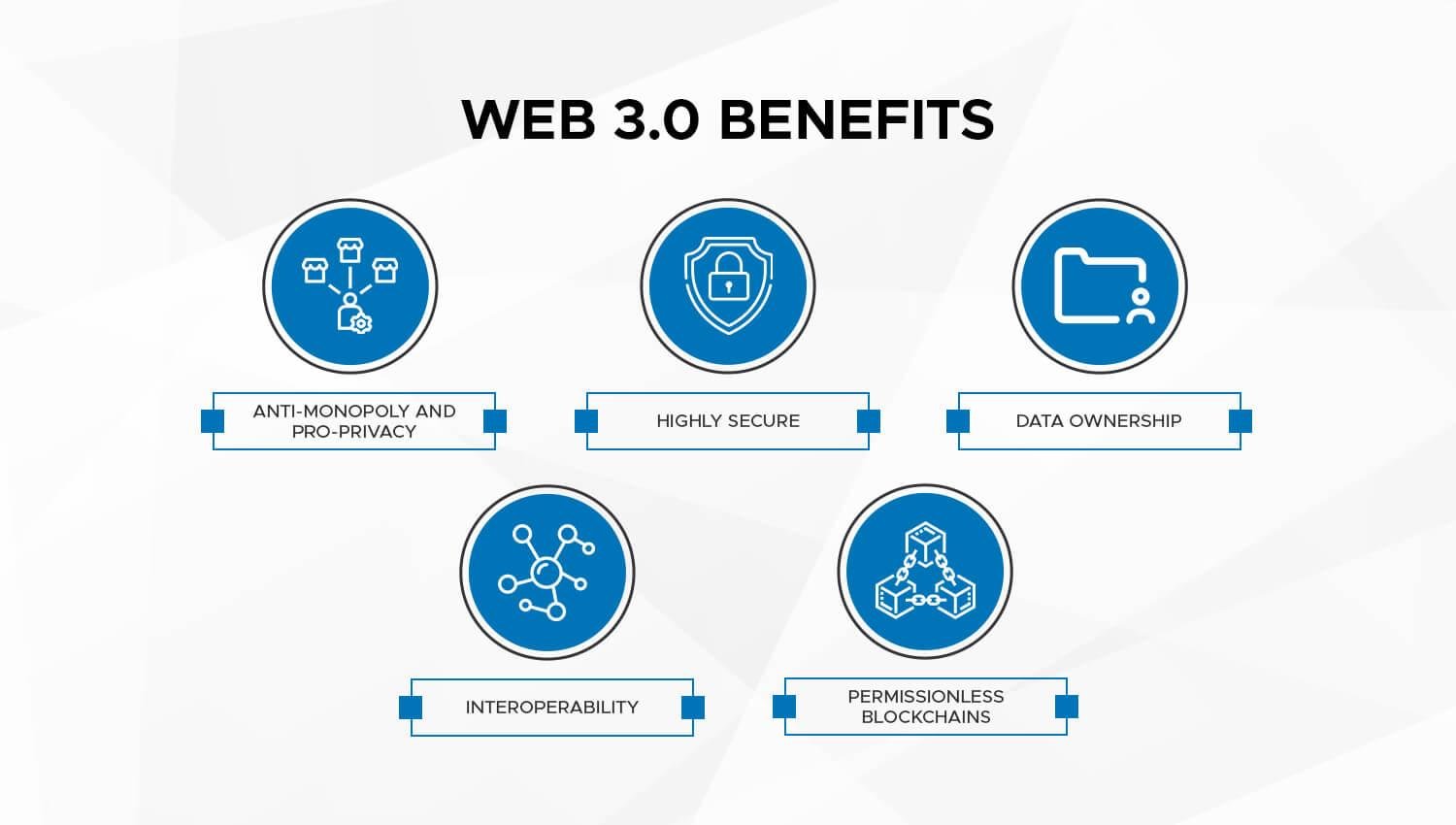
1. Data Ownership
You control your personal data—not corporations.
2. Better Privacy
No need to share personal details unnecessarily.
3. Reduced Censorship
No central authority can easily block content.
4. Financial Inclusion
Anyone with internet access can participate in the global economy.
Challenges of Web3
1. Scalability
Blockchain networks can be slow and expensive.
2. Complexity
Web3 is still difficult for beginners to understand.
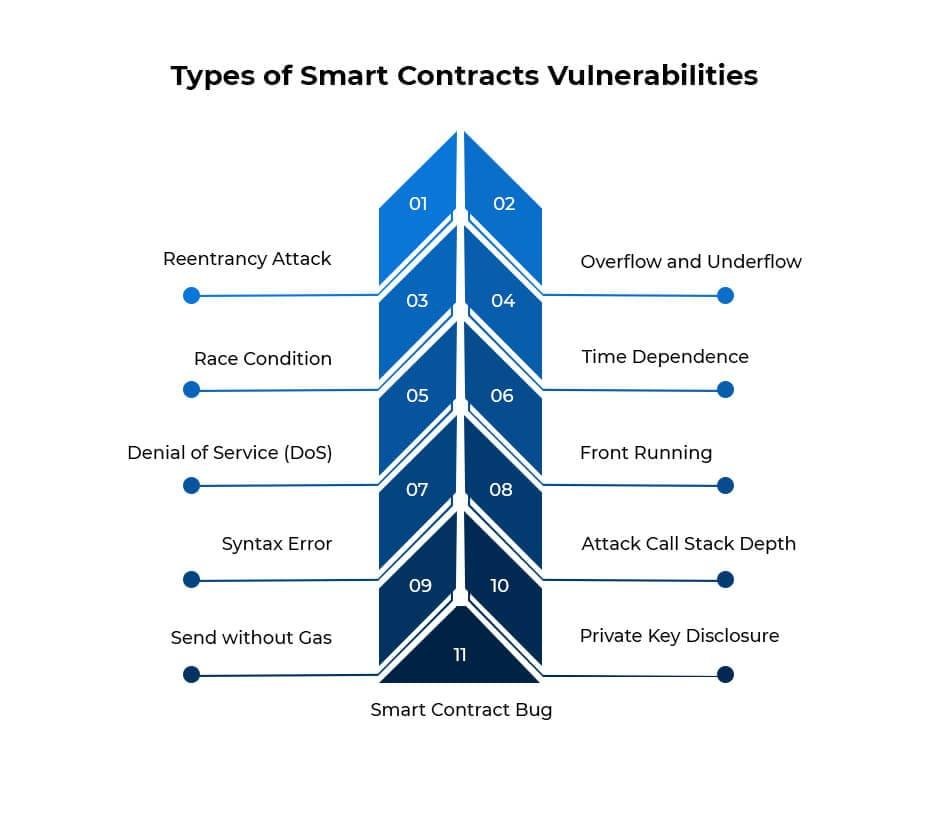
3. Security Risks
Smart contract bugs and scams can lead to losses.
4. Regulation Issues
Governments are still figuring out how to regulate Web3.
Web2 vs Web3 Comparison
| Feature | Web2 | Web3 |
|---|---|---|
| Control | Centralized companies | Decentralized networks |
| Data Ownership | Platform owns your data | You own your data |
| Monetization | Platform owns your data | Direct peer-to-peer |
| Trust | Trust companies | Trust code/blockchain |
The Future of Web3
Web3 is still in its early stages, but it has the potential to reshape industries such as finance, gaming, social media, and even governance.
Companies and developers worldwide are investing heavily in this space. While it may take years for full adoption, the shift toward decentralization is already underway.
Conclusion
Web3 represents a major shift in how the internet operates. It moves away from centralized control and gives power back to users through decentralization, blockchain, and digital ownership.
While it offers exciting possibilities, it also comes with challenges that need to be addressed. As the technology evolves, understanding Web3 today can give you a strong advantage in the future digital economy.
Whether you are a student, developer, or content creator, now is a great time to explore and learn about Web3.