
Introduction
As technology continues to evolve rapidly, cybersecurity has become one of the most critical concerns for individuals, businesses, and governments worldwide. In 2026, the digital world is more connected than ever through cloud computing, Artificial Intelligence (AI), smart devices, 5G networks, and the Internet of Things (IoT). While these innovations bring convenience and efficiency, they also create new opportunities for cybercriminals.
Cyberattacks are becoming more advanced, automated, and difficult to detect. From ransomware attacks and data breaches to AI-powered hacking and identity theft, organizations face increasing pressure to strengthen their digital defenses. As a result, cybersecurity is no longer just an IT issue — it has become a global priority.
This article explores the top cybersecurity trends in 2026, highlighting emerging threats, innovative security technologies, and the future of digital protection.
1.The Growing Importance of Cybersecurity
The world’s dependence on digital technology has increased dramatically in recent years. Businesses rely on cloud platforms, online transactions, remote work systems, and digital communication tools. Governments manage sensitive data online, while individuals store personal information on smartphones and social media platforms.
With billions of connected devices worldwide, cybercriminals have more targets than ever before. According to cybersecurity experts, cybercrime damages are expected to reach trillions of dollars globally.
Cybersecurity in 2026 focuses on:
- Protecting sensitive data
- Preventing financial fraud
- Securing digital identities
- Defending cloud infrastructure
- Preventing AI-based cyberattacks
- Enhancing privacy protection
Organizations that fail to prioritize cybersecurity risk major financial and reputational damage.
2.AI-Powered Cybersecurity
Artificial Intelligence is transforming cybersecurity in both positive and negative ways.
AI for Defense
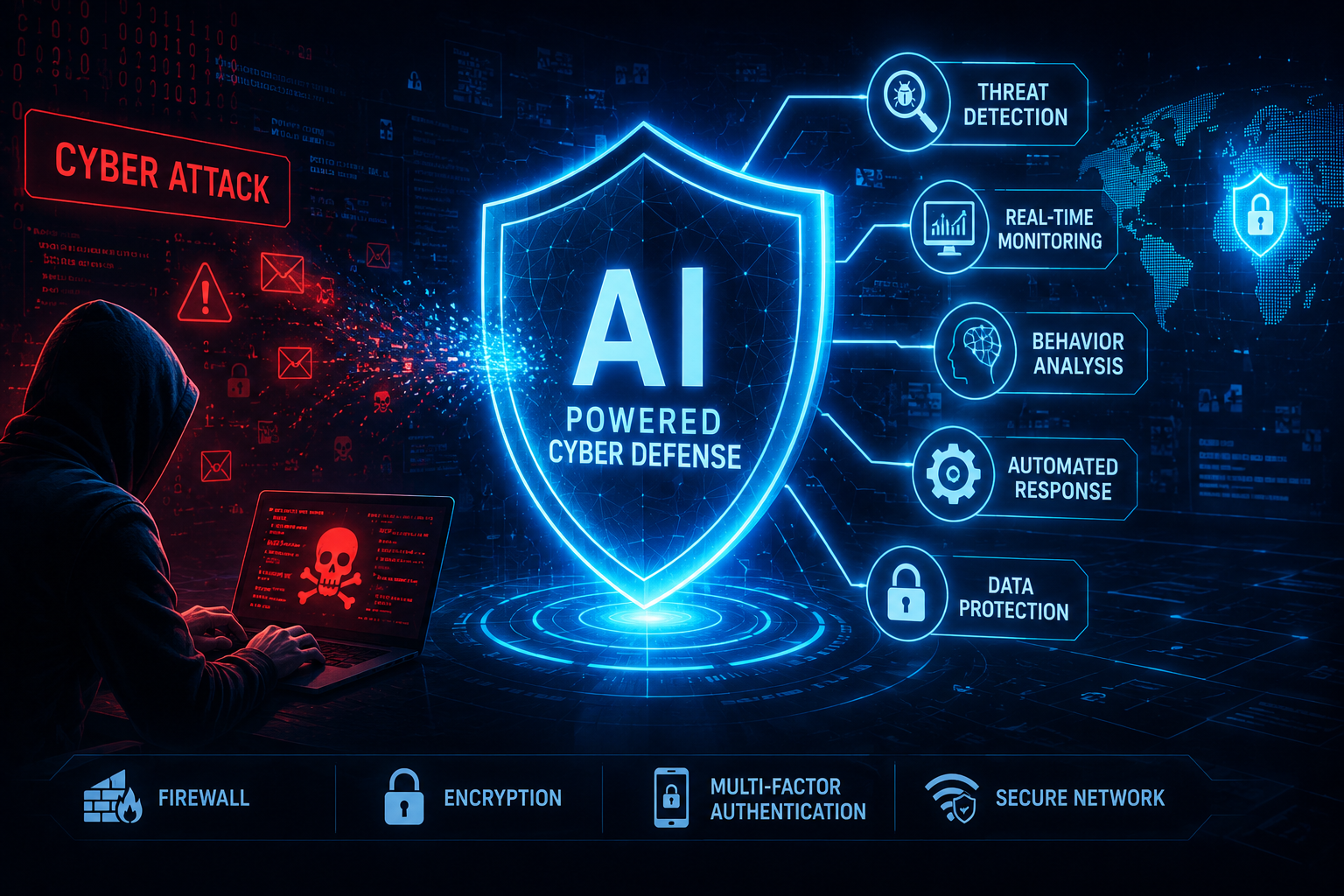
Security companies are increasingly using AI-powered systems to detect threats faster than traditional security tools. AI can analyze massive amounts of data in real time, identify suspicious activities, and automatically respond to attacks.
Benefits include:
- Real-time threat detection
- Faster incident response
- Predictive security analysis
- Automated malware detection
- Reduced human error
AI-driven cybersecurity platforms can recognize unusual behavior patterns and stop attacks before they cause serious damage.
AI for Cyberattacks
Unfortunately, cybercriminals are also using AI to create more advanced attacks.
Examples include:
- AI-generated phishing emails
- Automated hacking tools
- Deepfake scams
- Intelligent malware
- Password-cracking systems
This growing “AI vs AI” battle is becoming one of the biggest cybersecurity challenges in 2026.
3.Rise of Zero Trust Security
Traditional cybersecurity models assumed that users inside an organization’s network could be trusted. However, modern cyber threats have made this approach outdated.
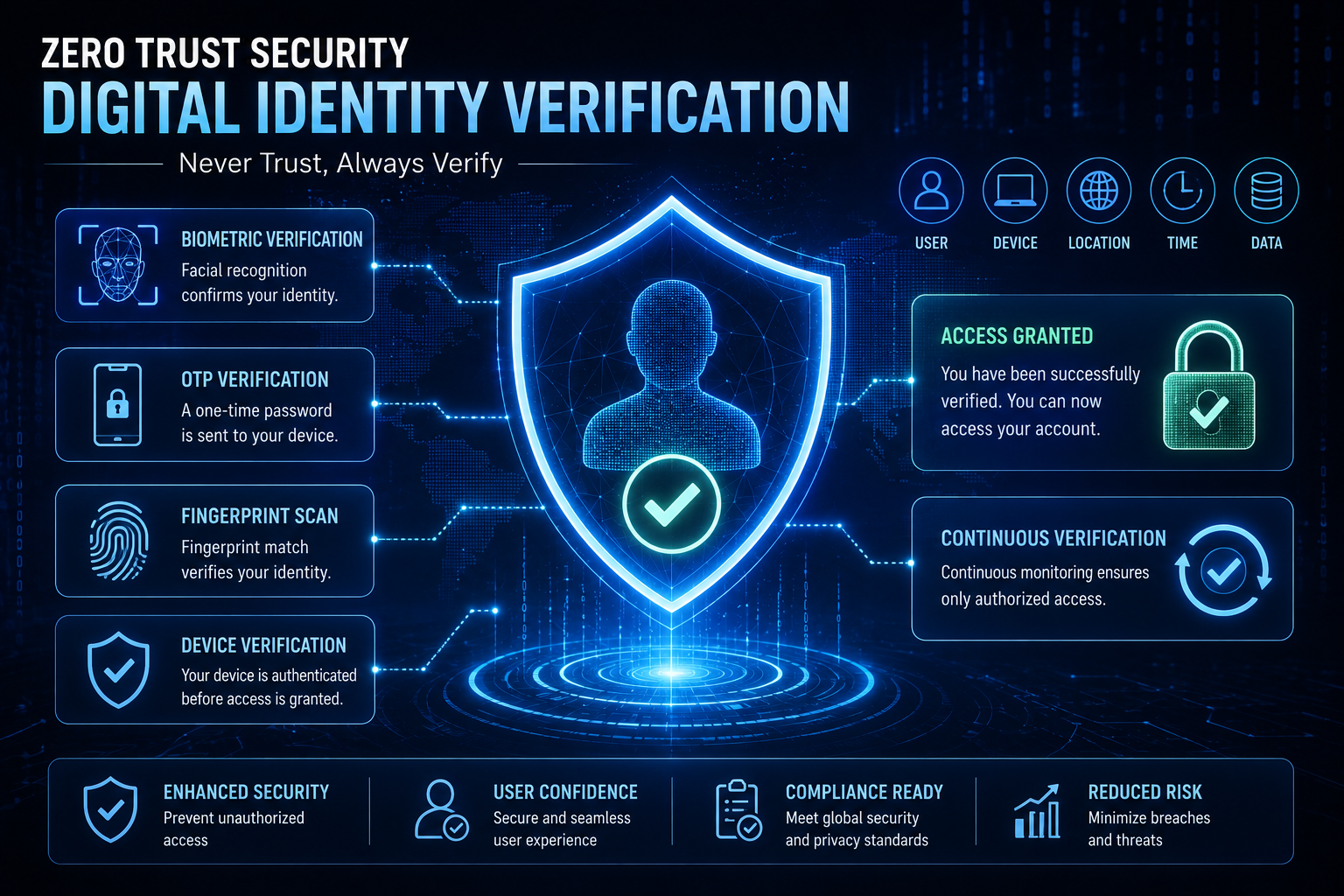
In 2026, many organizations are adopting the Zero Trust Security Model.
What is Zero Trust?
Zero Trust follows the principle:
“Never trust, always verify.”
Every user, device, and application must continuously verify identity and authorization before accessing systems or data.
Key features include:
- Multi-factor authentication (MFA)
- Identity verification
- Device monitoring
- Access control
- Continuous security checks
Zero Trust architecture helps reduce insider threats and unauthorized access.
4.Cloud Security Becomes Essential
Cloud computing continues to dominate modern business operations in 2026. Companies store massive amounts of sensitive information on cloud platforms such as AWS, Google Cloud, and Microsoft Azure.
As cloud adoption increases, cloud security has become a major priority.
Major Cloud Security Trends
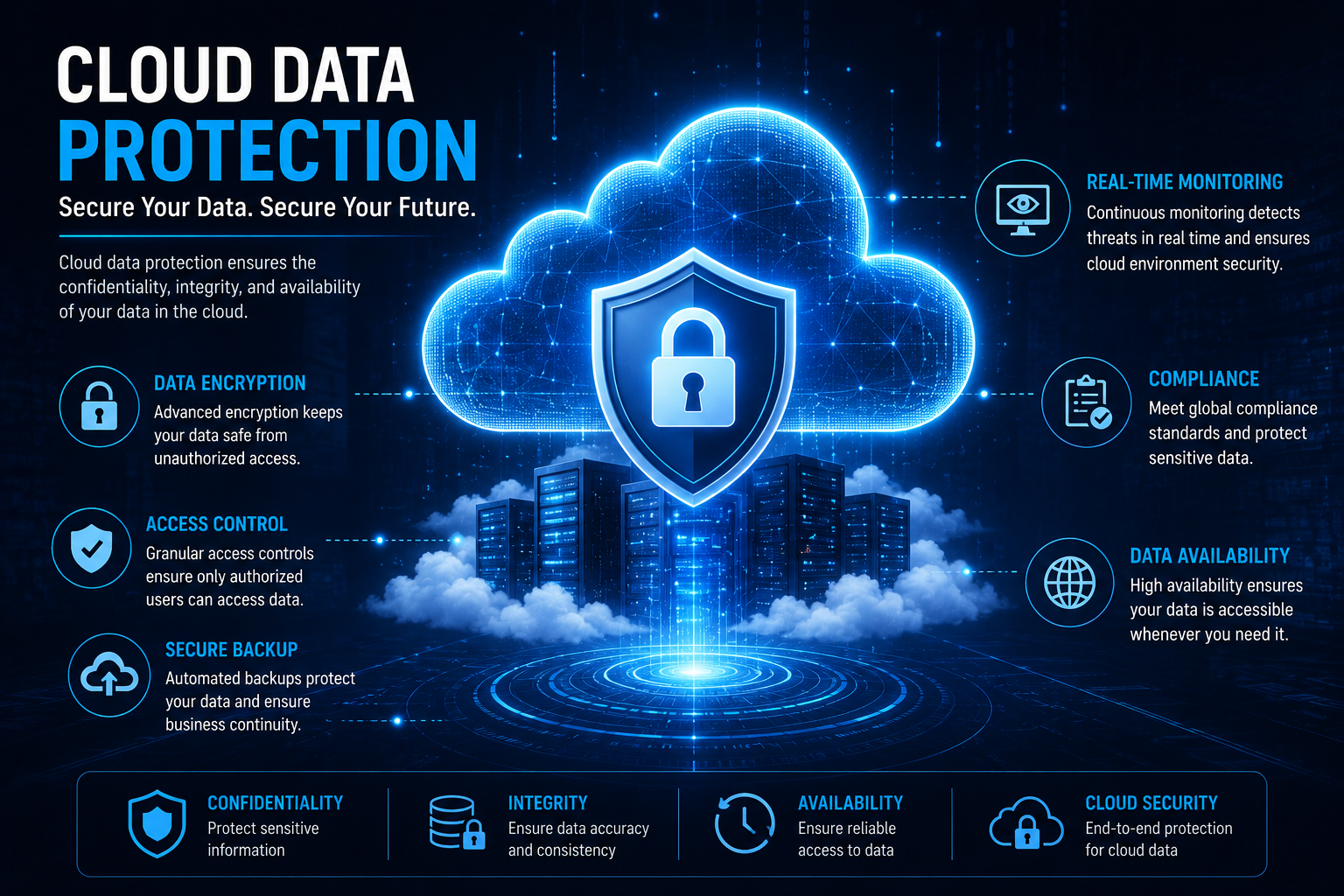
- AI-driven cloud monitoring
- Advanced encryption systems
- Secure cloud backups
- Identity and access management
- Multi-cloud security solutions
Organizations are investing heavily in cloud security tools to prevent data leaks and cyberattacks.
5.Ransomware Attacks Continue to Grow
Ransomware remains one of the most dangerous cyber threats in 2026.
In ransomware attacks, hackers encrypt a victim’s data and demand payment for its release. These attacks target businesses, hospitals, schools, banks, and government systems.

Modern Ransomware Trends
Cybercriminals now use:
- AI-powered ransomware
- Double extortion tactics
- Ransomware-as-a-Service (RaaS)
- Cryptocurrency-based payments
Attackers not only encrypt files but also threaten to leak sensitive information publicly.
To defend against ransomware, organizations are focusing on:
- Regular data backups
- Employee training
- Endpoint protection
- Network segmentation
- Incident response planning
6.Cybersecurity for Remote Work
Remote and hybrid work environments continue to expand in 2026. Employees often access company systems from home networks and personal devices, increasing security risks.
Common Remote Work Threats
- Weak Wi-Fi security
- Phishing attacks
- Device theft
- Unsecured endpoints
- Credential theft
Organizations are implementing stronger remote security measures such as:
- VPNs (Virtual Private Networks)
- Endpoint detection systems
- Remote device monitoring
- Multi-factor authentication
- Secure collaboration platforms
Cybersecurity training for employees has also become essential.
7.Internet of Things (IoT) Security
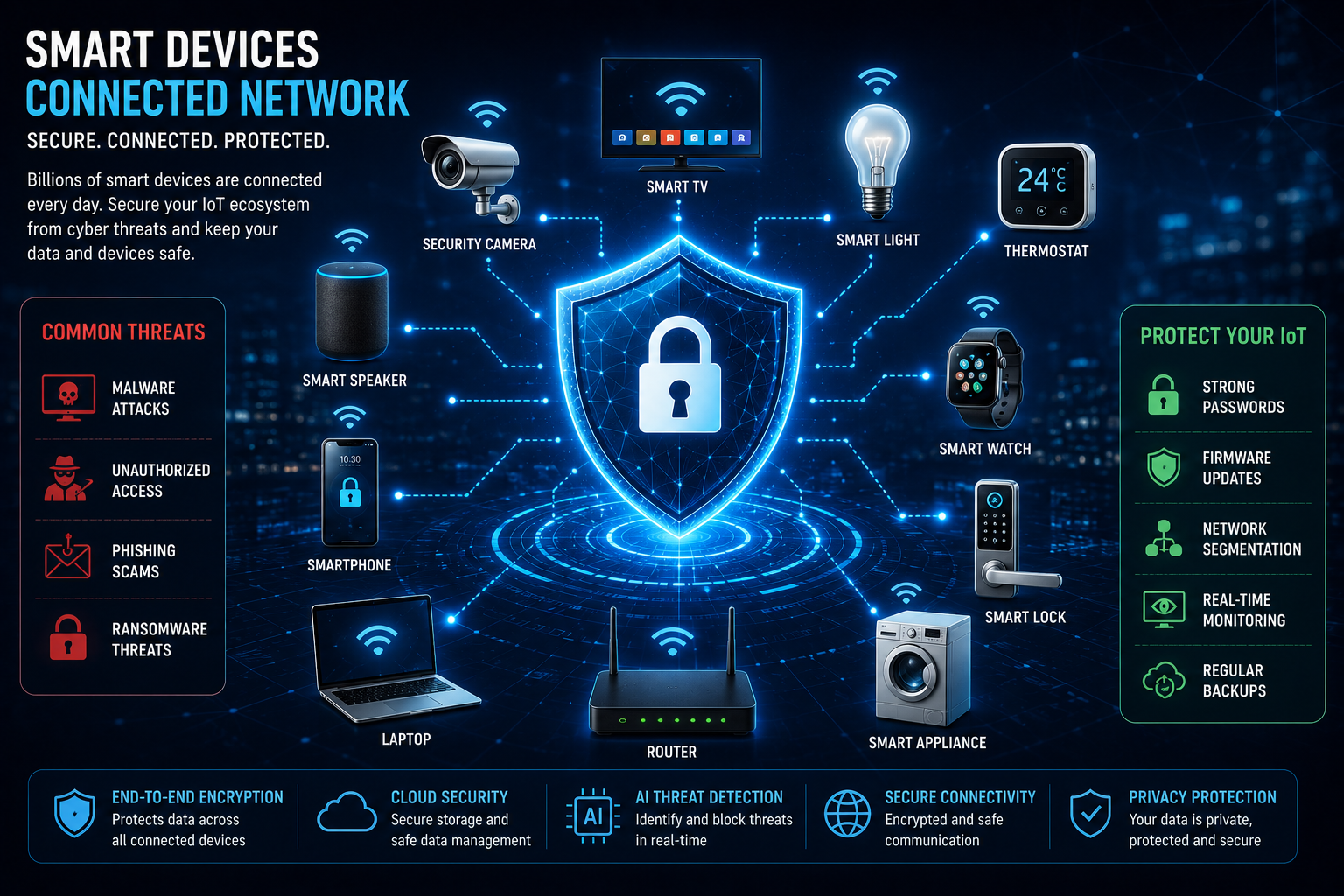
The Internet of Things connects billions of smart devices worldwide, including:
- Smart homes
- Wearable devices
- Smart factories
- Connected vehicles
- Healthcare equipment
While IoT devices improve convenience and automation, they also create new vulnerabilities.
IoT Security Challenges
Many IoT devices have weak security protections, making them easy targets for hackers.
Common risks include:
- Device hijacking
- Data theft
- Botnet attacks
- Privacy violations
In 2026, companies are focusing on:
- Secure device authentication
- Firmware updates
- IoT network monitoring
- AI-powered threat detection
Governments are also introducing stricter IoT security regulations.
9.Deepfake and Identity Fraud Protection
Deepfake technology powered by AI is becoming increasingly sophisticated.
Cybercriminals can create fake videos, audio recordings, and images that appear realistic. These deepfakes are used for:
- Financial scams
- Political misinformation
- Identity theft
- Social engineering attacks
Organizations are developing advanced verification systems to detect manipulated content.
Emerging Solutions
- Biometric authentication
- AI deepfake detection
- Voice verification systems
- Digital identity protection
Protecting digital identities has become a major cybersecurity focus in 2026.
10.Quantum Computing and Cybersecurity
Quantum computing is advancing rapidly and has the potential to revolutionize computing power.
However, quantum computers could eventually break traditional encryption methods used to secure online communications and financial transactions.
Post-Quantum Cryptography
To prepare for this future, cybersecurity experts are developing:
- Quantum-resistant encryption
- Advanced cryptographic algorithms
- Secure communication systems
Governments and technology companies are investing heavily in post-quantum cybersecurity research.
11.Biometric Security Trends
Passwords alone are no longer considered secure enough.
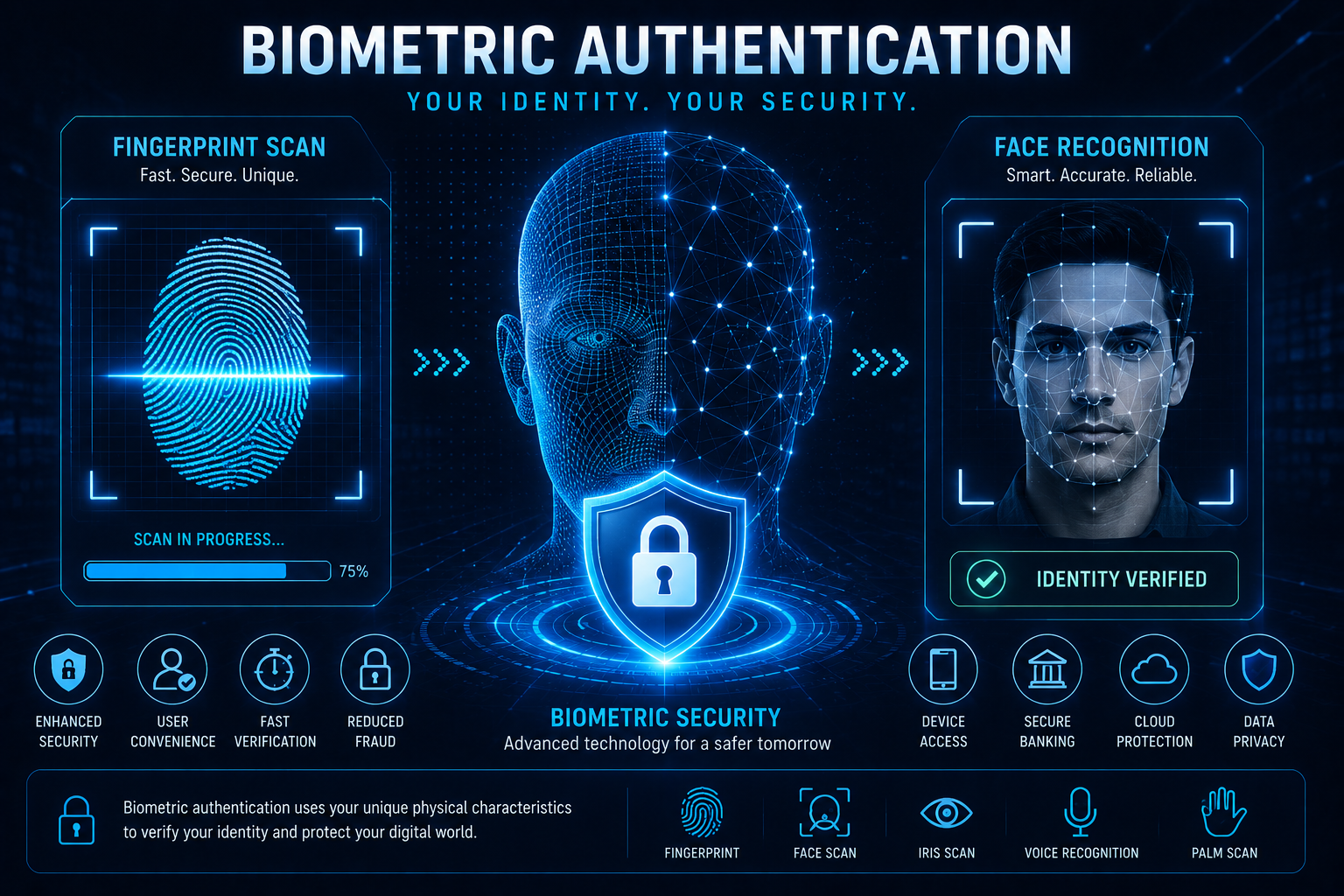
In 2026, biometric authentication is becoming more common for securing accounts and devices.
Popular biometric technologies include:
- Fingerprint scanning
- Facial recognition
- Iris scanning
- Voice recognition
- Behavioral biometrics
Biometric systems improve security while also making authentication faster and more convenient.
However, privacy concerns surrounding biometric data storage remain important.
12.Cybersecurity Skills and Workforce Demand
The demand for cybersecurity professionals continues to grow worldwide.
Organizations need experts in areas such as:
- Ethical hacking
- Threat analysis
- Digital forensics
- Cloud security
- AI security
- Incident response
Cybersecurity is becoming one of the fastest-growing career fields in 2026.
Popular Cybersecurity Careers
- Security Analyst
- Ethical Hacker
- Cybersecurity Engineer
- Cloud Security Specialist
- SOC Analyst
- Penetration Tester
Educational institutions are increasingly offering cybersecurity courses and certifications.
13.Privacy Regulations and Compliance
Governments worldwide are introducing stricter privacy laws to protect user data.
Organizations must comply with regulations related to:
- Data protection
- User consent
- Data storage
- Breach reporting
- AI transparency
Failure to comply can result in massive fines and legal consequences.
Privacy-focused cybersecurity strategies are becoming essential for businesses operating globally.
14.Future of Cybersecurity
The future of cybersecurity will involve greater automation, AI integration, and proactive threat prevention.

Future Predictions
- Fully automated security operations
- AI-powered cyber defense systems
- Quantum-safe encryption
- Advanced biometric authentication
- Self-healing networks
- Predictive threat intelligence
Cybersecurity will continue evolving as technology advances and new digital threats emerge.
Organizations that invest in advanced security infrastructure and employee awareness will be better prepared for the future.
Conclusion
Cybersecurity in 2026 is more important than ever before. As digital transformation accelerates across industries, cyber threats are becoming increasingly sophisticated and dangerous.
From AI-powered cyberattacks and ransomware to cloud vulnerabilities and deepfake scams, organizations face a rapidly changing threat landscape. At the same time, innovative technologies such as AI-driven security systems, Zero Trust architecture, biometric authentication, and quantum-resistant encryption are helping strengthen digital protection.
The future of cybersecurity will depend on continuous innovation, global cooperation, and responsible technology use. Businesses, governments, and individuals must remain vigilant and adapt to emerging threats to ensure a safer digital future.
In the coming years, cybersecurity will not just be about protecting systems — it will be about protecting trust, privacy, and the digital foundation of modern society.