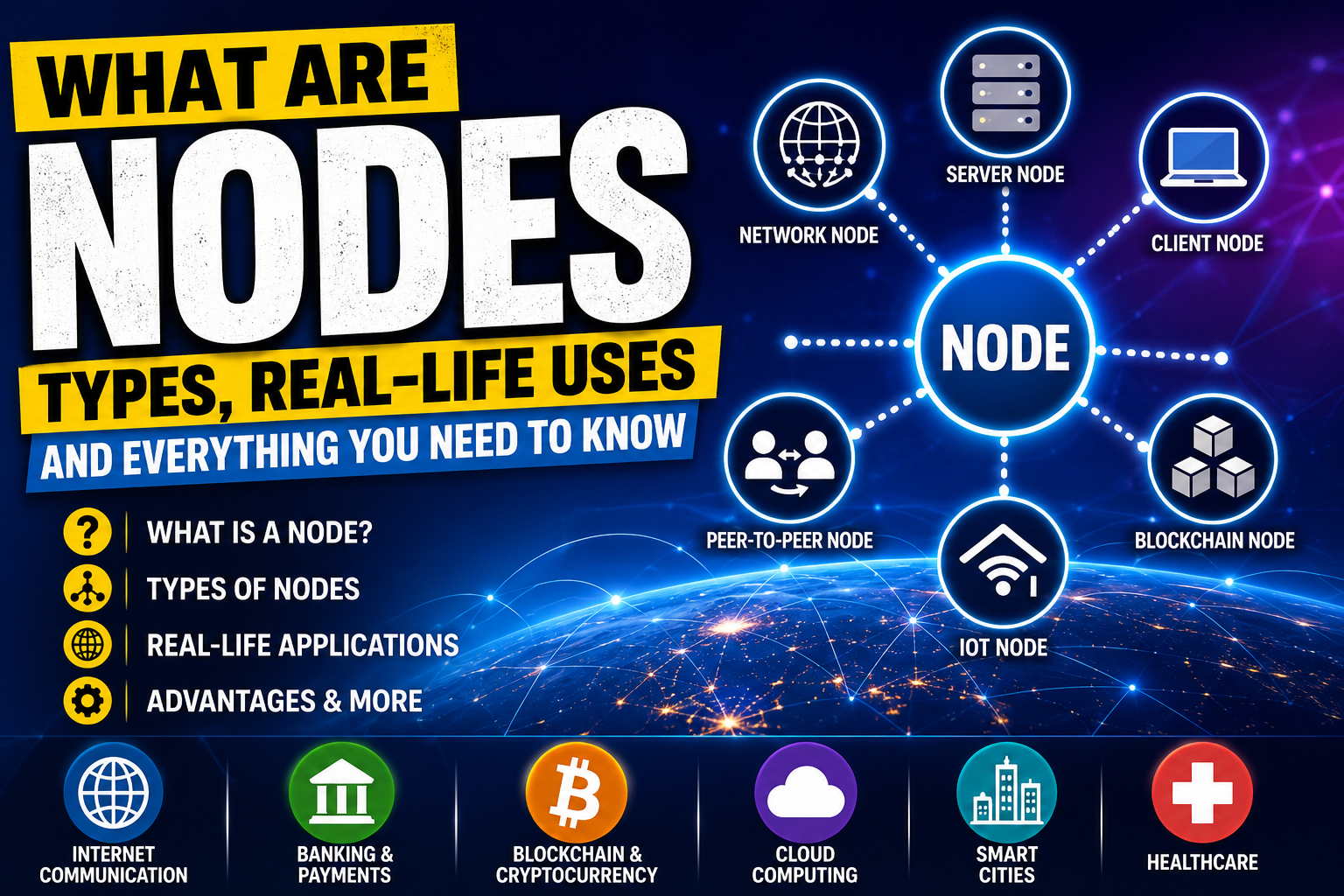
Category: Uncategorized

  • The Impact of Generative AI on Education: Transforming Learning in the Digital Age
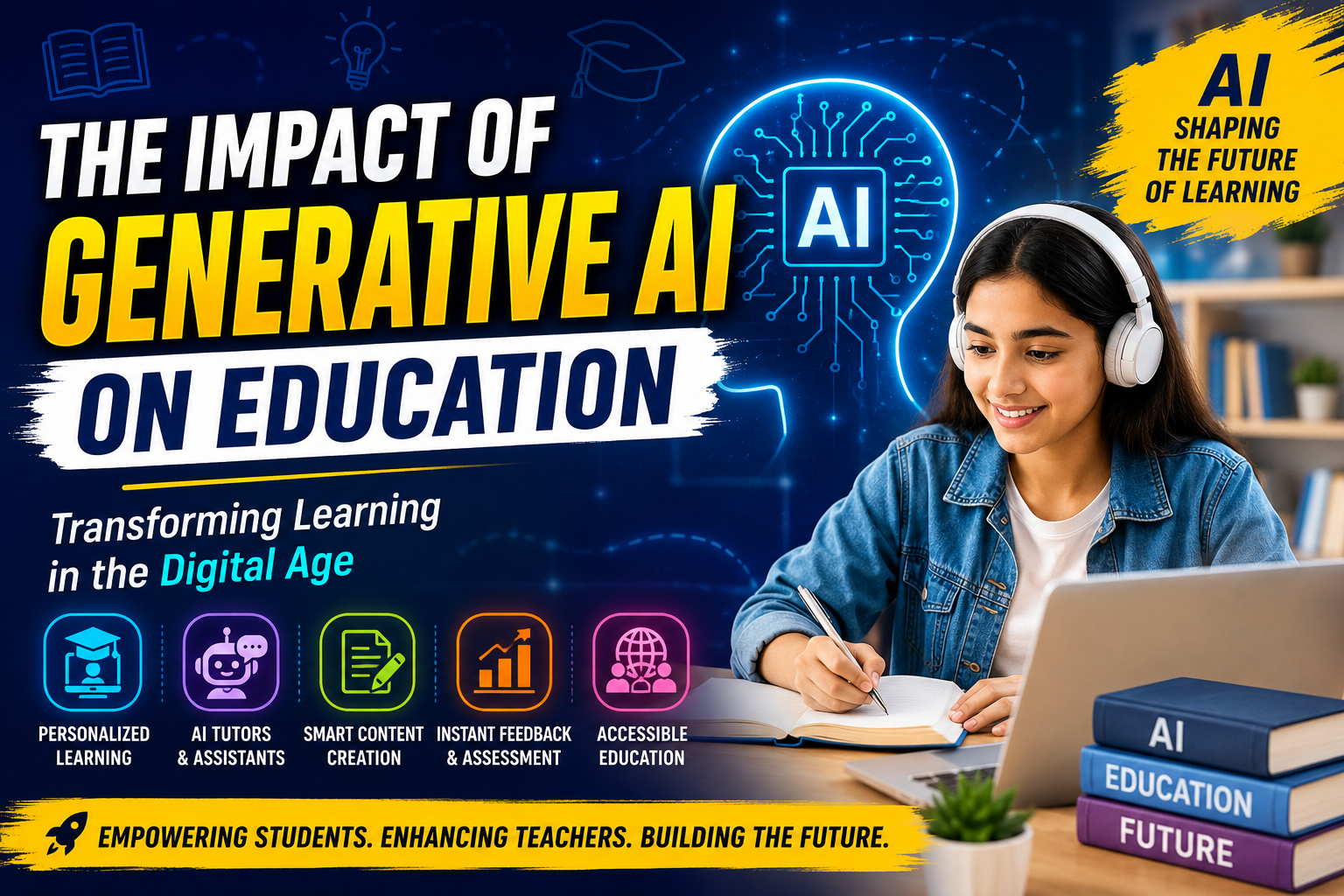
    The Impact of Generative AI on Education: Transforming Learning in the Digital Age

    Introduction

    The education sector has always evolved alongside technological advancements. From chalkboards and textbooks to computers and online learning platforms, each innovation has reshaped how knowledge is delivered and consumed. Today, one of the most transformative technologies influencing education is Generative Artificial Intelligence (Generative AI). Tools such as AI-powered chatbots, content generators, virtual tutors, and personalized learning systems are revolutionizing classrooms worldwide.

    Generative AI refers to artificial intelligence systems capable of creating new content, including text, images, videos, audio, and even code, based on patterns learned from vast datasets. Unlike traditional AI, which primarily analyzes information, Generative AI can generate original outputs that mimic human creativity and intelligence. As educational institutions increasingly adopt these technologies, the impact on teaching, learning, assessment, and academic administration continues to grow.

    This article explores the impact of Generative AI on education, highlighting its benefits, challenges, applications, and future potential.


    Understanding Generative AI in Education

    Generative AI utilizes advanced machine learning models, particularly Large Language Models (LLMs), to understand and generate human-like responses. In education, these systems can assist students with learning, help teachers create instructional materials, and streamline administrative tasks.

    Popular applications of Generative AI include:

    • AI-powered tutoring systems
    • Automated content creation
    • Personalized learning experiences
    • Language translation tools
    • Intelligent assessment systems
    • Educational chatbots
    • Virtual teaching assistants

    These technologies are making education more accessible, efficient, and engaging for learners worldwide.


    Personalized Learning Experiences

    One of the most significant advantages of Generative AI is its ability to personalize education according to individual student needs.

    Traditional classrooms often follow a one-size-fits-all approach, where students learn at the same pace regardless of their abilities. However, every learner has unique strengths, weaknesses, and learning styles.

    Generative AI can:

    • Analyze student performance data.
    • Identify knowledge gaps.
    • Recommend customized learning materials.
    • Adjust lesson difficulty based on progress.
    • Provide individualized feedback.

    For example, if a student struggles with mathematics, an AI system can generate additional practice problems, simplified explanations, and step-by-step solutions tailored to the student’s understanding level.

    This personalized approach improves learning outcomes and helps students achieve their full potential.


    AI-Powered Virtual Tutors

    Generative AI is transforming education through intelligent virtual tutors that provide instant assistance anytime and anywhere.

    Unlike human tutors, AI tutors are available 24/7 and can support millions of students simultaneously. These systems can answer questions, explain complex concepts, and guide learners through difficult subjects.

    Benefits of AI tutors include:

    • Immediate responses to student queries.
    • Continuous availability.
    • Cost-effective learning support.
    • Personalized explanations.
    • Interactive learning experiences.

    Students can receive academic support outside classroom hours, reducing dependence on private tutoring and increasing educational accessibility.


    Enhanced Content Creation for Educators

    Teachers spend considerable time creating lesson plans, assignments, quizzes, presentations, and study materials. Generative AI significantly reduces this workload by automating content creation.

    AI tools can generate:

    • Lesson outlines
    • Classroom activities
    • Practice worksheets
    • Multiple-choice questions
    • Summaries
    • Presentation content
    • Educational examples

    This automation allows educators to focus more on teaching, mentoring, and student engagement rather than repetitive administrative tasks.

    Furthermore, teachers can quickly customize materials to suit different grade levels and learning objectives.


    Improved Student Engagement

    Student engagement plays a critical role in academic success. Traditional learning methods sometimes fail to maintain student interest, especially among digital-native generations.

    Generative AI enhances engagement through:

    Interactive Learning

    AI-powered platforms can simulate conversations, role-playing exercises, and real-world scenarios.

    Gamification

    AI can create personalized quizzes, challenges, and educational games that make learning enjoyable.

    Multimedia Content

    Generative AI can produce images, videos, animations, and visual explanations that help students better understand difficult concepts.

    These interactive experiences make learning more dynamic and motivating.


    Language Learning and Communication

    Generative AI has significantly improved language education by providing advanced language-learning tools.

    Students can:

    • Practice conversations with AI chatbots.
    • Receive grammar corrections.
    • Translate content instantly.
    • Improve writing skills.
    • Learn pronunciation through AI speech systems.

    Language barriers that once limited educational access are becoming less significant as AI-powered translation and communication tools continue to improve.

    This is especially beneficial for international students and multilingual learning environments.


    Accessibility and Inclusive Education

    Generative AI is helping create a more inclusive educational system by supporting students with disabilities and diverse learning needs.

    Examples include:

    Support for Visually Impaired Students

    AI can convert text into speech and generate audio explanations.

    Support for Hearing-Impaired Students

    Speech-to-text systems can provide real-time captions during lectures.

    Learning Assistance

    Students with learning difficulties can receive personalized explanations and alternative learning formats.

    By improving accessibility, Generative AI ensures that education becomes available to a broader range of learners.


    Revolutionizing Assessments and Feedback

    Assessment is an essential component of education, but grading assignments and providing feedback can be time-consuming.

    Generative AI helps automate these processes by:

    • Evaluating assignments.
    • Generating performance reports.
    • Providing detailed feedback.
    • Identifying areas for improvement.
    • Tracking learning progress.

    Students benefit from immediate feedback, enabling them to correct mistakes and improve their understanding more quickly.

    Teachers also gain valuable insights into student performance and learning patterns.


    Supporting Research and Academic Work

    Research is a critical part of higher education. Generative AI assists students and researchers in various ways.

    Applications include:

    • Summarizing research papers.
    • Generating literature reviews.
    • Organizing references.
    • Identifying relevant sources.
    • Assisting with academic writing.

    These capabilities save time and allow researchers to focus on analysis, innovation, and critical thinking.

    However, researchers must verify AI-generated information to ensure accuracy and academic integrity.


    Administrative Efficiency in Educational Institutions

    Beyond teaching and learning, Generative AI is improving administrative operations within educational institutions.

    AI can automate tasks such as:

    • Student enrollment processes.
    • Schedule management.
    • Attendance tracking.
    • Email communication.
    • Student support services.

    Educational institutions can reduce operational costs and improve efficiency through AI-powered automation.

    This allows administrators to devote more resources to enhancing educational quality and student services.


    Challenges and Concerns

    Despite its numerous benefits, Generative AI also presents several challenges that must be addressed.

    Academic Integrity

    Students may misuse AI tools to complete assignments, essays, and exams without genuine learning.

    Educational institutions must develop policies that encourage responsible AI use while maintaining academic honesty.

    Accuracy Issues

    AI-generated content may sometimes contain incorrect or misleading information.

    Students and educators must verify information obtained from AI systems before relying on it.

    Privacy and Data Security

    AI platforms often require access to user data to provide personalized experiences.

    Protecting student information and ensuring compliance with privacy regulations remain important concerns.

    Overdependence on Technology

    Excessive reliance on AI could reduce critical thinking, creativity, and problem-solving skills among students.

    Educators must strike a balance between technological assistance and independent learning.

    Digital Divide

    Not all students have equal access to advanced technologies and internet connectivity.

    Educational institutions and governments must work to ensure equitable access to AI-powered learning tools.


    Ethical Considerations

    The integration of Generative AI in education raises important ethical questions.

    Key considerations include:

    • Transparency in AI-generated content.
    • Fairness and bias prevention.
    • Responsible use of student data.
    • Accountability for AI-generated information.
    • Ethical implementation practices.

    Developers, educators, and policymakers must collaborate to establish guidelines that ensure AI benefits all learners fairly and responsibly.


    The Future of Generative AI in Education

    The future of education will likely involve deeper integration of Generative AI technologies.

    Potential developments include:

    Fully Personalized Learning Paths

    AI systems may create individualized educational journeys tailored to each student’s goals, abilities, and interests.

    Intelligent Virtual Classrooms

    Future classrooms may feature AI teaching assistants capable of supporting both teachers and students in real time.

    Advanced Simulation-Based Learning

    AI-generated virtual environments could provide immersive experiences for subjects such as science, medicine, engineering, and history.

    Lifelong Learning Support

    Generative AI may assist individuals throughout their careers by offering continuous learning opportunities and skill development programs.

    Global Education Access

    AI-powered educational platforms could help deliver quality education to remote and underserved communities around the world.

    As technology continues to evolve, Generative AI will play a central role in shaping the future of learning.

  • 5G and 6G: The Future of Connectivity

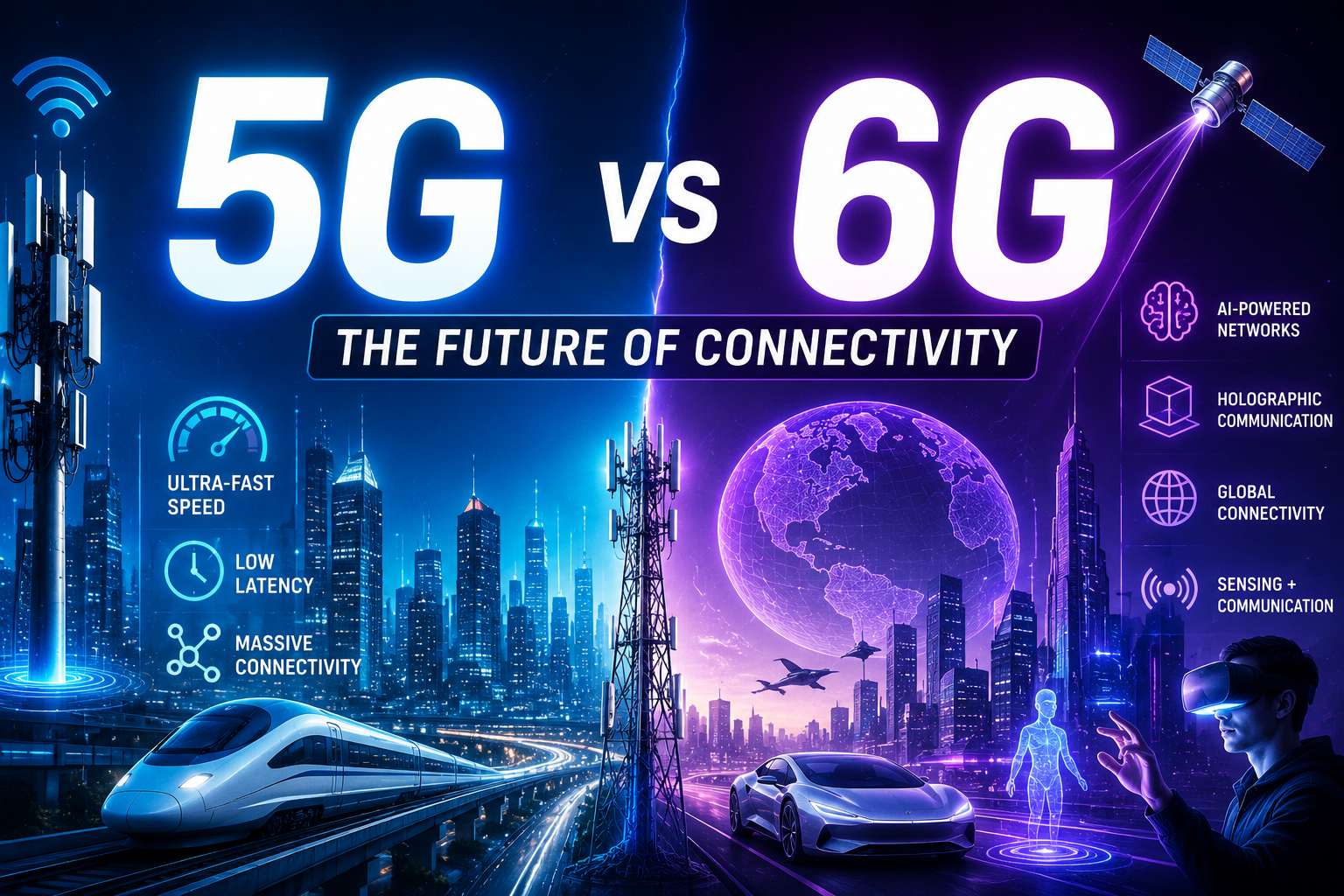
    5G and 6G: The Future of Connectivity

    Introduction

    The world is becoming increasingly connected every day. From smartphones and smart homes to autonomous vehicles and industrial automation, modern technologies depend on fast, reliable, and efficient communication networks. Over the past few decades, mobile network technology has evolved significantly, transforming the way people communicate, work, learn, and entertain themselves. The introduction of 5G marked a major milestone in this journey, offering unprecedented speed, low latency, and massive connectivity.

    However, technology never stands still. While 5G networks are still expanding across the globe, researchers, governments, and technology companies are already working on the next generation of wireless communication: 6G. Expected to emerge commercially around 2030, 6G promises to revolutionize connectivity even further by integrating artificial intelligence, advanced sensing capabilities, and ultra-fast data transmission.

    This blog explores the evolution of mobile networks, the impact of 5G, the potential of 6G, and how these technologies will shape the future of connectivity.


    The Evolution of Mobile Networks

    To understand the significance of 5G and 6G, it is important to look at how mobile communication has evolved over the years.

    1G: The Beginning

    Introduced in the 1980s, 1G was the first generation of wireless communication. It enabled basic voice calls using analog technology. While revolutionary at the time, it suffered from poor sound quality and limited coverage.

    2G: Digital Communication

    The 1990s saw the arrival of 2G networks. These digital networks improved call quality and introduced text messaging (SMS), making communication more efficient and secure.

    3G: Mobile Internet

    The early 2000s brought 3G technology, allowing users to access the internet on their mobile devices. Video calling, web browsing, and multimedia services became possible.

    4G: The Smartphone Revolution

    4G transformed mobile connectivity by providing high-speed internet access. Streaming services, social media platforms, cloud computing, and mobile applications flourished because of 4G networks.

    5G: Intelligent Connectivity

    5G represents a major leap forward, enabling faster speeds, lower latency, and support for billions of connected devices. It serves as the foundation for smart cities, autonomous vehicles, and advanced industrial automation.

    6G: The Next Frontier

    6G is expected to push the boundaries even further, creating intelligent networks capable of supporting immersive digital experiences and real-time interactions between humans and machines.


    Understanding 5G Technology

    5G stands for the fifth generation of mobile network technology. It was designed to address the growing demand for faster internet speeds, increased network capacity, and seamless connectivity.

    Key Features of 5G

    1. Ultra-Fast Speeds

    One of the most notable advantages of 5G is its speed. Under ideal conditions, 5G can deliver download speeds up to 10 Gbps, making it significantly faster than 4G.

    This means:

    • Instant downloads
    • High-quality video streaming
    • Faster cloud access
    • Enhanced gaming experiences

    2. Low Latency

    Latency refers to the time it takes for data to travel between devices.

    5G reduces latency to as low as 1 millisecond, enabling:

    • Real-time communication
    • Remote surgery
    • Autonomous driving
    • Industrial automation

    3. Massive Device Connectivity

    As the Internet of Things (IoT) expands, billions of devices need reliable connectivity.

    5G can support:

    • Smart homes
    • Smart cities
    • Wearable devices
    • Connected vehicles
    • Industrial sensors

    4. Network Slicing

    Network slicing allows operators to create multiple virtual networks within a single physical network.

    Benefits include:

    • Better resource management
    • Improved security
    • Customized services for different industries

    Real-World Applications of 5G

    Smart Cities

    5G enables cities to become more efficient through connected infrastructure.

    Examples include:

    • Smart traffic management
    • Intelligent street lighting
    • Waste management systems
    • Environmental monitoring

    These applications help reduce costs and improve urban living.

    Healthcare

    Healthcare is one of the biggest beneficiaries of 5G.

    Applications include:

    • Remote patient monitoring
    • Telemedicine
    • Robotic surgeries
    • Real-time health data analysis

    Doctors can provide better care even when patients are located far away.

    Autonomous Vehicles

    Self-driving vehicles require rapid communication with surrounding infrastructure.

    5G provides:

    • Real-time navigation updates
    • Vehicle-to-vehicle communication
    • Enhanced safety systems
    • Traffic optimization

    Industry 4.0

    Modern factories are becoming increasingly automated.

    5G supports:

    • Smart manufacturing
    • Predictive maintenance
    • Industrial robotics
    • Supply chain optimization

    This improves productivity while reducing operational costs.

    Entertainment and Gaming

    The entertainment industry has also benefited significantly from 5G.

    Users can enjoy:

    • Cloud gaming
    • 4K and 8K streaming
    • Virtual Reality experiences
    • Augmented Reality applications

    Image Placement Suggestion 1

    Place this image section after the “Real-World Applications of 5G” heading.


    Challenges Facing 5G

    Despite its advantages, 5G faces several challenges.

    Infrastructure Costs

    Deploying 5G requires a large number of small cell towers and advanced network equipment, making implementation expensive.

    Security Concerns

    As more devices become connected, cybersecurity risks increase.

    Organizations must invest in:

    • Strong encryption
    • Secure authentication
    • Network monitoring

    Coverage Limitations

    High-frequency 5G signals have shorter ranges and can be affected by buildings and environmental obstacles.

    Energy Consumption

    The growing number of connected devices can increase overall energy demands.


    Introducing 6G Technology

    While 5G is still expanding globally, researchers are actively developing 6G technology.

    6G is expected to become commercially available around 2030 and will build upon the foundations established by 5G.

    The goal of 6G is not only faster communication but also the creation of intelligent and adaptive networks capable of supporting futuristic applications.


    Key Features of 6G

    1. Terabit-Level Speeds

    6G may achieve speeds of up to 1 Terabit per second.

    This would allow:

    • Instant data transfers
    • Real-time holographic communication
    • Advanced immersive experiences

    2. AI-Native Networks

    Artificial Intelligence will be deeply integrated into network operations.

    Benefits include:

    • Automatic optimization
    • Self-healing networks
    • Intelligent traffic management
    • Improved efficiency

    3. Ultra-Low Latency

    6G could reduce latency to microseconds, enabling near-instant communication.

    This is crucial for:

    • Advanced robotics
    • Remote operations
    • Real-time simulations

    4. Integrated Sensing and Communication

    6G networks may function as both communication and sensing systems.

    Applications include:

    • Environmental monitoring
    • Precision navigation
    • Smart transportation

    5. Global Connectivity

    6G aims to provide connectivity everywhere, including:

    • Remote villages
    • Oceans
    • Airspace
    • Space exploration missions

    Transformative Applications of 6G

    Holographic Communication

    Imagine attending a meeting where participants appear as life-sized holograms.

    6G could make holographic communication a reality.

    Extended Reality (XR)

    Extended Reality combines:

    • Virtual Reality (VR)
    • Augmented Reality (AR)
    • Mixed Reality (MR)

    6G will provide the bandwidth needed for highly immersive experiences.

    Digital Twins

    Digital twins are virtual replicas of physical objects or systems.

    Industries can use digital twins to:

    • Predict failures
    • Optimize operations
    • Improve efficiency

    Advanced Healthcare

    Future healthcare systems could utilize:

    • AI-powered diagnostics
    • Remote robotic surgery
    • Real-time patient monitoring
    • Personalized treatment plans

    Space Connectivity

    6G could extend communication capabilities beyond Earth, supporting future space missions and satellite networks.


    Image Placement Suggestion 2

    Place this image section after the “Transformative Applications of 6G” heading.


    The Future Impact on Society

    The combined influence of 5G and 6G will transform nearly every aspect of society.

    Education

    Students will access immersive virtual classrooms and interactive learning experiences.

    Business

    Companies will leverage advanced automation, AI-driven analytics, and remote collaboration tools.

    Transportation

    Smart transportation systems will improve safety and reduce congestion.

    Agriculture

    Farmers will use connected sensors and AI technologies to optimize crop production.

    Environmental Sustainability

    Advanced monitoring systems will help manage resources more efficiently and reduce environmental impact.


    Conclusion

    The evolution from 5G to 6G represents more than just faster internet speeds. These technologies are laying the foundation for a fully connected and intelligent digital future. While 5G is already transforming industries through smart cities, autonomous vehicles, healthcare innovations, and industrial automation, 6G promises to push the boundaries even further with AI-native networks, holographic communication, digital twins, and global connectivity.

    As research and development continue, the transition toward 6G will unlock opportunities that were once considered science fiction. Businesses, governments, and individuals must prepare for a future where connectivity is not merely a convenience but a fundamental part of everyday life.

    The journey from 5G to 6G is a journey toward a smarter, faster, and more connected world—one where technology seamlessly integrates with human experiences and drives innovation on an unprecedented scale.

  • The Rise of Decentralized Identity (DID): The Future of Digital Verification

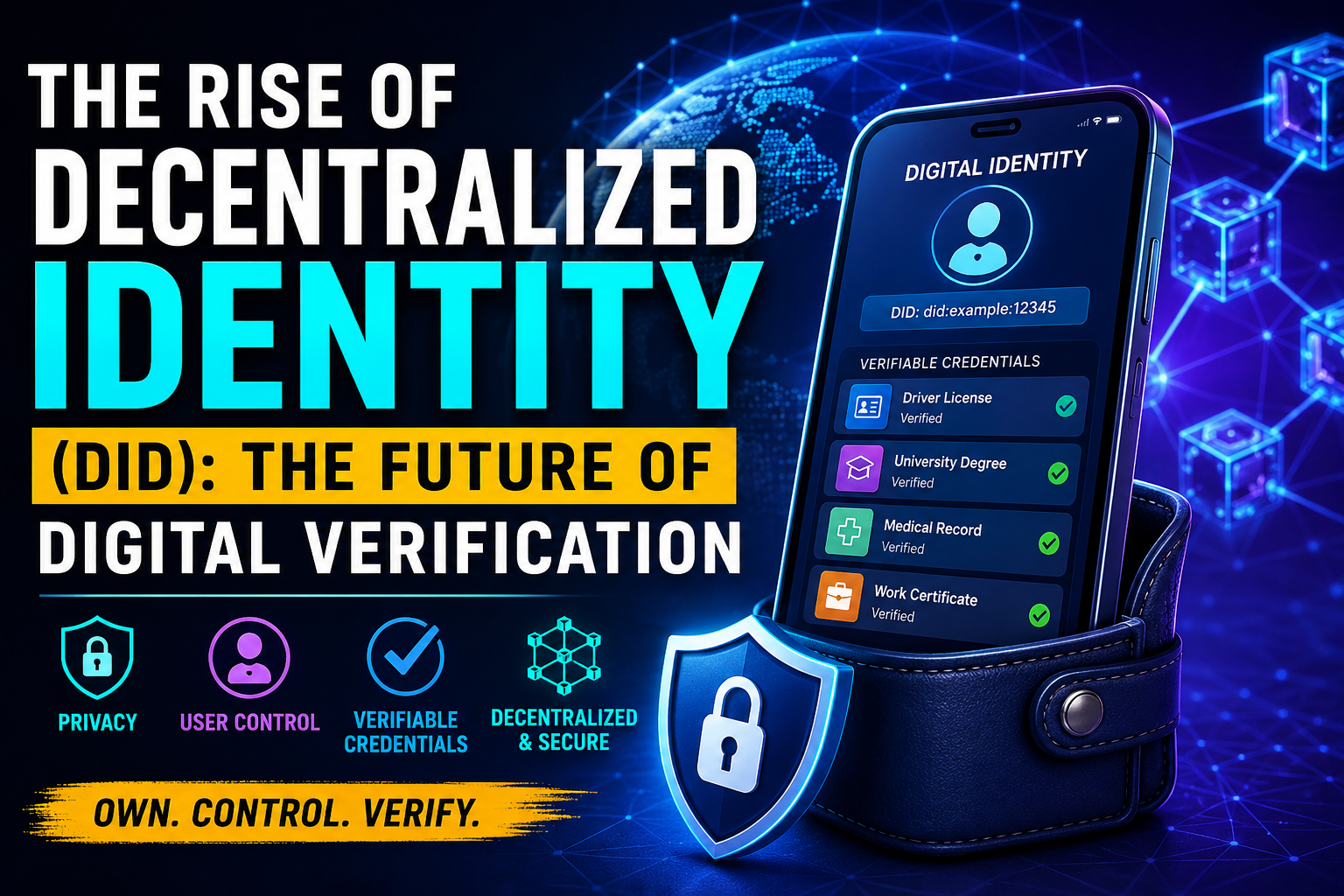
    The Rise of Decentralized Identity (DID): The Future of Digital Verification

    Introduction

    In today’s digital world, identity has become one of the most valuable assets. Every time we create a social media account, sign up for an online service, make a payment, or access government platforms, we are required to share personal information. Unfortunately, traditional identity systems rely heavily on centralized databases that store vast amounts of user data. These systems have become prime targets for cybercriminals, leading to frequent data breaches, identity theft, and privacy concerns.

    As digital transformation accelerates across industries, the need for a more secure, privacy-focused, and user-controlled identity system is becoming increasingly important. This is where Decentralized Identity (DID) emerges as a revolutionary solution. Powered by blockchain technology, DID is reshaping the way individuals and organizations manage digital identities by giving users complete control over their personal information.

    In 2026, Decentralized Identity is no longer just an experimental technology. Governments, financial institutions, healthcare providers, educational organizations, and Web3 platforms are actively exploring and implementing DID solutions to enhance security, privacy, and trust in digital interactions.

    Understanding Decentralized Identity (DID)

    Decentralized Identity is a digital identity model that allows individuals to own, manage, and control their personal information without depending on a centralized authority.

    Unlike traditional identity systems where personal data is stored by companies or government databases, DID enables users to store their credentials securely in digital wallets. Users can decide when, where, and with whom they share their information.

    The DID ecosystem is built around three key components:

    1. Decentralized Identifiers

    A Decentralized Identifier is a unique identifier created and controlled by the user rather than a centralized organization. It acts as a digital identity reference that can be verified on a blockchain network.

    2. Verifiable Credentials

    Verifiable Credentials are digital versions of documents such as:

    • Passports
    • Driver’s licenses
    • University degrees
    • Employment certificates
    • Medical records
    • Professional licenses

    These credentials are cryptographically signed, making them tamper-proof and instantly verifiable.

    3. Digital Wallets

    Digital wallets store identity credentials securely. Users can present proof of identity whenever needed without exposing unnecessary personal information.

    Why Traditional Digital Identity Systems Are Failing

    Despite technological advancements, traditional identity management systems face significant challenges.

    Data Breaches

    Large organizations store millions of user records in centralized databases. When these databases are hacked, sensitive information can be exposed.

    High-profile data breaches over the past decade have affected billions of users worldwide, highlighting the vulnerabilities of centralized identity systems.

    Identity Theft

    Cybercriminals often steal personal information to commit fraud, open bank accounts, or gain unauthorized access to services.

    As digital interactions increase, identity theft continues to be a growing concern.

    Lack of User Control

    Most online platforms collect and retain large amounts of personal data. Users often have little control over how their information is stored, shared, or monetized.

    Verification Complexity

    Organizations spend significant resources verifying customer identities, leading to slow onboarding processes and increased operational costs.

    These limitations are driving the demand for decentralized identity solutions.

    How Decentralized Identity Works

    The DID framework operates on the principles of self-sovereign identity (SSI), where individuals become the owners of their digital identities.

    The process typically follows these steps:

    Step 1: Identity Creation

    A user creates a decentralized identifier and stores it in a secure digital wallet.

    Step 2: Credential Issuance

    A trusted institution, such as a university or government agency, issues verifiable credentials to the user.

    Step 3: Credential Storage

    The credentials remain under the user’s control and are stored securely in their wallet.

    Step 4: Verification Request

    When a service provider needs proof of identity, the user shares only the required information.

    Step 5: Instant Verification

    The service provider verifies the credential’s authenticity through blockchain-based cryptographic verification.

    This process eliminates the need for repeated document submissions and reduces dependency on centralized databases.

    Key Benefits of Decentralized Identity

    Enhanced Privacy

    Users share only the minimum information required for a transaction.

    For example, instead of revealing a complete date of birth, a user can simply prove that they are over 18 years old.

    Improved Security

    Blockchain technology and cryptographic signatures make credentials highly secure and resistant to tampering.

    Since there is no central database, hackers have fewer opportunities to access large volumes of personal information.

    User Ownership

    Individuals maintain complete control over their digital identities and decide how their information is shared.

    Reduced Fraud

    Verifiable credentials significantly reduce identity fraud because credentials can be instantly authenticated.

    Faster Verification

    Identity verification that traditionally takes days can be completed within seconds using DID systems.

    Lower Costs

    Organizations can reduce expenses associated with identity verification, compliance, and document management.

    Real-World Applications of DID in 2026

    Financial Services

    Banks and fintech companies are adopting DID solutions to streamline Know Your Customer (KYC) processes.

    Customers can verify their identities instantly without repeatedly submitting documents to different institutions.

    This improves customer experience while reducing operational costs.

    Healthcare

    Healthcare providers use decentralized identities to manage patient records securely.

    Patients can grant doctors temporary access to specific medical information while maintaining privacy.

    This improves data sharing between healthcare institutions and enhances patient care.

    Education

    Universities are issuing blockchain-based diplomas and certificates as verifiable credentials.

    Employers can instantly verify academic qualifications without contacting educational institutions.

    This reduces credential fraud and simplifies recruitment.

    Government Services

    Governments are exploring digital identity programs based on DID frameworks.

    Citizens can access public services, tax systems, voting platforms, and social benefits through secure digital credentials.

    Travel and Immigration

    Digital passports and travel credentials are becoming more common.

    Travelers can verify their identity quickly at airports and border checkpoints while maintaining privacy.

    Employment Verification

    Companies can issue employment credentials that allow professionals to prove work experience instantly.

    Recruiters can verify qualifications without lengthy background checks.

    The Role of Blockchain in DID

    Blockchain serves as the foundation for decentralized identity systems.

    Its key contributions include:

    Immutability

    Identity records cannot be altered or deleted without authorization.

    Transparency

    Verification processes are transparent and auditable.

    Decentralization

    No single organization controls the identity network.

    Trust

    Cryptographic verification eliminates the need for intermediaries.

    Popular blockchain networks supporting DID initiatives include:

    • Ethereum
    • Polygon
    • Solana
    • Hyperledger Indy

    These platforms provide the infrastructure necessary for secure identity verification.

    DID and Web3

    The growth of Web3 is accelerating the adoption of decentralized identity systems.

    In Web3 environments, users interact directly with decentralized applications without relying on centralized platforms.

    DID enables:

    • Secure authentication
    • Privacy-preserving interactions
    • Cross-platform identity portability
    • Decentralized reputation systems
    • User-owned digital profiles

    As Web3 ecosystems continue expanding, DID is expected to become a fundamental building block of the decentralized internet.

    Challenges Facing DID Adoption

    Despite its potential, decentralized identity still faces several challenges.

    Regulatory Uncertainty

    Governments and regulators are still developing frameworks for decentralized identity systems.

    Clear regulations will be essential for widespread adoption.

    User Education

    Many users are unfamiliar with blockchain technology and decentralized identity concepts.

    Educational initiatives will be necessary to increase adoption.

    Interoperability

    Different DID platforms must be able to communicate and exchange credentials seamlessly.

    Industry-wide standards are being developed to address this issue.

    Recovery Mechanisms

    Users must have reliable methods to recover identities if wallets or credentials are lost.

    Balancing security and accessibility remains a challenge.

    Infrastructure Development

    Widespread adoption requires robust digital infrastructure and integration with existing systems.

    Emerging Trends in Decentralized Identity

    Several trends are shaping the future of DID in 2026 and beyond.

    AI-Powered Identity Verification

    Artificial Intelligence is being combined with DID systems to improve fraud detection and automate verification processes.

    Biometric Integration

    Fingerprint and facial recognition technologies are being integrated with decentralized identities for stronger authentication.

    Cross-Border Digital Identity

    Countries are collaborating to create interoperable identity frameworks that simplify international travel and business.

    Digital Credentials Economy

    Individuals are beginning to manage professional achievements, certifications, memberships, and licenses through decentralized credential ecosystems.

    Enterprise Adoption

    Large corporations are increasingly adopting DID solutions for employee management, access control, and compliance requirements.

    The Future of Digital Verification

    Experts believe decentralized identity could become the standard model for digital verification within the next decade.

    As cybersecurity threats continue to evolve, organizations are recognizing the limitations of centralized identity systems.

    Future DID ecosystems may enable:

    • Passwordless authentication
    • Universal digital identities
    • Secure online voting
    • Trusted AI interactions
    • Global identity portability
    • Frictionless digital onboarding

    These advancements could fundamentally transform how people interact with digital services.

    Conclusion

    Decentralized Identity (DID) represents one of the most significant innovations in the evolution of digital trust. By shifting control of personal information from centralized organizations to individuals, DID offers a safer, more private, and more efficient approach to identity verification.

    As blockchain technology matures and adoption continues to grow, decentralized identity solutions are poised to play a critical role in finance, healthcare, education, government services, and the broader Web3 ecosystem. While challenges related to regulation, interoperability, and user education remain, the benefits of enhanced privacy, stronger security, and user empowerment make DID a compelling vision for the future.

    In 2026, the rise of Decentralized Identity is no longer a distant possibility—it is becoming a reality. As digital interactions continue to expand, DID has the potential to redefine how trust is established online and create a future where individuals truly own and control their digital identities.

  • Blockchain Beyond Cryptocurrency: New Innovations in 2026

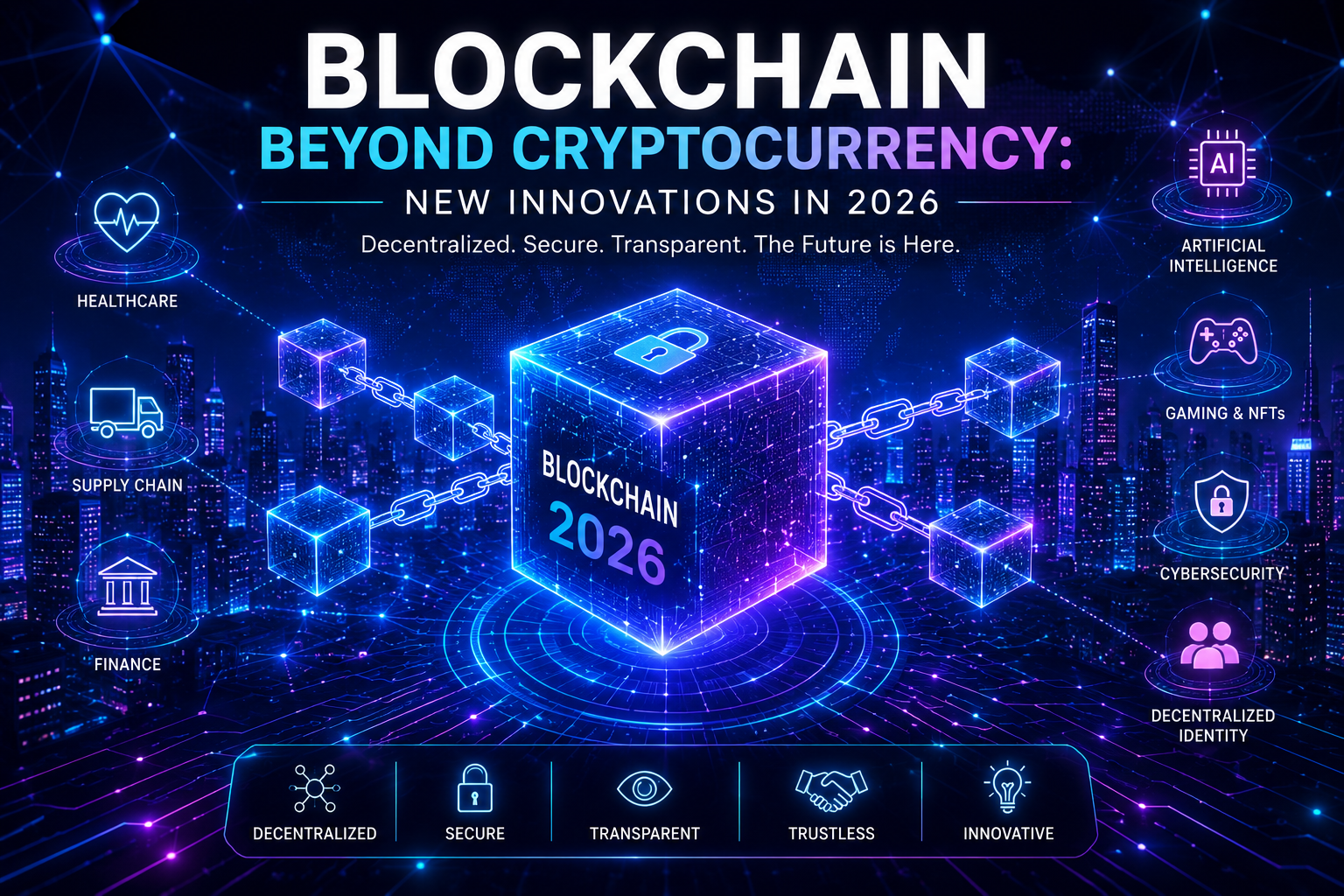
    Blockchain Beyond Cryptocurrency: New Innovations in 2026

    Introduction

    When most people hear the word blockchain, they immediately think of Bitcoin or cryptocurrency. But in 2026, blockchain technology has evolved far beyond digital coins. Industries like healthcare, banking, gaming, cybersecurity, supply chain, and artificial intelligence are now using blockchain to solve real-world problems.

    Blockchain is becoming one of the most important technologies for transparency, security, automation, and digital ownership. Companies around the world are investing heavily in blockchain-based systems because they reduce fraud, improve trust, and increase efficiency.


    Blockchain in Healthcare

    One of the biggest innovations in 2026 is blockchain-based healthcare systems. Hospitals and medical companies are using blockchain to securely store patient records and share data safely between hospitals.

    This technology helps:

    • Protect medical information
    • Reduce data leaks
    • Improve transparency
    • Speed up emergency treatment

    Smart Contracts Are Transforming Business

    Smart contracts are self-executing digital agreements stored on blockchain networks. These contracts automatically complete transactions when conditions are met.

    In 2026, smart contracts are widely used in:

    • Real estate
    • Banking
    • Insurance
    • Freelancing
    • Online business deals

    This reduces paperwork, saves time, and removes middlemen.


    Blockchain + Artificial Intelligence (AI)

    The combination of AI and blockchain is one of the hottest technology trends in 2026. AI helps machines make decisions, while blockchain provides secure and transparent data storage.

    Together, they are being used for:

    • Fraud detection
    • Smart cities
    • Secure AI systems
    • Personalized healthcare
    • Automated business operations

    Many companies are building decentralized AI platforms where users control their own data instead of depending on large tech companies.


    Blockchain in Supply Chain Management

    Blockchain technology is helping companies track products from factories to customers. Customers can now verify product authenticity and track shipment history using blockchain systems.

    Industries using this technology include:

    • Food companies
    • Electronics
    • Luxury brands
    • Pharmaceutical companies

    This increases transparency and reduces fake products in the market.


    Blockchain Gaming and Digital Ownership

    Gaming has changed significantly because of blockchain technology. Players can now truly own in-game items like skins, characters, virtual land, and collectibles.

    Web3 gaming and metaverse platforms are growing rapidly in 2026 because blockchain allows secure digital ownership and trading.


    Green Blockchain Technology

    Earlier blockchain systems consumed huge amounts of electricity, but modern blockchain platforms are becoming energy-efficient through technologies like:

    • Proof-of-Stake
    • Renewable energy integration
    • Green mining systems

    This makes blockchain more environmentally friendly and sustainable.


    Real-World Adoption of Blockchain in 2026

    In 2026, many global companies and governments are actively investing in blockchain technology for real-world applications. Major banks are testing blockchain-based payment systems to make international transactions faster and more secure. Educational institutions are using blockchain to verify certificates and prevent fake degrees. Even social media platforms are exploring decentralized systems where users have more control over their personal data and digital identity.

    Another important innovation is tokenization. Real-world assets like real estate, artwork, music rights, and luxury products can now be converted into digital blockchain assets. This allows people to buy small ownership shares in expensive assets, creating new investment opportunities for ordinary users.

    Cybersecurity is also improving through blockchain technology. Since blockchain records cannot be changed easily, hackers find it difficult to manipulate data. Businesses are now using blockchain for secure cloud storage, identity protection, and fraud prevention systems.

    Experts believe blockchain adoption will continue growing rapidly over the next decade because it offers transparency, decentralization, and security. As more industries integrate blockchain into their operations, the technology could become a core part of the future digital economy.


    Challenges of Blockchain

    Even though blockchain technology is growing rapidly, some challenges still exist:

    • Government regulations
    • Cybersecurity threats
    • Scalability issues
    • High implementation costs
    • Lack of awareness

    However, experts believe blockchain adoption will continue increasing in the coming years.


    Conclusion

    Blockchain is no longer limited to cryptocurrency. In 2026, it is transforming industries through secure, transparent, and decentralized systems.

    From healthcare and AI to gaming and supply chains, blockchain technology is shaping the future of the digital world. As innovation continues, blockchain could become one of the most important technologies of the modern era.

  • How AI and Blockchain Work Together: The Future of Smart Technology

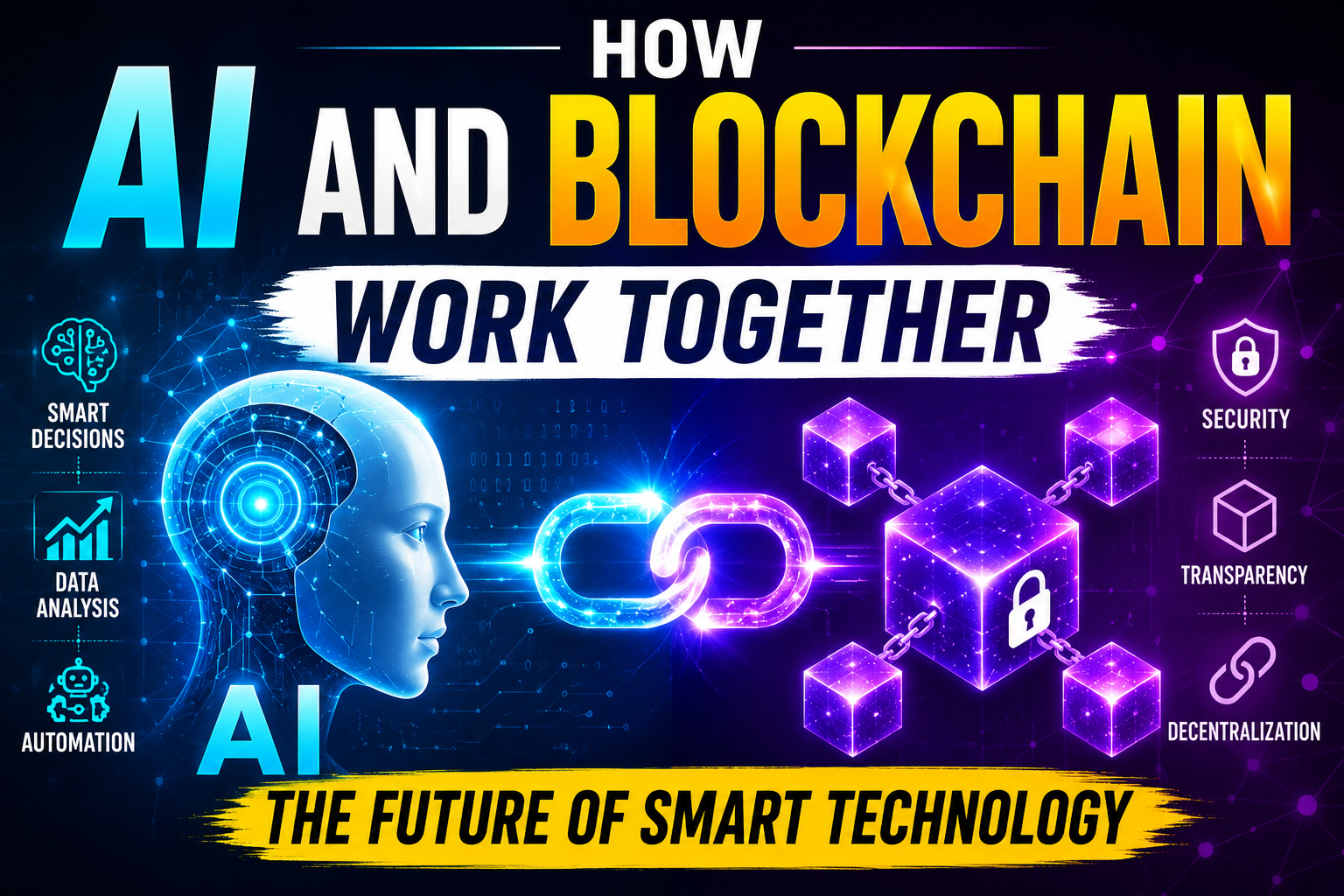
    How AI and Blockchain Work Together: The Future of Smart Technology

    Artificial Intelligence (AI) and Blockchain are two of the most powerful technologies shaping the digital world in 2026. Individually, both technologies have already transformed industries. AI is making machines smarter, while blockchain is making digital systems more secure and transparent. But when these two technologies work together, they create something even more revolutionary.

    From healthcare and finance to cybersecurity and smart cities, AI and blockchain are becoming the backbone of next-generation innovation. Tech companies, startups, and governments are investing billions into combining these technologies because together they solve many modern digital problems.

    In this blog, we’ll explore how AI and blockchain work together, their real-life applications, benefits, challenges, and why this combination is considered the future of technology.


    What is Artificial Intelligence (AI)?

    Artificial Intelligence refers to machines or computer systems that can think, learn, analyze, and make decisions like humans. AI uses algorithms and data to perform tasks such as:

    • Voice recognition
    • Image detection
    • Language translation
    • Recommendation systems
    • Chatbots
    • Self-driving cars

    Popular AI tools like ChatGPT, Google Gemini, and AI-powered assistants are examples of how AI is becoming part of everyday life.

    AI works best when it has access to massive amounts of accurate data. However, data security and trust are major challenges. This is where blockchain enters the picture.


    What is Blockchain Technology?

    Blockchain is a decentralized digital ledger that stores information securely across multiple computers. Once data is added to the blockchain, it becomes almost impossible to change or hack.

    Key features of blockchain include:

    • Transparency
    • Security
    • Decentralization
    • Immutability
    • Trustless transactions

    Blockchain is most famous for powering cryptocurrencies like Bitcoin, but its uses now go far beyond crypto.

    Industries using blockchain today include:

    • Banking
    • Supply chain
    • Healthcare
    • Real estate
    • Gaming
    • Voting systems

    Why AI and Blockchain Need Each Other

    AI and blockchain solve each other’s weaknesses.

    Problems with AI

    • AI depends heavily on data
    • Data can be manipulated or stolen
    • AI systems often lack transparency
    • Users may not trust AI decisions

    Problems with Blockchain

    • Blockchain cannot analyze complex data efficiently
    • Smart contracts have limited intelligence
    • Blockchain systems can be slow

    When combined:

    • Blockchain provides secure and trusted data for AI
    • AI improves blockchain efficiency and automation

    Together, they create intelligent, transparent, and secure systems.


    How AI and Blockchain Work Together

    1. Secure Data Sharing

    AI systems require huge amounts of data to learn and improve. Blockchain can securely store and verify this data.

    For example:

    • Hospitals can share medical records securely
    • AI can analyze patient data without privacy risks
    • Blockchain ensures data authenticity

    This creates a safer environment for AI training.


    2. Improving AI Transparency

    One major criticism of AI is the “black box” problem. Sometimes AI makes decisions without explaining how it reached them.

    Blockchain records every AI decision transparently. This helps:

    • Track AI behavior
    • Reduce bias
    • Increase trust

    Businesses and governments can verify how AI systems make decisions.


    3. Smarter Smart Contracts

    Smart contracts are self-executing digital agreements on blockchain networks. However, traditional smart contracts are limited.

    AI adds intelligence to smart contracts by allowing them to:

    • Analyze situations
    • Predict outcomes
    • Make smart decisions automatically

    Example:
    An insurance company can use AI-powered smart contracts to automatically detect accidents and process claims instantly.


    4. Fraud Detection

    AI is excellent at identifying suspicious activities and patterns.

    Blockchain stores transaction histories securely, while AI analyzes them to detect:

    • Fraud
    • Cyberattacks
    • Fake transactions
    • Money laundering

    Banks and fintech companies are already using AI and blockchain together for advanced fraud prevention systems.


    5. Decentralized AI Systems

    Today, big tech companies control most AI systems and user data.

    Blockchain enables decentralized AI platforms where:

    • Users own their data
    • AI models become transparent
    • No single company controls the system

    This creates a fairer and more democratic AI ecosystem.


    Real-Life Applications of AI and Blockchain

    Healthcare Industry

    Healthcare is one of the biggest sectors benefiting from AI and blockchain integration.

    How it works:

    • Blockchain securely stores patient records
    • AI analyzes health data for diagnosis
    • Doctors access trusted medical histories instantly

    Benefits:

    • Faster treatment
    • Reduced medical fraud
    • Better patient privacy

    AI can even predict diseases using blockchain-protected medical data.


    Banking and Finance

    Banks handle millions of transactions daily, making security extremely important.

    AI + Blockchain in banking:

    • AI detects fraud instantly
    • Blockchain secures transactions
    • Smart contracts automate payments

    This reduces:

    • Human errors
    • Processing costs
    • Fraud risks

    Cryptocurrency exchanges also use AI-powered blockchain systems for better security.


    Supply Chain Management

    Companies need to track products from factories to customers.

    Blockchain records every movement of products, while AI analyzes logistics data.

    Benefits:

    • Real-time tracking
    • Fake product detection
    • Faster deliveries
    • Better inventory management

    Large companies use AI and blockchain to improve global supply chains.


    Cybersecurity

    Cybercrime is increasing rapidly in the digital age.

    AI helps detect threats quickly, while blockchain prevents data tampering.

    Together they provide:

    • Advanced threat detection
    • Secure identity verification
    • Protection against hacking

    This combination is becoming essential for cybersecurity systems worldwide.


    Smart Cities

    Future smart cities rely heavily on intelligent systems.

    AI and blockchain can manage:

    • Traffic systems
    • Electricity usage
    • Waste management
    • Public safety

    Blockchain secures city data, while AI optimizes operations automatically.

    This creates safer and more efficient urban environments.


    Benefits of Combining AI and Blockchain

    Enhanced Security

    Blockchain protects AI data from tampering and hacking.

    Better Trust

    Transparent blockchain records increase trust in AI decisions.

    Improved Automation

    AI-powered smart contracts reduce manual work and increase efficiency.

    Faster Decision-Making

    AI analyzes data instantly while blockchain provides verified information.

    Decentralization

    Users gain more control over their personal data instead of depending on large corporations.


    Challenges of AI and Blockchain Integration

    Although the future looks exciting, combining AI and blockchain also comes with challenges.

    High Costs

    Building AI-blockchain systems requires advanced infrastructure and investment.

    Scalability Issues

    Blockchain networks can become slow when handling massive AI data.

    Technical Complexity

    Both technologies are highly complex and require skilled professionals.

    Regulatory Concerns

    Governments are still developing laws for AI and blockchain systems.


    Future of AI and Blockchain

    Experts believe AI and blockchain together will drive the next digital revolution.

    Future developments may include:

    • Fully autonomous businesses
    • AI-powered decentralized apps
    • Secure digital identities
    • Smarter healthcare systems
    • Advanced robotic automation

    Web3 platforms are already combining blockchain and AI to create decentralized internet ecosystems.

    As technology advances, industries that adopt AI and blockchain early may gain massive competitive advantages.


    Top Companies Working on AI and Blockchain

    Many leading companies are investing heavily in these technologies.

    Some popular names include:

    • IBM
    • Microsoft
    • Google
    • OpenAI
    • NVIDIA
    • Ethereum-based startups

    These companies are building AI-powered blockchain solutions for real-world problems.


    AI + Blockchain in Cryptocurrency

    Cryptocurrency projects are increasingly integrating AI into blockchain networks.

    Examples include:

    • AI trading bots
    • Predictive crypto analysis
    • AI-powered DeFi platforms
    • Automated risk management

    This trend is becoming one of the hottest topics in the crypto industry.


    Why This Technology Matters in 2026

    In today’s digital world, data is the new currency. Businesses need systems that are:

    • Smart
    • Secure
    • Transparent
    • Fast
    • Reliable

    AI provides intelligence, while blockchain provides trust.

    Together, they can reshape industries and solve some of the biggest problems in technology.

    This is why AI and blockchain are often called the “perfect tech partnership.”


    Conclusion

    AI and blockchain are no longer just futuristic concepts. They are real technologies already transforming businesses and daily life. AI makes systems smarter, while blockchain makes them secure and transparent.

    When these technologies work together, they unlock incredible possibilities:

    • Smarter automation
    • Safer digital systems
    • Better healthcare
    • Advanced cybersecurity
    • Transparent financial systems

    The combination of AI and blockchain is expected to dominate the future of innovation in 2026 and beyond.

    As industries continue adopting these technologies, understanding how AI and blockchain work together will become increasingly important for students, developers, businesses, and tech enthusiasts.

    The future is intelligent, decentralized, and secure — and AI with blockchain is leading the way.

  • What Are Nodes? Types of Nodes and Their Real-Life Uses

    What Are Nodes? Types of Nodes and Their Real-Life Uses

    Introduction

    In today’s digital world, technology connects billions of devices every second. Whether you are browsing the internet, watching videos online, sending messages through social media, making online payments, or using smart home devices, all these systems rely on networks. One of the most important concepts behind these networks is the node.

    The term “node” is commonly used in computer networking, blockchain technology, cloud computing, and the Internet of Things (IoT). Although the word may sound technical, the concept is actually simple. A node is basically a connection point in a network that can send, receive, store, or process information.

    Every modern digital system depends on nodes to function efficiently. Without nodes, devices would not be able to communicate with each other. From smartphones and computers to servers and blockchain systems, nodes play a major role in ensuring smooth communication and data transfer.

    In this blog, we will explore what nodes are, how they work, the different types of nodes, and their real-life applications.


    What Is a Node?

    A node is any device or connection point within a network that can communicate with other devices. Nodes can send data, receive data, process information, or store information.

    In simple words, a node is an active participant in a network.

    Examples of nodes include:

    • Computers
    • Smartphones
    • Routers
    • Printers
    • Servers
    • Blockchain systems
    • Smart devices

    Whenever two or more devices connect and exchange information, they function as nodes.

    For example, when you use your mobile phone to open a website, your phone acts as a node. The server hosting the website is also a node. The routers transferring data between them are nodes as well.


    How Do Nodes Work?

    Nodes work by communicating with each other through networks. Each node has a unique address or identity that helps it send and receive data.

    When data travels through a network, it moves from one node to another until it reaches its destination.

    For example:

    1. You type a website address in your browser.
    2. Your computer sends a request to a server.
    3. The request travels through several routers and switches.
    4. The server processes the request.
    5. The website data is sent back to your device.

    In this process:

    • Your computer is a node.
    • The routers are nodes.
    • The web server is also a node.

    This communication happens within seconds because nodes continuously exchange information.


    Characteristics of Nodes

    Nodes have several important characteristics:

    1. Communication

    Nodes communicate with other nodes in the network.

    2. Identification

    Every node has a unique identity such as an IP address or MAC address.

    3. Data Processing

    Some nodes process and manage data.

    4. Data Storage

    Certain nodes store information for future use.

    5. Connectivity

    Nodes connect networks and devices together.


    Types of Nodes

    There are different types of nodes depending on their purpose and functionality.

    1. Network Node

    A network node is any device connected to a computer network.

    Examples:

    • Desktop computers
    • Laptops
    • Mobile phones
    • Printers
    • Wi-Fi devices

    Real-Life Uses:

    Network nodes are commonly used in:

    • Schools
    • Colleges
    • Offices
    • Banks
    • Homes

    In an office network, computers and printers communicate with each other through nodes to share files and internet access.

    Advantages:

    • Easy communication
    • File sharing
    • Resource sharing

    2. Server Node

    A server node is a powerful computer or system that provides services and resources to other devices.

    Examples:

    • Web servers
    • Database servers
    • Cloud servers
    • Email servers

    Real-Life Uses:

    Whenever you:

    • Watch videos online
    • Use social media
    • Open websites
    • Store files in cloud storage

    server nodes are working behind the scenes.

    For example, streaming platforms use server nodes to deliver videos to millions of users.

    Advantages:

    • Centralized data storage
    • Fast data access
    • Reliable services

    3. Client Node

    A client node requests services or data from a server node.

    Examples:

    • Smartphones
    • Tablets
    • Personal computers

    Real-Life Uses:

    When you use apps such as:

    • Messaging apps
    • Social media apps
    • Browsers
    • Gaming applications

    your device acts as a client node.

    The client node sends requests, while the server node responds with information.

    Advantages:

    • User-friendly communication
    • Access to online services
    • Fast interaction with servers

    4. Blockchain Node

    A blockchain node is a computer connected to a blockchain network that helps verify and maintain transactions.

    Examples:

    • Bitcoin nodes
    • Ethereum nodes
    • Crypto mining systems

    Real-Life Uses:

    Blockchain nodes are used in:

    • Cryptocurrency systems
    • Digital payments
    • Smart contracts
    • Decentralized applications

    For example, when someone sends cryptocurrency, blockchain nodes verify the transaction before adding it to the blockchain.

    Advantages:

    • High security
    • Transparency
    • Decentralization

    5. Peer-to-Peer (P2P) Node

    In a peer-to-peer network, all nodes have equal power and share resources directly.

    Examples:

    • File-sharing systems
    • Torrent applications
    • Decentralized networks

    Real-Life Uses:

    P2P nodes are commonly used for:

    • Sharing files
    • Sharing software
    • Online gaming
    • Music sharing

    Unlike traditional networks, P2P networks do not rely on a central server.

    Advantages:

    • Cost-effective
    • Decentralized communication
    • Easy resource sharing

    6. IoT Node (Internet of Things)

    IoT nodes are smart devices connected to the internet.

    Examples:

    • Smart TVs
    • Smart watches
    • Smart refrigerators
    • Smart lights
    • Security cameras

    Real-Life Uses:

    IoT nodes are widely used in smart homes and smart cities.

    For example:

    • Smart lights can be controlled using mobile apps.
    • Smart cameras can send live footage over the internet.
    • Fitness bands monitor health data.

    Advantages:

    • Automation
    • Remote control
    • Improved convenience

    7. Router Node

    A router node transfers data between networks.

    Examples:

    • Wi-Fi routers
    • Internet routers

    Real-Life Uses:

    Routers are used in homes, schools, and offices to provide internet access.

    They help direct data packets to the correct destination.

    Advantages:

    • Fast internet communication
    • Network management
    • Better connectivity

    8. Switch Node

    A switch node connects devices within a local network.

    Examples:

    • LAN switches
    • Ethernet switches

    Real-Life Uses:

    Switches are used in offices and computer labs to connect multiple computers.

    Advantages:

    • Faster communication
    • Reduced network traffic
    • Better performance

    Real-Life Applications of Nodes

    Nodes are used everywhere in modern technology. Below are some important real-life applications.

    1. Internet Communication

    The internet itself is a massive network of nodes.

    Whenever users:

    • Open websites
    • Send emails
    • Stream videos
    • Use social media

    nodes transfer and process data.

    Without nodes, internet communication would not be possible.


    2. Banking and Online Payments

    Banks use server nodes and secure networks to process transactions.

    Examples include:

    • ATM systems
    • Online banking
    • UPI payments
    • Credit card transactions

    Nodes help verify transactions quickly and securely.


    3. Blockchain and Cryptocurrency

    Blockchain technology depends heavily on nodes.

    Nodes verify transactions and maintain copies of the blockchain ledger.

    Applications include:

    • Bitcoin
    • Ethereum
    • Smart contracts
    • NFT platforms

    Blockchain nodes improve transparency and security.


    4. Cloud Computing

    Cloud computing platforms use multiple server nodes to store and manage data.

    Examples include:

    • Cloud storage
    • Online backups
    • Hosting platforms

    Cloud nodes help users access data from anywhere.


    5. Smart Homes

    Smart homes use IoT nodes for automation.

    Examples include:

    • Smart fans
    • Smart AC systems
    • Smart lights
    • Smart door locks

    These devices communicate through networks and can be controlled remotely.


    6. Healthcare Systems

    Hospitals use nodes for:

    • Patient record management
    • Medical device monitoring
    • Online consultations
    • Health data storage

    Connected devices help doctors monitor patients more efficiently.


    7. Transportation Systems

    Modern transportation systems use nodes in:

    • GPS systems
    • Traffic management
    • Railway networks
    • Smart traffic signals

    Nodes help improve navigation and traffic control.


    8. Educational Institutions

    Schools and colleges use network nodes for:

    • Computer labs
    • Online learning
    • Digital libraries
    • Smart classrooms

    Nodes allow students and teachers to share information quickly.


    Advantages of Nodes

    Nodes offer several benefits in networking and technology.

    1. Fast Communication

    Nodes allow quick transfer of information between devices.

    2. Better Connectivity

    Nodes help connect millions of devices worldwide.

    3. Data Sharing

    Users can share files, resources, and information easily.

    4. Reliability

    Networks with multiple nodes can continue functioning even if one node fails.

    5. Scalability

    New nodes can be added easily to expand networks.

    6. Improved Security

    Some nodes, especially blockchain nodes, provide high security and transparency.


    Disadvantages of Nodes

    Although nodes are useful, they also have some disadvantages.

    1. Security Risks

    If nodes are not protected properly, hackers may attack networks.

    2. High Maintenance Cost

    Large networks require maintenance and monitoring.

    3. Complex Management

    Managing thousands of nodes can become difficult.

    4. Network Failure

    If important nodes fail, communication may slow down.


    Future of Nodes

    As technology continues to grow, the importance of nodes will increase.

    Future technologies such as:

    • Artificial Intelligence (AI)
    • 5G networks
    • Smart cities
    • Autonomous vehicles
    • Advanced blockchain systems

    will rely heavily on nodes.

    Billions of connected devices are expected to communicate through nodes in the future, making networks faster and smarter.


    Conclusion

  • Types of Blockchain: A Simple Guide to Understanding How They Work

    Types of Blockchain: A Simple Guide to Understanding How They Work

    If you’ve heard the word “blockchain” and assumed it’s just about Bitcoin, you’re not alone. Most people make that connection. But blockchain has quietly grown into something much bigger — it’s now reshaping how banks store records, how hospitals manage patient data, how governments track land ownership, and a lot more.

    At its core, a blockchain is really just a digital record book. Information gets stored in “blocks,” and those blocks are linked together in a chain. What makes it special is that once something is written in, it’s almost impossible to change — which is why industries that care deeply about trust and accuracy have taken such a strong interest in it.

    But here’s something most people don’t realize: there isn’t just one type of blockchain. There are actually four main varieties, and each one serves a pretty different purpose. Let’s walk through them.

    1. Public Blockchain — Open to Everyone

    Think of a public blockchain like a giant open noticeboard in a town square. Anyone can walk up, read what’s there, and add their own message. No one owns it, no one controls it, and everyone can see everything.

    Bitcoin and Ethereum are the most well-known examples. Thousands of computers around the world (called “nodes”) keep the network running and verify every single transaction.

    What’s great about it: The openness is exactly what makes it trustworthy. You don’t have to rely on any company or government — the system itself does the checking. It’s also extremely difficult to hack because there’s no single point of weakness.

    The trade-offs: That openness comes at a cost. Processing transactions takes time because so many nodes need to agree. Bitcoin’s verification system also guzzles a lot of electricity. And as more people join, things can slow down even further.

    Where it’s used: Cryptocurrency transfers, decentralized apps, digital voting systems, and crowdfunding platforms.


    2. Private Blockchain — For Organizations That Need Control

    Now imagine that same noticeboard — but it’s locked inside a company’s office. Only employees with a badge can get in, and the company decides exactly who can read or write anything.

    That’s essentially what a private blockchain is. One organization runs the show. Platforms like Hyperledger and R3 Corda are built for exactly this kind of use.

    What’s great about it: Because fewer computers are involved, transactions happen much faster. Sensitive data stays protected. And the organization can scale things up or down as needed without much fuss.

    The trade-offs: You’re trusting one organization completely. If they decide to manipulate data internally, there’s not much stopping them. And since it’s not open, outsiders have no way to verify what’s happening.

    Where it’s used: Internal banking systems, employee records, healthcare data, business contracts, supply chain tracking within a single company.


    3. Consortium Blockchain — When Multiple Organizations Share Control

    This one sits in interesting territory. What if several hospitals, or a group of banks, all wanted to share a blockchain — but none of them wanted any single one to be fully in charge?

    That’s a consortium blockchain. A defined group of organizations jointly manages the network. Each participant has a role, and no single party can override the others. It’s semi-decentralized — more open than a private blockchain, but more controlled than a public one.

    What’s great about it: It’s built for collaboration. The costs and responsibilities are shared, security is stronger because multiple parties are watching, and transactions are faster than on a fully public chain.

    The trade-offs: Getting multiple organizations to agree on rules and governance is genuinely complicated. Disputes can arise. And since access is still restricted, transparency is limited to participating members.

    Where it’s used: Banking networks, insurance groups, collaborative supply chains, joint government projects, and research consortiums.


    4. Hybrid Blockchain — The Best of Both Worlds

    Some situations are complicated. An organization might want certain data to be completely public and verifiable — while keeping other data private and protected. A hybrid blockchain makes this possible.

    You get to choose: this information goes public, that information stays locked. It’s flexible in a way the other types aren’t.

    What’s great about it: Businesses get real control over their data without having to sacrifice transparency entirely. It’s also faster than a purely public chain and more cost-effective than running separate systems.

    The trade-offs: Designing a hybrid system is complex. Users have to trust the organization managing the private side — which reintroduces some of the same concerns as a private blockchain.

    Where it’s used: Real estate transactions, government service portals, retail businesses, healthcare management, and financial institutions that need to balance privacy with public accountability.


    Quick Comparison

    Feature Public Private Consortium Hybrid
    Who can join Anyone Invited only Selected group Controlled
    Who’s in charge No one (decentralized) One organization Multiple orgs Mixed
    Transparency High Low Medium Selective
    Speed Slower Fast Fast Fast
    Security Very high High High High
    Cost Higher Lower Shared Moderate

    So Which One Actually Matters?

    The honest answer is: it depends entirely on what you’re trying to do.

    If you’re building something that needs to be open, verifiable, and free from any central authority — a public blockchain makes sense. If you’re a company that just wants to improve internal record-keeping with better security — a private blockchain is probably the right fit. If you’re part of an industry where multiple players need to share data but none should dominate — consortium is the model to look at. And if your needs are somewhere in the middle, hybrid gives you that flexibility.


    Where Is All This Heading?

    Blockchain is still maturing, but it’s moving fast. Countries including India are exploring it for everything from land registries to education certificates to digital identity systems. Developers are also weaving it together with AI, IoT, and the emerging Web3 ecosystem.

    None of the four types is “winning” — they’re each evolving for different niches. What’s clear is that blockchain isn’t just a cryptocurrency thing anymore. It’s becoming part of the infrastructure that modern digital life runs on.

    And understanding the difference between these four types is a solid starting point for anyone who wants to follow where it’s going.

  • How Blockchain Works Step-by-Step (With Real Examples)

    How Blockchain Works Step-by-Step (With Real Examples)

    Blockchain technology has become one of the most revolutionary innovations in the digital world. From cryptocurrencies to supply chain management, it is transforming how data is stored, verified, and shared. But many people still find it confusing. So, let’s break it down in simple terms and understand how blockchain works step-by-step, along with real-life examples.


    What is Blockchain? (Quick Overview)

    Before diving into the steps, let’s understand the basic idea.

    A blockchain is a distributed digital ledger that records transactions across multiple computers in a secure and transparent way. Instead of storing data in one central place, it is shared across a network, making it almost impossible to hack or manipulate.

    Think of it like a digital notebook that is copied and shared with thousands of people. Every time a new transaction is written, everyone gets updated, and no one can secretly change it.


    Key Components of Blockchain

    To understand how blockchain works, you should know its main parts:

    • Block – A container that stores transaction data
    • Chain – Blocks linked together in sequence
    • Nodes – Computers that maintain the blockchain network
    • Miners/Validators – People or systems that verify transactions
    • Consensus Mechanism – Rules used to agree on transactions

    Step-by-Step Process of How Blockchain Works

    Let’s go through the complete process step-by-step.


    Step 1: A Transaction is Initiated

    Everything starts when someone makes a transaction.

    For example:
    Sudhir  wants to send ₹1000 to Shubham using cryptocurrency.

    This transaction includes:

    • Sender’s details
    • Receiver’s details
    • Amount
    • Timestamp

    The transaction is then created digitally and sent to the blockchain network.


    Step 2: Transaction is Broadcast to the Network

    Once the transaction is created, it is broadcasted to a network of computers (nodes).

    These nodes are spread across the world and work together to process the transaction. This makes blockchain decentralized, meaning no single authority controls it.


    Step 3: Transaction Verification Begins

    Now, the nodes verify whether the transaction is valid.

    They check:

    • Does Rahul have enough balance?
    • Is the transaction authentic?
    • Is there any attempt of fraud or double-spending?

    This verification process depends on the consensus mechanism, such as:

    • Proof of Work (PoW)
    • Proof of Stake (PoS)

    Step 4: Transaction is Added to a Block

    Once verified, the transaction is grouped with other transactions into a block.

    A block contains:

    • List of transactions
    • Timestamp
    • Unique identifier (hash)
    • Previous block’s hash

    This is where blockchain becomes powerful—each block is linked to the previous one.


    Step 5: Block is Validated by the Network

    Before adding the block to the chain, it must be validated.

    In some systems (like Bitcoin), miners solve complex mathematical problems to validate the block. This process is called mining.

    In other systems (like Ethereum 2.0), validators are chosen based on their stake.

    Once validated, the block is ready to be added to the blockchain.


    Step 6: Block is Added to the Blockchain

    After validation, the block is added to the existing blockchain.

    Now:

    • The transaction becomes permanent
    • It cannot be changed or deleted
    • Everyone in the network gets updated

    This creates a transparent and tamper-proof record.


    Step 7: Transaction is Completed

    Finally, the transaction is completed.

    Rahul has successfully sent ₹1000 to Amit, and the record is permanently stored in the blockchain.


    Real-Life Example of Blockchain Working

    Let’s understand this with a real-world example.

    Example: Sending Cryptocurrency

    1. You send Bitcoin to your friend
    2. The transaction is broadcast to the network
    3. Nodes verify the transaction
    4. It gets added to a block
    5. The block is validated by miners
    6. The block is added to the blockchain
    7. Your friend receives the Bitcoin

    This entire process happens within minutes and without any bank involvement.


    Why Blockchain is Secure

    Blockchain is considered highly secure because of the following reasons:

    1. Decentralization

    Data is not stored in one place, making hacking extremely difficult.

    2. Cryptography

    Each transaction is encrypted using advanced cryptographic techniques.

    3. Immutability

    Once data is added, it cannot be changed.

    4. Transparency

    All transactions are visible to network participants.


    Advantages of Blockchain

    • High Security
    • Transparency
    • No Middleman Required
    • Fast Transactions
    • Reduced Costs

    Limitations of Blockchain

    While powerful, blockchain also has some challenges:

    • Scalability Issues
    • High Energy Consumption (PoW)
    • Regulatory Uncertainty
    • Complex Technology

    Future of Blockchain

    Blockchain is not just about cryptocurrency anymore. It is being used in:

    • Banking and Finance
    • Healthcare
    • Supply Chain
    • Voting Systems
    • Real Estate

    In the future, blockchain could become a core part of digital infrastructure across industries.

  • The Future of Trust: Top 5 Real-World Uses of Blockchain Technology

    The Future of Trust: Top 5 Real-World Uses of Blockchain Technology

    For a long time, the word “Blockchain” was synonymous only with Bitcoin. However, as the dust of the initial crypto craze settles, the world is beginning to see blockchain for what it truly is: a revolutionary way to store, verify, and transfer data without the need for a central authority.

    At its core, blockchain is a decentralized digital ledger. Once information is recorded, it is nearly impossible to change or delete, making it the ultimate tool for transparency and security. Here are the top five sectors where blockchain is making a massive real-world impact.

    1. Transforming Healthcare: Secure Patient Data

    Healthcare systems across the globe struggle with fragmented data. Your medical history is often scattered across different hospitals, clinics, and pharmacies. This lack of a unified record can lead to misdiagnosis or delayed treatment.

    The Blockchain Solution: By using blockchain, a patient’s medical history can be stored in a secure, encrypted ledger.

    • Privacy: Patients hold the “private keys” to their data, deciding which doctor or hospital can view their records.

    • Interoperability: Whether you are in New York or Mumbai, your medical data can be accessed instantly by authorized providers.

    • Drug Traceability: Blockchain is also being used to track the pharmaceutical supply chain to identify and eliminate counterfeit medicines.

    Visual Note: Imagine a digital shield protecting a patient’s folder, where only the patient has the key to unlock it for a doctor.

    2. Secure and Transparent Voting Systems

    Election integrity is a hot topic worldwide. Traditional voting methods, whether paper-based or electronic, are often vulnerable to hacking, human error, or claims of “rigging.”

    The Blockchain Solution: Blockchain can create an unchangeable record of every vote cast.

    • Immutability: Once a vote is recorded on the blockchain, it cannot be deleted or altered by any government or hacker.

    • Auditability: Every citizen could verify that their vote was counted correctly without compromising their anonymity.

    • Accessibility: Blockchain could eventually allow for secure mobile voting, significantly increasing voter turnout by allowing people to vote safely from home.


    3. Revolutionizing Supply Chain Management

    Have you ever wondered if the “Organic” coffee you bought is actually organic? Supply chains are incredibly complex, involving dozens of intermediaries from farmers to retailers.

    The Blockchain Solution: Blockchain provides a “birth-to-shelf” history of a product.

    • Transparency: Every time a product changes hands, the transaction is logged.

    • Efficiency: If a foodborne illness breaks out, companies can use blockchain to trace the contaminated batch back to the specific farm in seconds.

    • Ethics: It helps companies prove that their materials are ethically sourced, such as conflict-free diamonds or fair-trade cocoa.


    4. Real Estate: Simplifying Property Deals

    Buying real estate is currently a slow, paper-heavy process involving brokers, lawyers, and title insurance companies. It is expensive and prone to fraud.

    The Blockchain Solution: Blockchain introduces Smart Contracts—self-executing contracts where the terms are written directly into code.

    • No Middlemen: When the buyer sends the digital payment, the blockchain automatically transfers the property title to the buyer.

    • Fractional Ownership: Blockchain allows property to be “tokenized.” Instead of buying a whole building, investors can buy “tokens” representing a small percentage of the property.

    [PHOTO 2: Insert an image of a digital key or a house icon connected to a chain of digital blocks, symbolizing modern real estate transactions.]


    5. Next-Gen Banking and Financial Services

    The financial sector was the first to adopt blockchain. Sending money across borders currently takes days and costs high transaction fees.

    The Blockchain Solution:

    • Instant Settlements: Blockchain allows for 24/7, near-instant cross-border payments.

    • DeFi (Decentralized Finance): People can now earn interest, borrow, or lend money directly through blockchain protocols without needing a traditional bank.

    • Reduced Costs: By removing the “middleman” banks, the cost of moving money drops significantly, benefiting millions of people who send money back to their families.

  • What Is Web3? A Complete Beginner-Friendly Guide

    What Is Web3? A Complete Beginner-Friendly Guide

    Introduction

    The internet has gone through massive transformations since its inception. From simple static web pages to highly interactive social platforms, each phase has reshaped how we communicate, work, and live. Now, a new evolution is underway—Web3. You may have heard this term associated with blockchain, cryptocurrencies, and NFTs, but what exactly does it mean?

    In simple terms, Web3 refers to a decentralized version of the internet where users have more control over their data, identity, and digital assets. Unlike today’s internet, dominated by large corporations, Web3 aims to shift power back to individuals.

    This article will give you a complete understanding of Web3, how it works, why it matters, and what the future might look like.

    The Evolution of the Internet

    To understand Web3, we need to first look at how the internet has evolved:

    1. Web1 (1990s – Early 2000s): Read-Only Web

    • Static websites
    • Limited interaction
    • Content created by a few, consumed by many

    Example: Personal websites or early news portals.

    2. Web2 (2000s – Present): Read-Write Web

    • Social media, blogs, apps
    • Users create content (YouTube, Instagram)
    • Controlled by big tech companies

    Example platforms: Facebook, Google, YouTube

    While Web2 made the internet interactive, it also created issues like:

    • Data privacy concerns
    • Centralized control
    • Monetization controlled by platforms

    3. Web3 (Future): Read-Write-Own Web

    • Decentralized platforms
    • Users own their data and digital assets
    • Powered by blockchain technology

    Key Technologies Behind Web3

    Blockchain

    A blockchain is a distributed digital ledger that records transactions securely and transparently. Once data is added, it cannot be easily altered.

    Popular example: Bitcoin


    Smart Contracts

    Smart contracts are self-executing programs stored on a blockchain. They automatically run when certain conditions are met.

    Platform example: Ethereum


    Cryptocurrencies

    Digital currencies that allow peer-to-peer transactions without banks.


    dApps (Decentralized Applications)

    Apps that run on blockchain instead of centralized servers.

    How Web3 Works

    In Web2, when you use an app, your data is stored on company servers. In Web3:

    • Data is stored on a blockchain
    • Users interact through crypto wallets
    • No central authority controls the system

    For example:
    Instead of logging into a website using email/password, you might use a crypto wallet like MetaMask.


    Key Features of Web3

    1. Decentralization → No single entity controls the network. Data is distributed across multiple nodes.
    2. Ownership → Users own their digital identity, assets, and content.
    3. Transparency → All transactions are visible on the blockchain.
    4. Permissionless → Anyone can join without needing approval.
    5. Trustless → You don’t need to trust a company—the system is governed by code.

    Real-World Applications

     DeFi (Decentralized Finance)

    Platforms that allow lending, borrowing, and trading without banks.

     Example: Uniswap


     NFTs (Non-Fungible Tokens)

    Digital ownership of art, music, and collectibles.

    Marketplace: OpenSea


    DAOs

    Communities governed by smart contracts and token holders.


    Web3 Gaming

    Players can own in-game assets and trade them.


    Advantages of Web3

    1. Data Ownership

    You control your personal data—not corporations.

    2. Better Privacy

    No need to share personal details unnecessarily.

    3. Reduced Censorship

    No central authority can easily block content.

    4. Financial Inclusion

    Anyone with internet access can participate in the global economy.


    Challenges of Web3

    1. Scalability

    Blockchain networks can be slow and expensive.

    2. Complexity

    Web3 is still difficult for beginners to understand.

    3. Security Risks

    Smart contract bugs and scams can lead to losses.

    4. Regulation Issues

    Governments are still figuring out how to regulate Web3.


    Web2 vs Web3 Comparison

    Feature Web2 Web3
    Control Centralized companies Decentralized networks
    Data Ownership Platform owns your data You own your data
    Monetization Platform owns your data Direct peer-to-peer
    Trust Trust companies Trust code/blockchain

    The Future of Web3


    Web3 is still in its early stages, but it has the potential to reshape industries such as finance, gaming, social media, and even governance.

    Companies and developers worldwide are investing heavily in this space. While it may take years for full adoption, the shift toward decentralization is already underway.


    Conclusion

    Web3 represents a major shift in how the internet operates. It moves away from centralized control and gives power back to users through decentralization, blockchain, and digital ownership.

    While it offers exciting possibilities, it also comes with challenges that need to be addressed. As the technology evolves, understanding Web3 today can give you a strong advantage in the future digital economy.

    Whether you are a student, developer, or content creator, now is a great time to explore and learn about Web3.