
Introduction
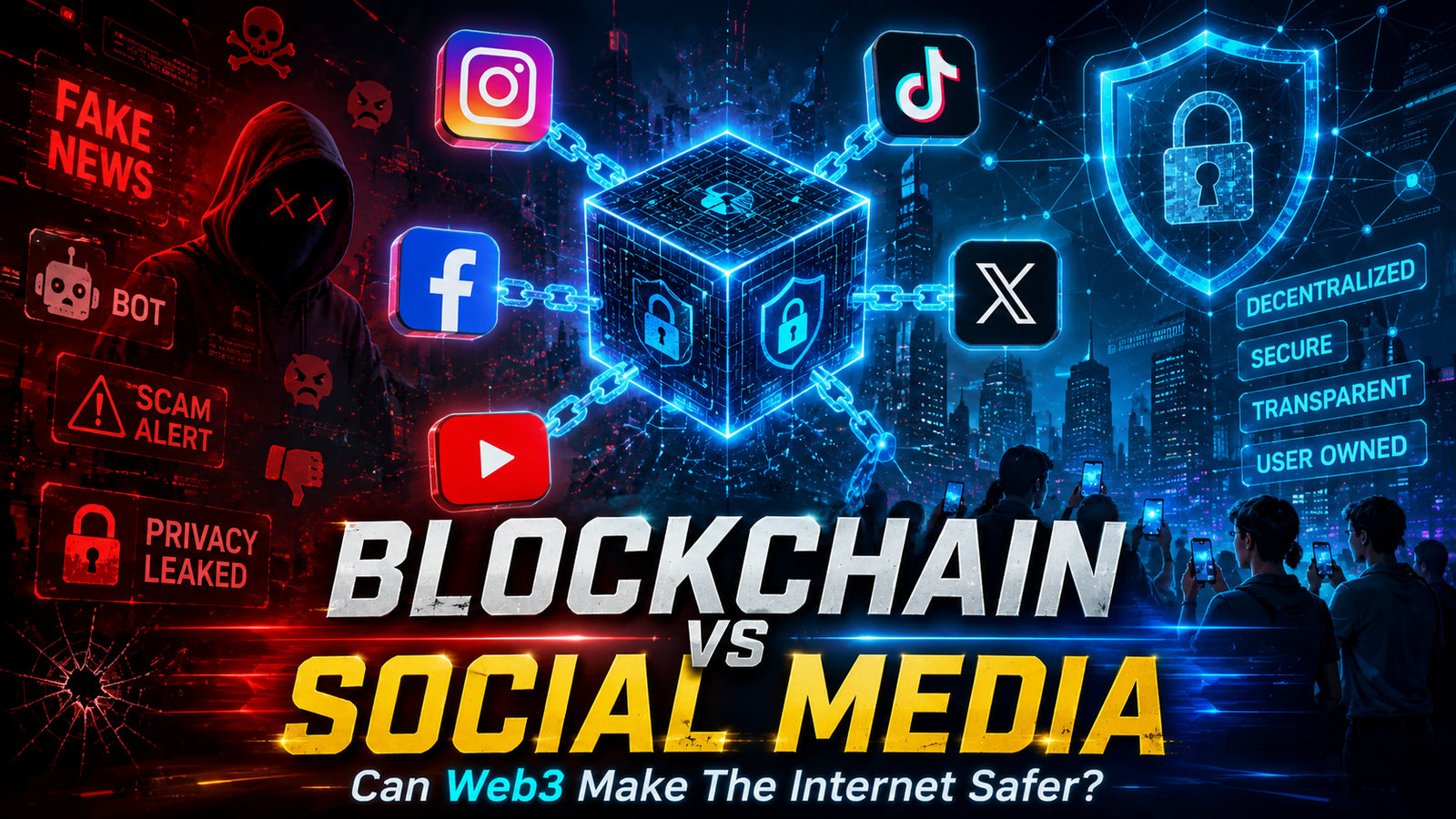
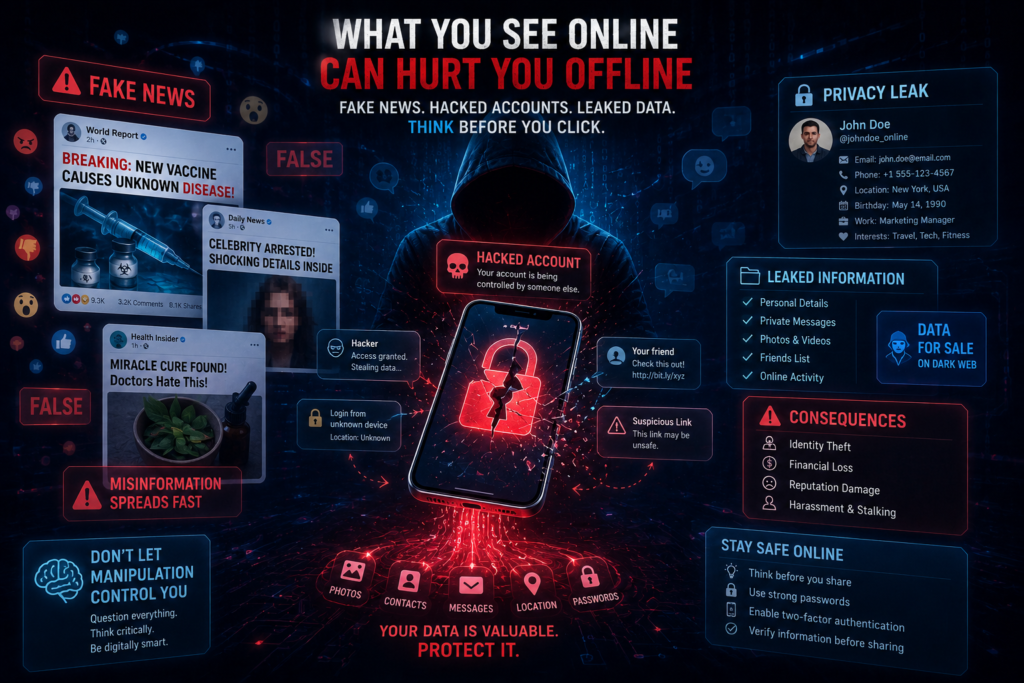
Social media has become a huge part of our daily lives. Platforms like Instagram, Facebook, X, and TikTok connect billions of people worldwide. We use these platforms for communication, entertainment, education, and even business. However, social media also faces serious problems such as fake news, hacking, privacy leaks, data theft, bots, scams, and misinformation.
Today, users are becoming more concerned about how their personal data is collected and used. Many social media companies store massive amounts of user data on centralized servers. If these servers are hacked, millions of users can be affected at once.
This is where blockchain technology enters the conversation. Blockchain is known for security, transparency, and decentralization. Many experts believe blockchain could help create safer and more trustworthy social media platforms in the future.
What is Blockchain?
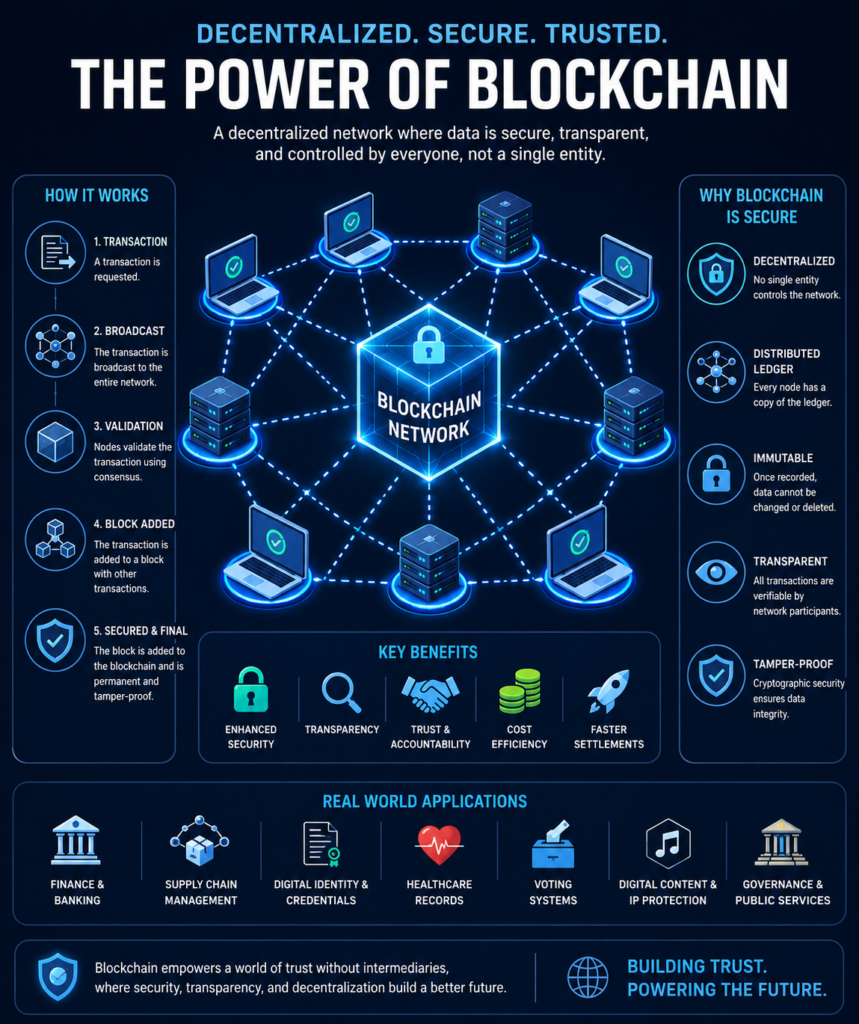
Blockchain is a decentralized digital ledger that stores information across multiple computers instead of one central server. Every transaction or piece of data is stored inside “blocks,” and these blocks are connected together in a chain.
The biggest advantage of blockchain is that once data is recorded, it becomes extremely difficult to change or hack. This makes blockchain highly secure and transparent.
Blockchain technology is already used in cryptocurrencies like Bitcoin and Ethereum, but now its applications are expanding into industries like healthcare, cybersecurity, finance, gaming, and social media.
Problems with Traditional Social Media
Most social media platforms today are centralized. This means one company controls everything, including:
- User data
- Content moderation
- Privacy policies
- Advertisements
- Platform rules
Because of centralization, users often face several issues:
1. Privacy Problems
Many companies collect user information such as location, browsing habits, interests, and personal details. This data is sometimes sold to advertisers or third-party companies.
2. Fake News and Misinformation
False information spreads rapidly on social media. Fake news can influence public opinion, elections, and even create panic.
3. Bots and Fake Accounts
Millions of fake accounts and automated bots exist on social media platforms. These bots spread spam, scams, and misleading information.
4. Data Breaches
Centralized databases are common targets for hackers. A single breach can expose millions of users’ personal data.
5. Lack of Transparency
Users often do not know how algorithms work or how their content is being controlled and promoted.
How Blockchain Can Improve Social Media Security
Blockchain technology offers solutions to many of these problems.
1. Decentralized Data Storage
Instead of storing data on one central server, blockchain distributes information across multiple nodes. This makes hacking extremely difficult because attackers would need to compromise many systems at once.
Users can also have more control over their own data rather than giving complete control to large companies.
2. Better Privacy Protection
Blockchain platforms can allow users to decide what information they want to share. Personal data can be encrypted and securely stored.
This reduces the chances of data misuse and protects user privacy.
3. Verification of Real Users
Blockchain-based identity systems can help verify real users and reduce fake accounts. Verified digital identities can make platforms safer and more trustworthy.
This can significantly reduce spam bots and online scams.
4. Fighting Fake News
Blockchain can help track the original source of information. Once content is recorded on blockchain, its history becomes transparent and traceable.
This can help users identify whether news or media has been modified or manipulated.
5. Transparent Algorithms
Blockchain-based social media platforms can offer transparent algorithms where users understand how content recommendations work.
This can create a fairer system without hidden manipulation.
Real-World Blockchain Social Media Platforms
Several decentralized social media platforms already use blockchain technology.
1. Steemit
Steemit is a blockchain-based blogging and social networking platform where users can earn cryptocurrency rewards for posting content.
2. Lens Protocol
Lens Protocol allows creators to own their content and audience instead of depending on centralized companies.
3. Mastodon
Mastodon uses decentralized servers and gives communities more control over moderation and privacy.
These platforms show how blockchain can create alternative social media ecosystems focused on privacy and user ownership.
Challenges of Blockchain Social Media
Although blockchain has huge potential, there are still challenges.
1. Scalability
Blockchain networks can sometimes process transactions slowly compared to traditional systems.
2. High Energy Consumption
Some blockchain networks consume large amounts of electricity, although newer technologies are becoming more energy efficient.
3. User Adoption
Most people are still unfamiliar with blockchain technology. Mass adoption may take time.
4. Content Moderation
Decentralized platforms may struggle with removing harmful or illegal content because no single authority controls the network.
The Future of Blockchain in Social Media
The future of social media may become more decentralized, private, and user-focused. As technology improves, blockchain could completely change how social platforms operate.
Future blockchain social media platforms may offer:
- Full user ownership of data
- Better online privacy
- Reduced fake accounts
- Transparent content systems
- Secure digital identities
- Creator-focused monetization
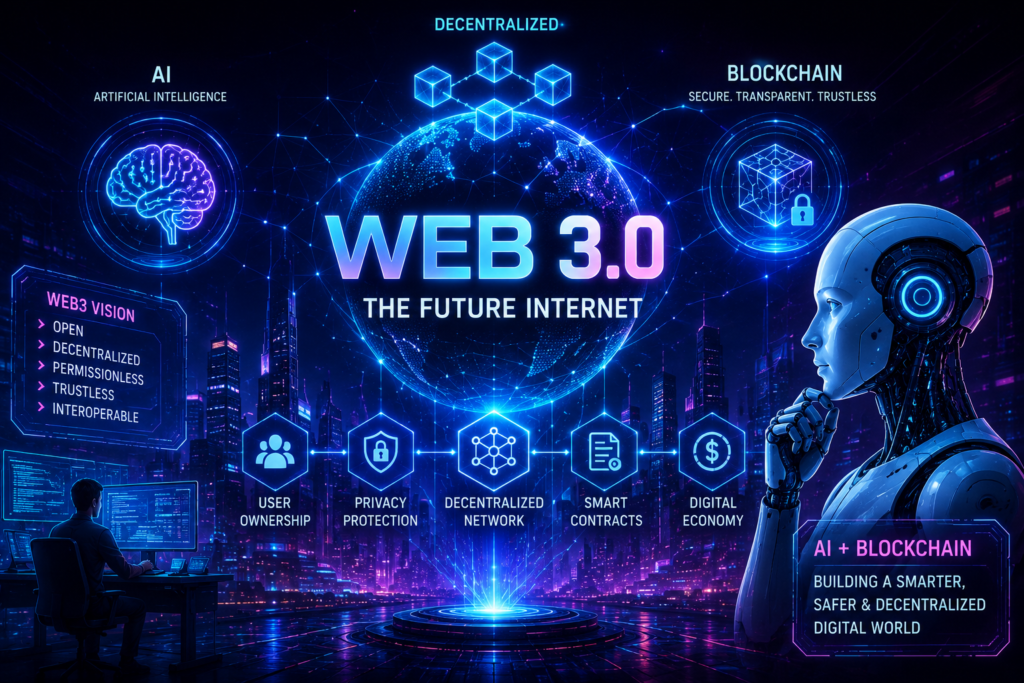
Many tech companies are already exploring Web3 technologies that combine blockchain, AI, and decentralized internet systems.
Conclusion
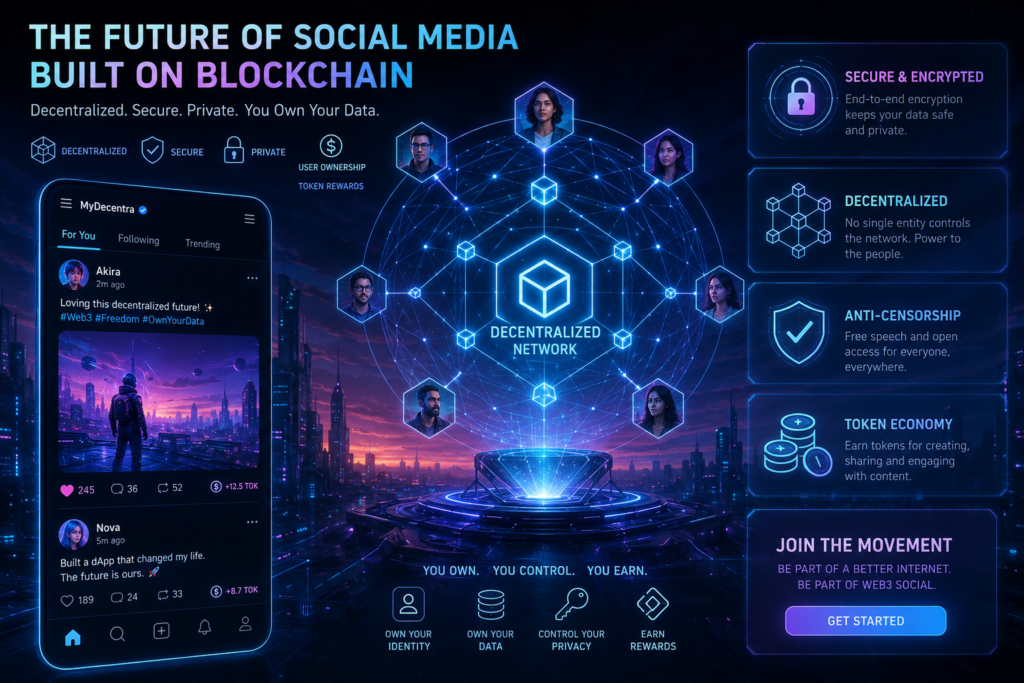
Blockchain technology has the potential to make social media safer, more transparent, and more secure. By decentralizing data storage, improving privacy, reducing fake accounts, and increasing transparency, blockchain could solve many problems faced by traditional social media platforms.
While there are still technical and adoption challenges, the future looks promising. As more people become aware of online privacy and digital ownership, blockchain-powered social media may become a major part of the next generation internet.
The combination of blockchain, AI, and Web3 could create a safer digital world where users have more control over their content, identity, and personal information.