
Introductio n
The internet has become one of the most important parts of modern life. People use it every day for communication, banking, shopping, education, gaming, and entertainment. However, as the internet grows, cyber threats are also increasing rapidly. Problems like hacking, data breaches, identity theft, fake news, and online scams affect millions of users worldwide. Because of these growing risks, many experts believe that blockchain technology could help create a safer and more secure internet.
Blockchain is mostly known because of cryptocurrencies like Bitcoin, but its use goes far beyond digital money. Blockchain is a decentralized and highly secure technology that can improve online privacy, data protection, and trust between users. It removes the need for a single authority and stores data in a transparent and tamper-resistant way.
This article explains how blockchain works, how it can improve internet security, its real-world applications, advantages, challenges, and whether it truly has the power to make the internet safer in the future.
What is Blockchain Technology?
Blockchain is a digital system used to store information securely across multiple computers. Instead of storing data in one central server, blockchain distributes information across a network. Each group of data is stored in a “block,” and these blocks are connected together in a chain.
Once information is added to the blockchain, it becomes extremely difficult to change or delete. Every transaction or update is verified by multiple computers in the network, making the system transparent and secure.
Key Features of Blockchain
- Decentralization – No single person or company controls the system.
- Transparency – Transactions can be verified publicly.
- Security – Advanced encryption protects data.
- Immutability – Data cannot easily be changed after being recorded.
- Trustless System – Users can interact without needing to trust each other directly.
Because of these features, blockchain is considered one of the most secure digital technologies today.
Why Internet Security is a Big Problem
The internet has many security weaknesses because most platforms use centralized systems. In centralized systems, all user data is stored on one server. If hackers attack that server, millions of users can be affected.
Common Internet Security Problems
1. Data Breaches
Companies store personal information such as passwords, emails, and payment details. Hackers often target these databases.
2. Identity Theft
Cybercriminals steal user identities and misuse personal data for fraud.
3. Fake Information
Fake news and manipulated content spread quickly online.
4. Password Hacking
Weak passwords and phishing attacks allow hackers to access accounts.
5. Centralized Control
Large companies control huge amounts of user data, creating privacy concerns.
These problems show why a more secure internet infrastructure is necessary.

“Cyber threats are increasing rapidly in the modern digital world.”
How Blockchain Can Make the Internet Safer
Blockchain introduces a different way of managing online systems. Instead of depending on one central authority, blockchain spreads control across the network. This creates several security benefits.
1. Better Data Security
Blockchain stores data using advanced cryptography. Every block contains a unique code called a hash. If someone tries to change the information, the hash also changes, alerting the network immediately.
This makes blockchain extremely resistant to hacking and unauthorized modifications.
For example, if medical records or banking information are stored on blockchain networks, hackers cannot easily alter the data.
Benefits:
- Reduced risk of data tampering
- Strong encryption protection
- Safer storage of sensitive information
2. Decentralization Reduces Single Point Failures
Traditional websites store data on centralized servers. If that server fails or gets hacked, the entire system becomes vulnerable.
Blockchain distributes data across thousands of computers. Even if one computer fails, the network continues working securely.
This decentralized system improves:
- Reliability
- Stability
- Security against cyber attacks
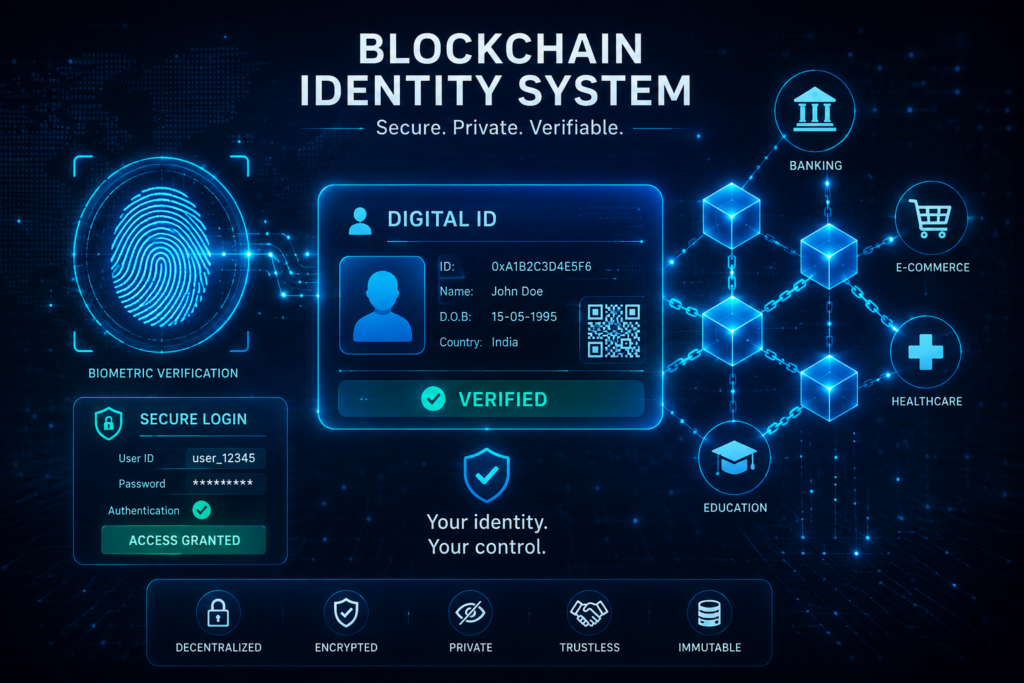
3. Improved Identity Protection
Passwords are one of the weakest parts of internet security. Many people reuse passwords across multiple websites.
Blockchain-based digital identities can reduce this problem. Users can control their own identity data instead of giving it to multiple companies.
With blockchain:
- Users own their digital identity
- Authentication becomes more secure
- Risk of identity theft decreases
This concept is called Self-Sovereign Identity (SSI).
4. Protection Against Fake Information
Blockchain can help verify the authenticity of online content. Since blockchain records cannot easily be changed, it becomes easier to trace original sources.
This can help reduce:
- Fake news
- Deepfake media
- Manipulated online content
Journalists and media companies can use blockchain to verify whether information is original and trustworthy.
5. Secure Online Payments
Online payment fraud is increasing globally. Blockchain allows secure peer-to-peer transactions without middlemen.
Cryptocurrency transactions are verified by the network and recorded permanently on blockchain ledgers.
Advantages include:
- Faster international payments
- Lower transaction fees
- Reduced fraud risk
- Transparent transaction history
6. Safer Cloud Storage
Most cloud storage systems are centralized. If hackers attack cloud servers, sensitive files may leak.
Blockchain-based storage systems divide files into encrypted parts and distribute them across multiple locations.
Benefits:
- Better privacy
- Reduced risk of mass data leaks
- Improved protection against ransomware attacks
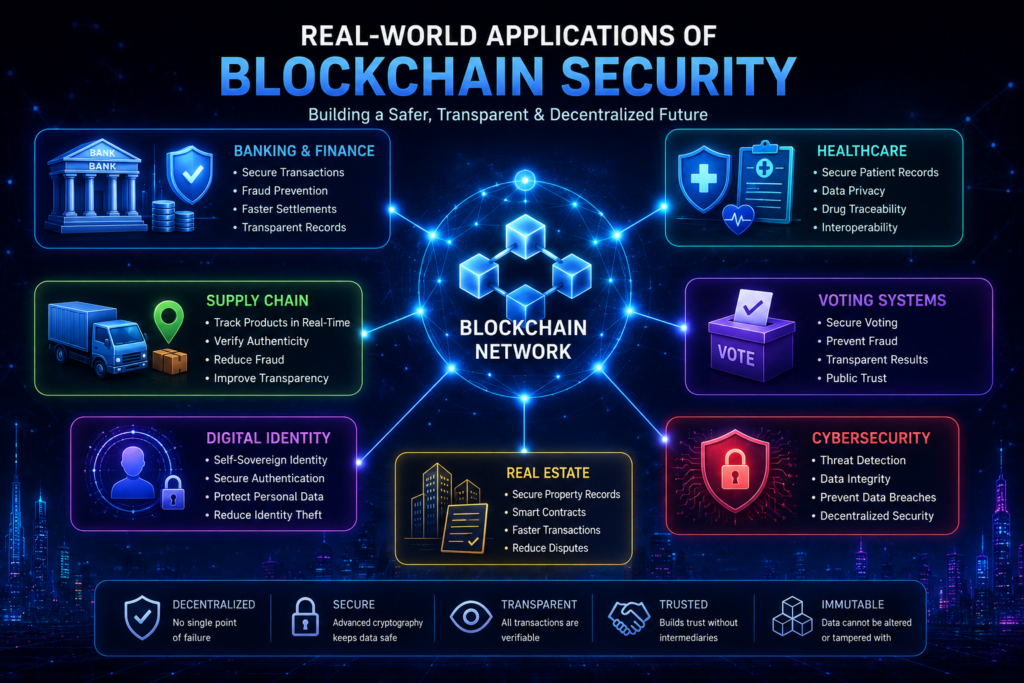
Real-World Applications of Blockchain Security
Blockchain is already being used in several industries to improve internet safety.
Banking and Finance
Banks use blockchain for secure transactions and fraud prevention.
Healthcare
Hospitals can securely store patient records using blockchain.
Supply Chain
Companies track products and verify authenticity using blockchain systems.
Voting Systems
Blockchain voting can reduce election fraud and improve transparency.
Cybersecurity
Security companies use blockchain to protect networks from attacks.
Large technology companies are investing heavily in blockchain-based security solutions.
Advantages of Using Blockchain for Internet Security
1. Transparency
All transactions are visible and verifiable.
2. Strong Security
Cryptographic protection makes hacking difficult.
3. User Control
Users gain more control over their personal data.
4. Reduced Fraud
Blockchain records are difficult to manipulate.
5. Improved Trust
Users can trust systems without relying on central authorities.
Challenges and Limitations of Blockchain
Although blockchain offers many security benefits, it also has some challenges.
1. Scalability Problems
Blockchain networks can become slow when handling large numbers of transactions.
2. High Energy Usage
Some blockchain systems consume large amounts of electricity.
3. Lack of Awareness
Many people still do not understand blockchain technology.
4. Regulatory Issues
Governments are still developing rules for blockchain systems.
5. Expensive Development
Building blockchain infrastructure can be costly.
Because of these challenges, blockchain adoption is still growing gradually.
The Future of Blockchain and Internet Security
Experts believe blockchain will play a major role in the future of internet security. As cyber threats become more advanced, decentralized technologies may become necessary.
Future internet systems could include:
- Decentralized social media platforms
- Blockchain-based identity systems
- Secure decentralized cloud storage
- Smart contracts for automatic security verification
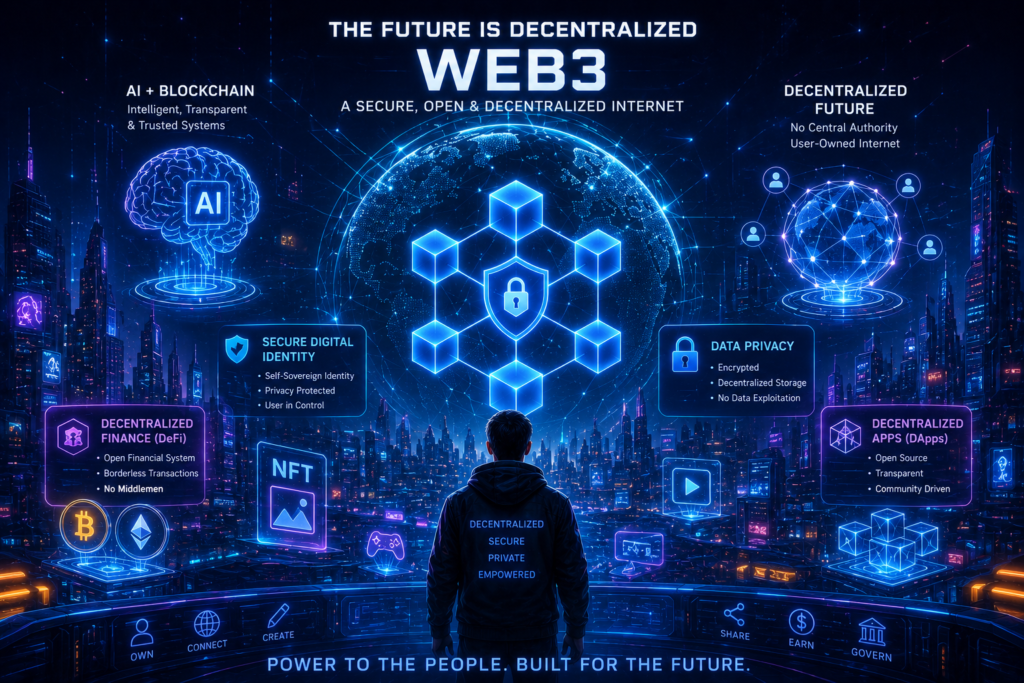
- Web3 applications with improved privacy
The rise of Web3 technology is already pushing the internet toward more decentralized systems powered by blockchain.
Conclusion
Blockchain technology has the potential to make the internet much safer than it is today. Its decentralized structure, strong encryption, transparency, and tamper-resistant nature provide solutions to many modern cybersecurity problems.
From protecting personal identities to securing online payments and preventing data breaches, blockchain can improve trust and security across the digital world. Although there are still challenges like scalability, energy usage, and regulations, the technology continues to evolve rapidly.
As the internet moves toward a more decentralized future, blockchain may become one of the most important technologies for creating a secure, private, and trustworthy online environment. While blockchain may not solve every cybersecurity problem completely, it can significantly strengthen the foundation of the internet and help build a safer digital future for everyone.