
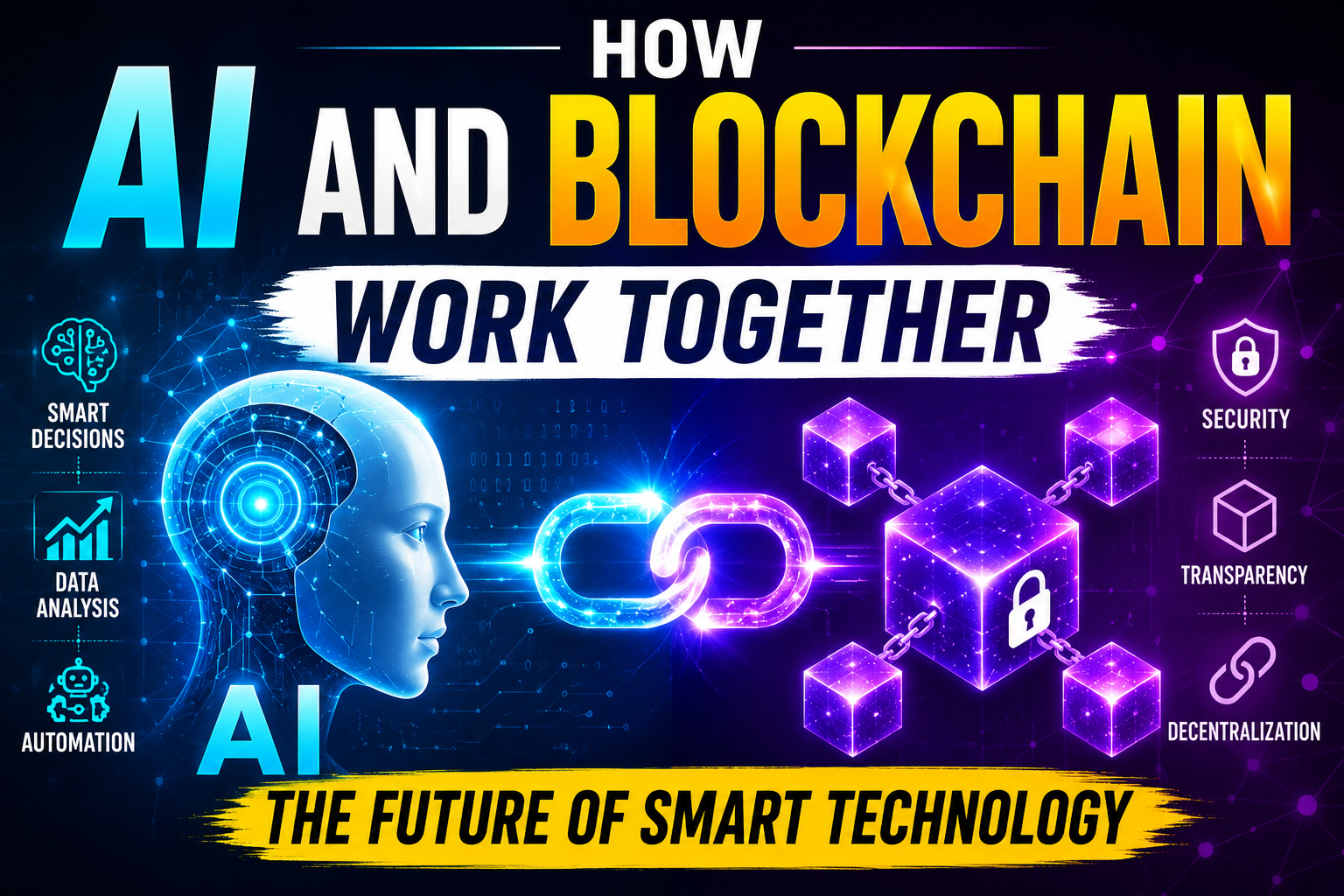
Artificial Intelligence (AI) and Blockchain are two of the most powerful technologies shaping the digital world in 2026. Individually, both technologies have already transformed industries. AI is making machines smarter, while blockchain is making digital systems more secure and transparent. But when these two technologies work together, they create something even more revolutionary.
From healthcare and finance to cybersecurity and smart cities, AI and blockchain are becoming the backbone of next-generation innovation. Tech companies, startups, and governments are investing billions into combining these technologies because together they solve many modern digital problems.
In this blog, we’ll explore how AI and blockchain work together, their real-life applications, benefits, challenges, and why this combination is considered the future of technology.
What is Artificial Intelligence (AI)?
Artificial Intelligence refers to machines or computer systems that can think, learn, analyze, and make decisions like humans. AI uses algorithms and data to perform tasks such as:
- Voice recognition
- Image detection
- Language translation
- Recommendation systems
- Chatbots
- Self-driving cars
Popular AI tools like ChatGPT, Google Gemini, and AI-powered assistants are examples of how AI is becoming part of everyday life.
AI works best when it has access to massive amounts of accurate data. However, data security and trust are major challenges. This is where blockchain enters the picture.
What is Blockchain Technology?
Blockchain is a decentralized digital ledger that stores information securely across multiple computers. Once data is added to the blockchain, it becomes almost impossible to change or hack.
Key features of blockchain include:
- Transparency
- Security
- Decentralization
- Immutability
- Trustless transactions
Blockchain is most famous for powering cryptocurrencies like Bitcoin, but its uses now go far beyond crypto.
Industries using blockchain today include:
- Banking
- Supply chain
- Healthcare
- Real estate
- Gaming
- Voting systems
Why AI and Blockchain Need Each Other
AI and blockchain solve each other’s weaknesses.
Problems with AI
- AI depends heavily on data
- Data can be manipulated or stolen
- AI systems often lack transparency
- Users may not trust AI decisions
Problems with Blockchain
- Blockchain cannot analyze complex data efficiently
- Smart contracts have limited intelligence
- Blockchain systems can be slow
When combined:
- Blockchain provides secure and trusted data for AI
- AI improves blockchain efficiency and automation
Together, they create intelligent, transparent, and secure systems.
How AI and Blockchain Work Together
1. Secure Data Sharing
AI systems require huge amounts of data to learn and improve. Blockchain can securely store and verify this data.
For example:
- Hospitals can share medical records securely
- AI can analyze patient data without privacy risks
- Blockchain ensures data authenticity
This creates a safer environment for AI training.
2. Improving AI Transparency
One major criticism of AI is the “black box” problem. Sometimes AI makes decisions without explaining how it reached them.
Blockchain records every AI decision transparently. This helps:
- Track AI behavior
- Reduce bias
- Increase trust
Businesses and governments can verify how AI systems make decisions.
3. Smarter Smart Contracts
Smart contracts are self-executing digital agreements on blockchain networks. However, traditional smart contracts are limited.
AI adds intelligence to smart contracts by allowing them to:
- Analyze situations
- Predict outcomes
- Make smart decisions automatically
Example:
An insurance company can use AI-powered smart contracts to automatically detect accidents and process claims instantly.
4. Fraud Detection
AI is excellent at identifying suspicious activities and patterns.
Blockchain stores transaction histories securely, while AI analyzes them to detect:
- Fraud
- Cyberattacks
- Fake transactions
- Money laundering
Banks and fintech companies are already using AI and blockchain together for advanced fraud prevention systems.
5. Decentralized AI Systems
Today, big tech companies control most AI systems and user data.
Blockchain enables decentralized AI platforms where:
- Users own their data
- AI models become transparent
- No single company controls the system
This creates a fairer and more democratic AI ecosystem.
Real-Life Applications of AI and Blockchain
Healthcare Industry
Healthcare is one of the biggest sectors benefiting from AI and blockchain integration.
How it works:
- Blockchain securely stores patient records
- AI analyzes health data for diagnosis
- Doctors access trusted medical histories instantly
Benefits:
- Faster treatment
- Reduced medical fraud
- Better patient privacy
AI can even predict diseases using blockchain-protected medical data.
Banking and Finance
Banks handle millions of transactions daily, making security extremely important.
AI + Blockchain in banking:
- AI detects fraud instantly
- Blockchain secures transactions
- Smart contracts automate payments
This reduces:
- Human errors
- Processing costs
- Fraud risks
Cryptocurrency exchanges also use AI-powered blockchain systems for better security.
Supply Chain Management
Companies need to track products from factories to customers.
Blockchain records every movement of products, while AI analyzes logistics data.
Benefits:
- Real-time tracking
- Fake product detection
- Faster deliveries
- Better inventory management
Large companies use AI and blockchain to improve global supply chains.
Cybersecurity
Cybercrime is increasing rapidly in the digital age.
AI helps detect threats quickly, while blockchain prevents data tampering.
Together they provide:
- Advanced threat detection
- Secure identity verification
- Protection against hacking
This combination is becoming essential for cybersecurity systems worldwide.
Smart Cities
Future smart cities rely heavily on intelligent systems.
AI and blockchain can manage:
- Traffic systems
- Electricity usage
- Waste management
- Public safety
Blockchain secures city data, while AI optimizes operations automatically.
This creates safer and more efficient urban environments.
Benefits of Combining AI and Blockchain
Enhanced Security
Blockchain protects AI data from tampering and hacking.
Better Trust
Transparent blockchain records increase trust in AI decisions.
Improved Automation
AI-powered smart contracts reduce manual work and increase efficiency.
Faster Decision-Making
AI analyzes data instantly while blockchain provides verified information.
Decentralization
Users gain more control over their personal data instead of depending on large corporations.
Challenges of AI and Blockchain Integration
Although the future looks exciting, combining AI and blockchain also comes with challenges.
High Costs
Building AI-blockchain systems requires advanced infrastructure and investment.
Scalability Issues
Blockchain networks can become slow when handling massive AI data.
Technical Complexity
Both technologies are highly complex and require skilled professionals.
Regulatory Concerns
Governments are still developing laws for AI and blockchain systems.
Future of AI and Blockchain
Experts believe AI and blockchain together will drive the next digital revolution.
Future developments may include:
- Fully autonomous businesses
- AI-powered decentralized apps
- Secure digital identities
- Smarter healthcare systems
- Advanced robotic automation
Web3 platforms are already combining blockchain and AI to create decentralized internet ecosystems.
As technology advances, industries that adopt AI and blockchain early may gain massive competitive advantages.
Top Companies Working on AI and Blockchain
Many leading companies are investing heavily in these technologies.
Some popular names include:
- IBM
- Microsoft
- OpenAI
- NVIDIA
- Ethereum-based startups
These companies are building AI-powered blockchain solutions for real-world problems.
AI + Blockchain in Cryptocurrency
Cryptocurrency projects are increasingly integrating AI into blockchain networks.
Examples include:
- AI trading bots
- Predictive crypto analysis
- AI-powered DeFi platforms
- Automated risk management
This trend is becoming one of the hottest topics in the crypto industry.
Why This Technology Matters in 2026
In today’s digital world, data is the new currency. Businesses need systems that are:
- Smart
- Secure
- Transparent
- Fast
- Reliable
AI provides intelligence, while blockchain provides trust.
Together, they can reshape industries and solve some of the biggest problems in technology.
This is why AI and blockchain are often called the “perfect tech partnership.”
Conclusion
AI and blockchain are no longer just futuristic concepts. They are real technologies already transforming businesses and daily life. AI makes systems smarter, while blockchain makes them secure and transparent.
When these technologies work together, they unlock incredible possibilities:
- Smarter automation
- Safer digital systems
- Better healthcare
- Advanced cybersecurity
- Transparent financial systems
The combination of AI and blockchain is expected to dominate the future of innovation in 2026 and beyond.
As industries continue adopting these technologies, understanding how AI and blockchain work together will become increasingly important for students, developers, businesses, and tech enthusiasts.
The future is intelligent, decentralized, and secure — and AI with blockchain is leading the way.