Introduction
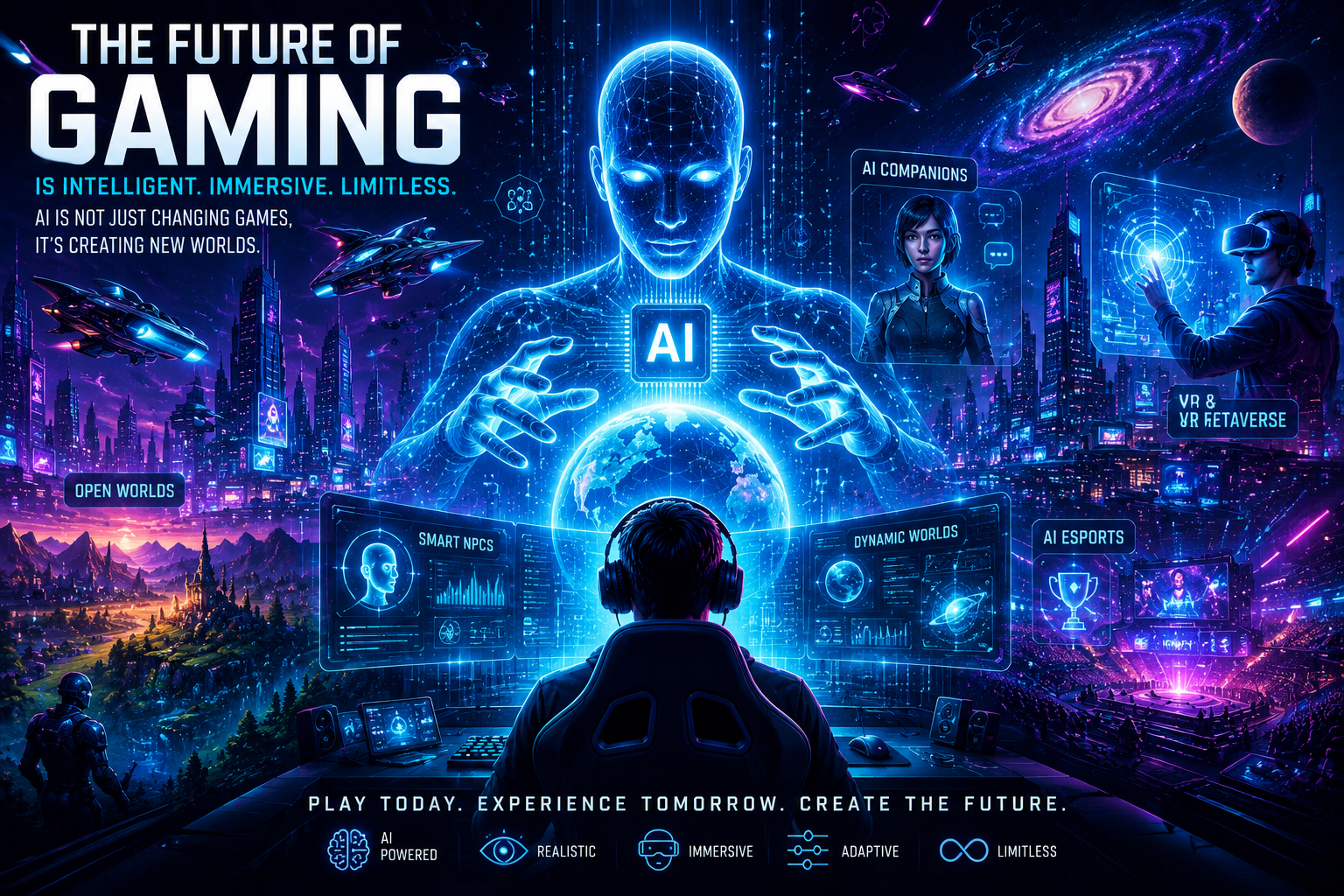
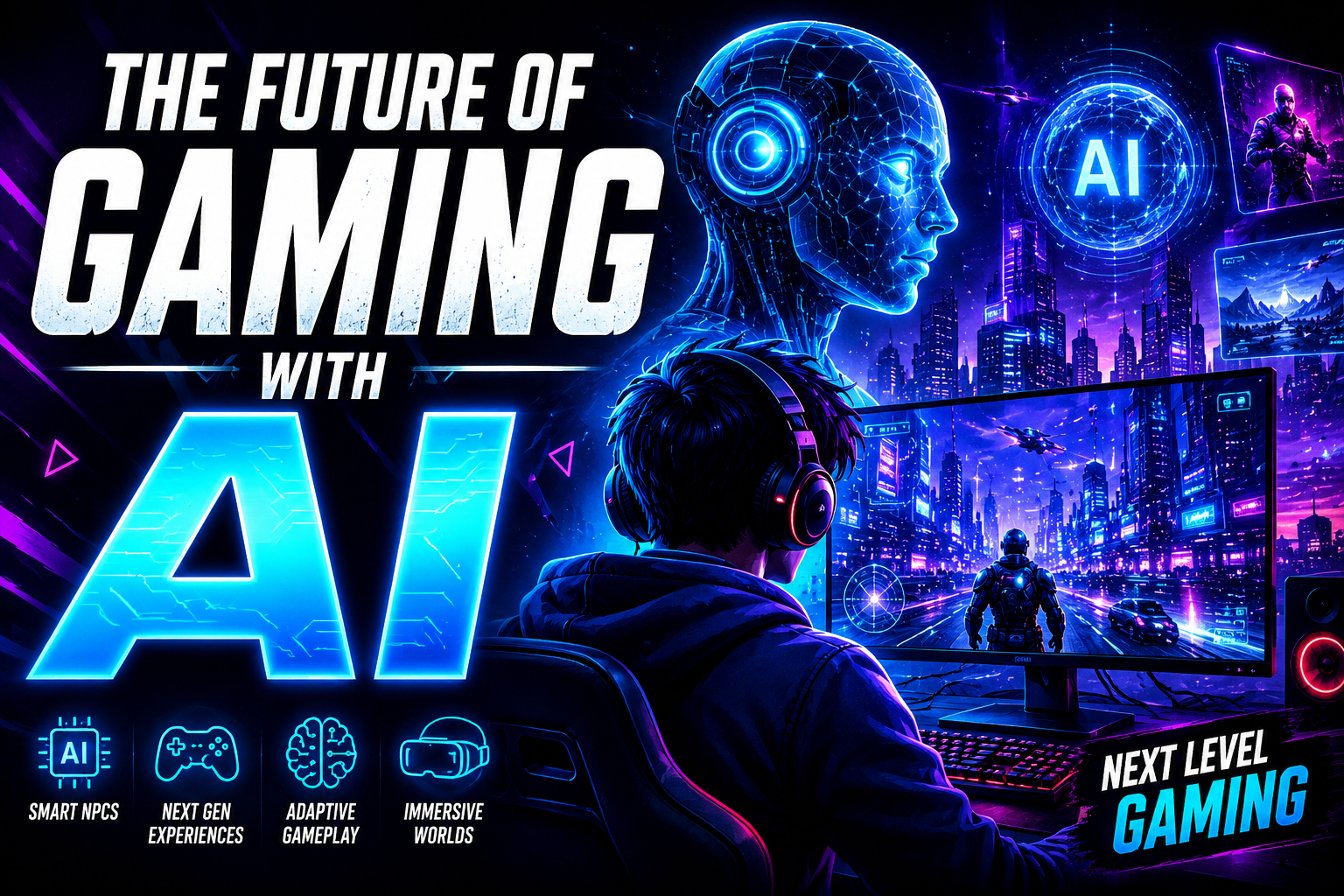
The gaming industry has evolved dramatically over the past few decades. From simple 2D arcade games to massive open-world experiences, technology has continuously transformed how people play and interact with games. In 2026, one of the biggest forces driving this transformation is Artificial Intelligence (AI).
AI is no longer limited to controlling basic enemy movements or repetitive game mechanics. Modern AI systems can create realistic characters, intelligent environments, personalized gameplay experiences, and even generate entire game worlds automatically. As gaming technology advances, AI is becoming the heart of next-generation gaming experiences.
The future of gaming with AI promises smarter NPCs, adaptive storylines, realistic simulations, AI-generated worlds, immersive virtual reality experiences, and highly personalized gameplay. This article explores how AI is revolutionizing gaming and shaping the future of the entertainment industry.
1.What is AI in Gaming?
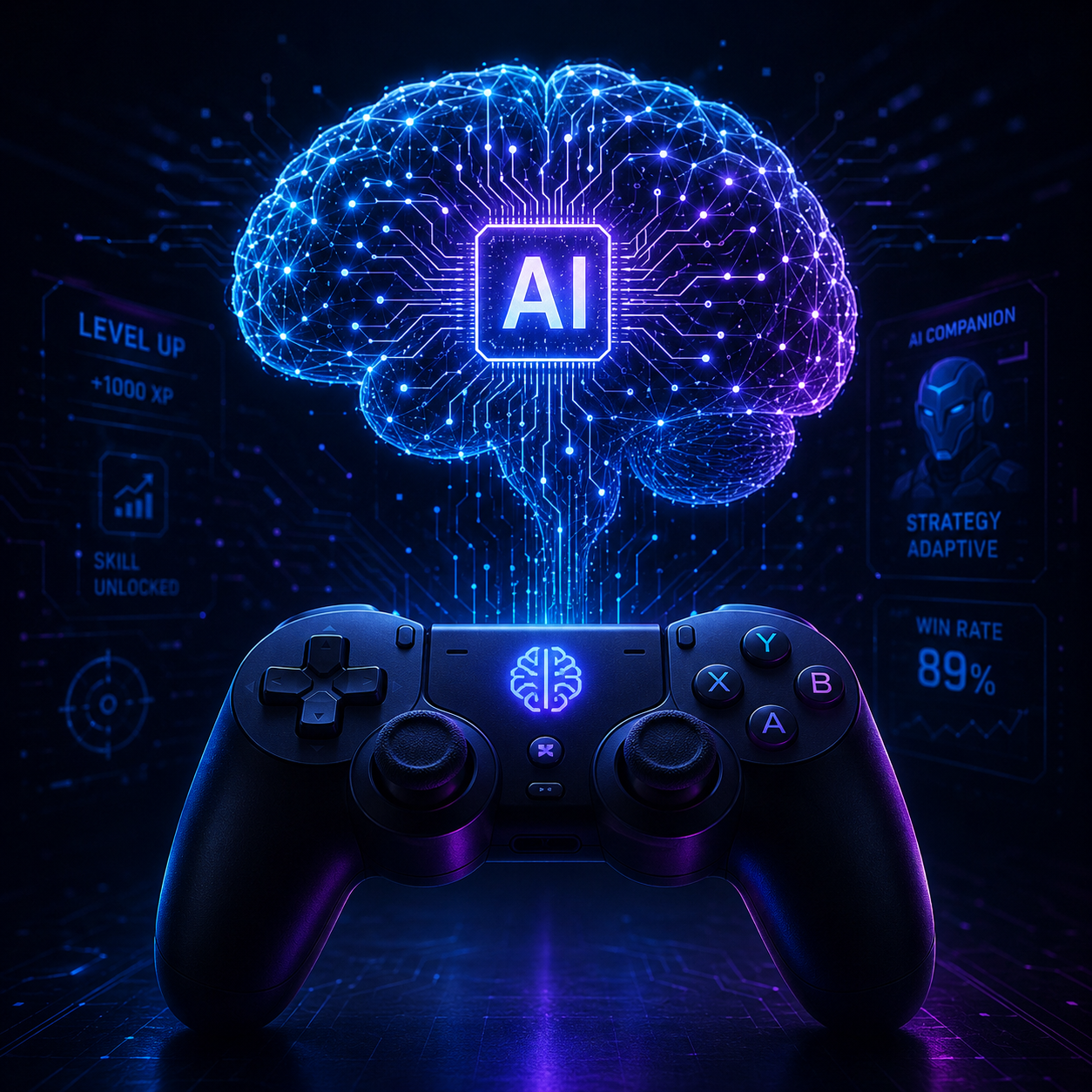
Artificial Intelligence in gaming refers to computer systems designed to simulate intelligent behavior inside video games. AI helps games respond dynamically to player actions, making gameplay more interactive and realistic.
Traditional game AI was mostly rule-based. Enemies followed fixed patterns, NPCs repeated scripted dialogues, and game worlds remained static. However, modern AI uses machine learning and advanced algorithms to create adaptive and evolving experiences.
AI in gaming is commonly used for:
- Non-player character (NPC) behavior
- Pathfinding and movement
- Enemy tactics
- Procedural content generation
- Voice recognition
- Personalized recommendations
- Anti-cheat systems
As AI technology improves, games are becoming more immersive than ever before.
2.AI-Powered Game Development
Game development is a complex and time-consuming process involving coding, animation, level design, storytelling, and testing. AI is helping developers speed up production while improving creativity and efficiency.
Automated Content Creation
AI tools can generate:
- Game environments
- Character models
- Animations
- Dialogue
- Music and sound effects
- Story elements
This reduces development costs and allows smaller studios to create large-scale games.
Procedural Generation
AI-powered procedural generation creates unique game worlds automatically. Popular games like Minecraft and No Man’s Sky already use similar technologies to generate massive environments.
Future AI systems may generate:
- Infinite open worlds
- Dynamic cities
- Realistic ecosystems
- Unique missions
- Adaptive storylines
This could make every player’s experience completely different.
3.Smarter NPCs and Realistic Gameplay The significance of effective communication in any professional setting cannot be overstated. It fosters collaboration, enhances productivity, and ensures that objectives are met with clarity and precision. As organizations continue to evolve in an increasingly complex landscape, the need for clear and concise dialogue among team members becomes paramount. Thus, prioritizing communication strategies is essential for achieving sustained success and fostering a positive organizational culture.
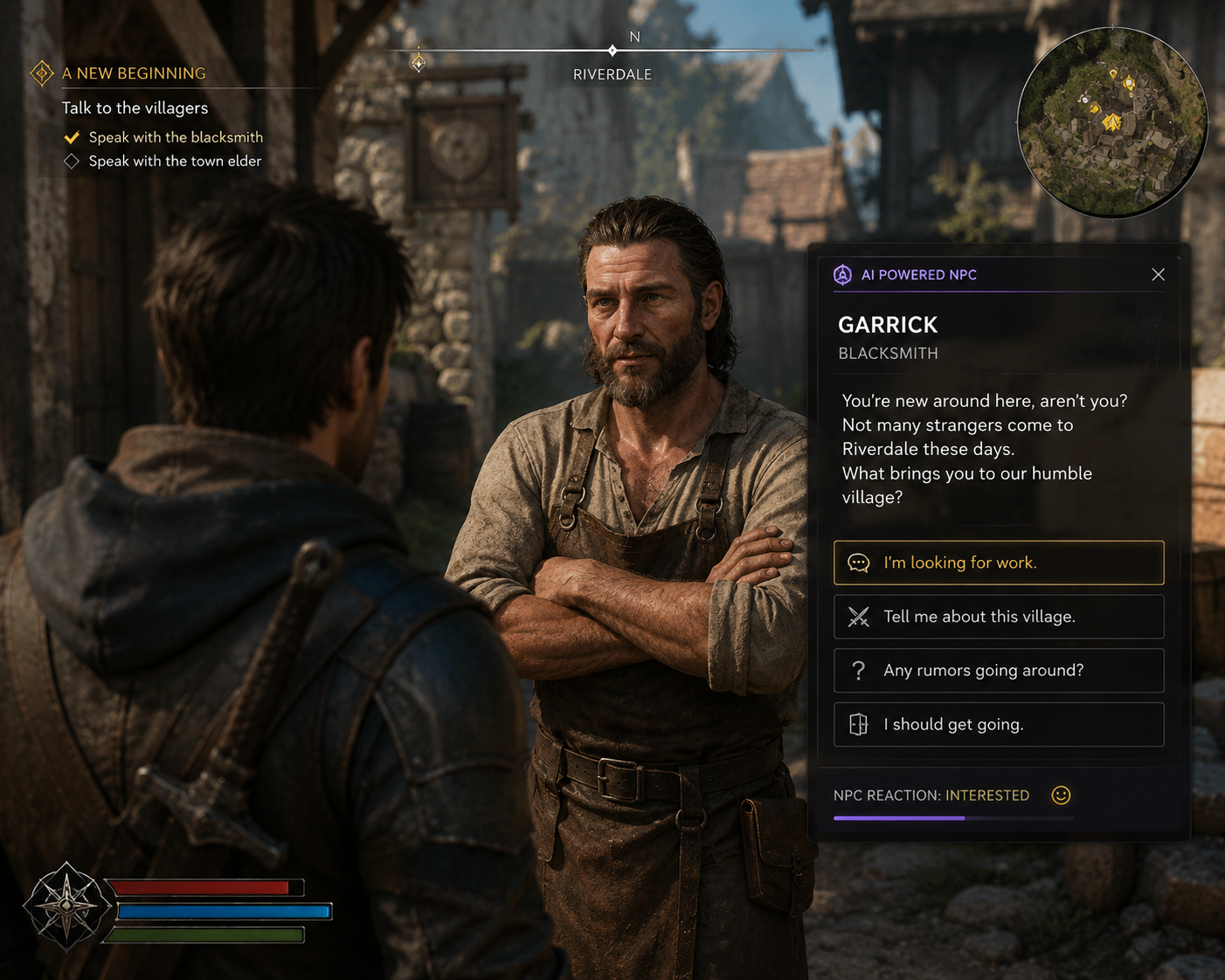
One of the most exciting applications of AI in gaming is the development of intelligent NPCs (Non-Player Characters).
Traditional NPCs often behave predictably and repeat the same actions. AI-powered NPCs can now:
- Learn from player behavior
- Adapt strategies
- Show emotional reactions
- Communicate naturally
- Make independent decisions
Human-Like Interactions
Future games may feature NPCs capable of realistic conversations using advanced language models. Players could speak naturally with in-game characters instead of selecting scripted dialogue options.
For example:
- Shopkeepers may remember previous interactions.
- Enemies may change tactics based on player style.
- Teammates may develop personalities and emotions.
This level of realism can create deeply immersive gaming experiences.
4.Personalized Gaming Experiences
AI allows games to adapt according to each player’s preferences, skills, and playstyle.
Dynamic Difficulty Adjustment
AI systems can analyze player performance and automatically adjust game difficulty in real time.
If a player struggles:
- Enemies become easier.
- Extra hints appear.
- Resources increase.
If a player performs well:
- Challenges become harder.
- Enemy AI improves.
- Missions become more complex.
This creates balanced and enjoyable gameplay for all skill levels.
Personalized Storytelling
AI may eventually generate personalized narratives based on player decisions and emotions.
Instead of following a fixed storyline, games could create:
- Unique endings
- Dynamic quests
- Character relationships
- Customized dialogues
This could revolutionize role-playing and story-driven games.
5.AI in Open World Games
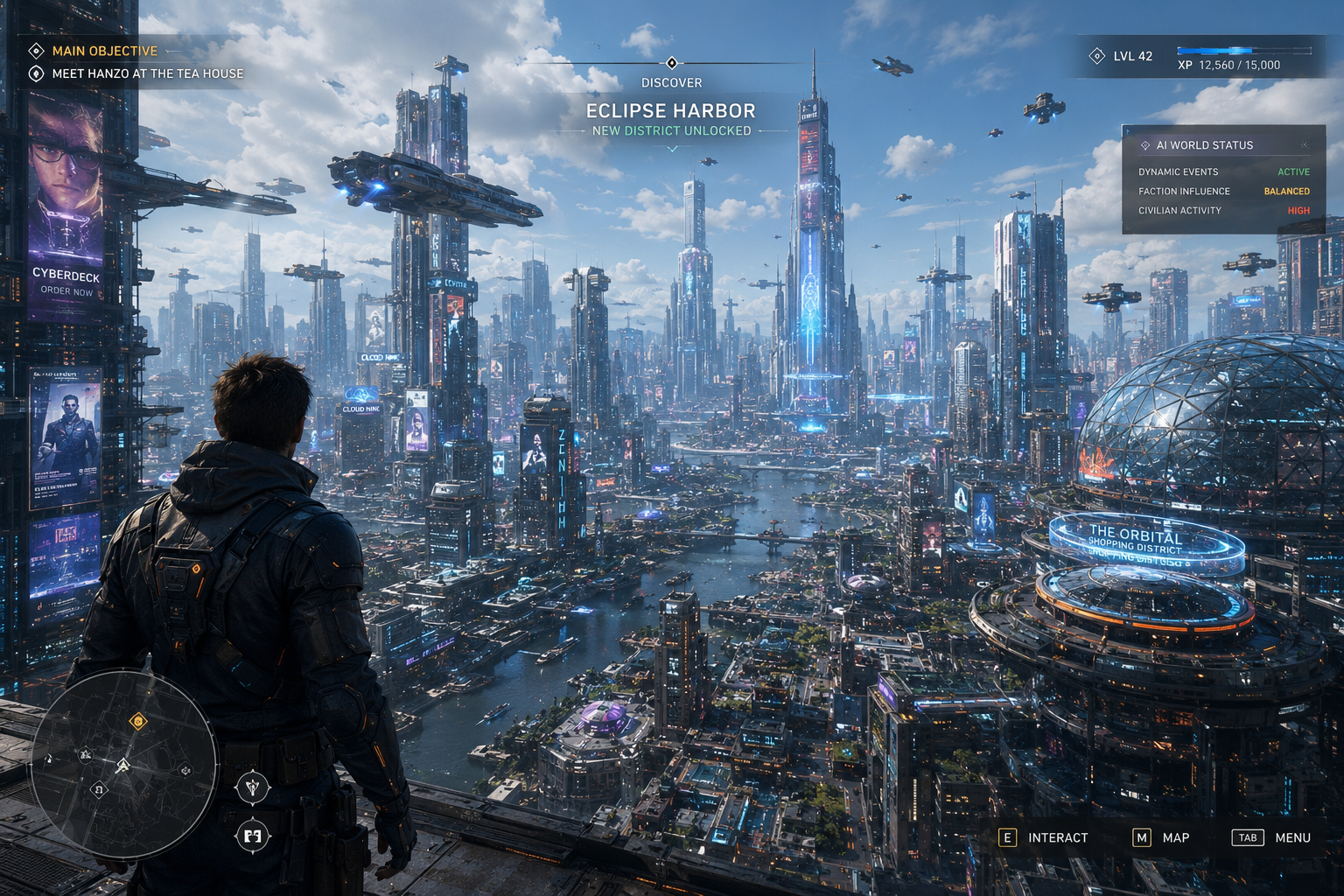
Open-world games are becoming larger and more detailed every year. AI is helping developers create realistic and living virtual worlds.
Intelligent Ecosystems
Future AI systems may simulate:
- Wildlife behavior
- Weather systems
- Economic systems
- Civilian routines
- Traffic patterns
Cities in games may feel truly alive, with NPCs following realistic schedules and reacting dynamically to player actions.
Infinite Exploration
AI-generated worlds may allow players to explore virtually endless environments without repetitive designs.
Games could continuously generate:
- New lands
- Hidden quests
- Dynamic events
- Random encounters
This would dramatically increase replay value.
6.AI and Esports
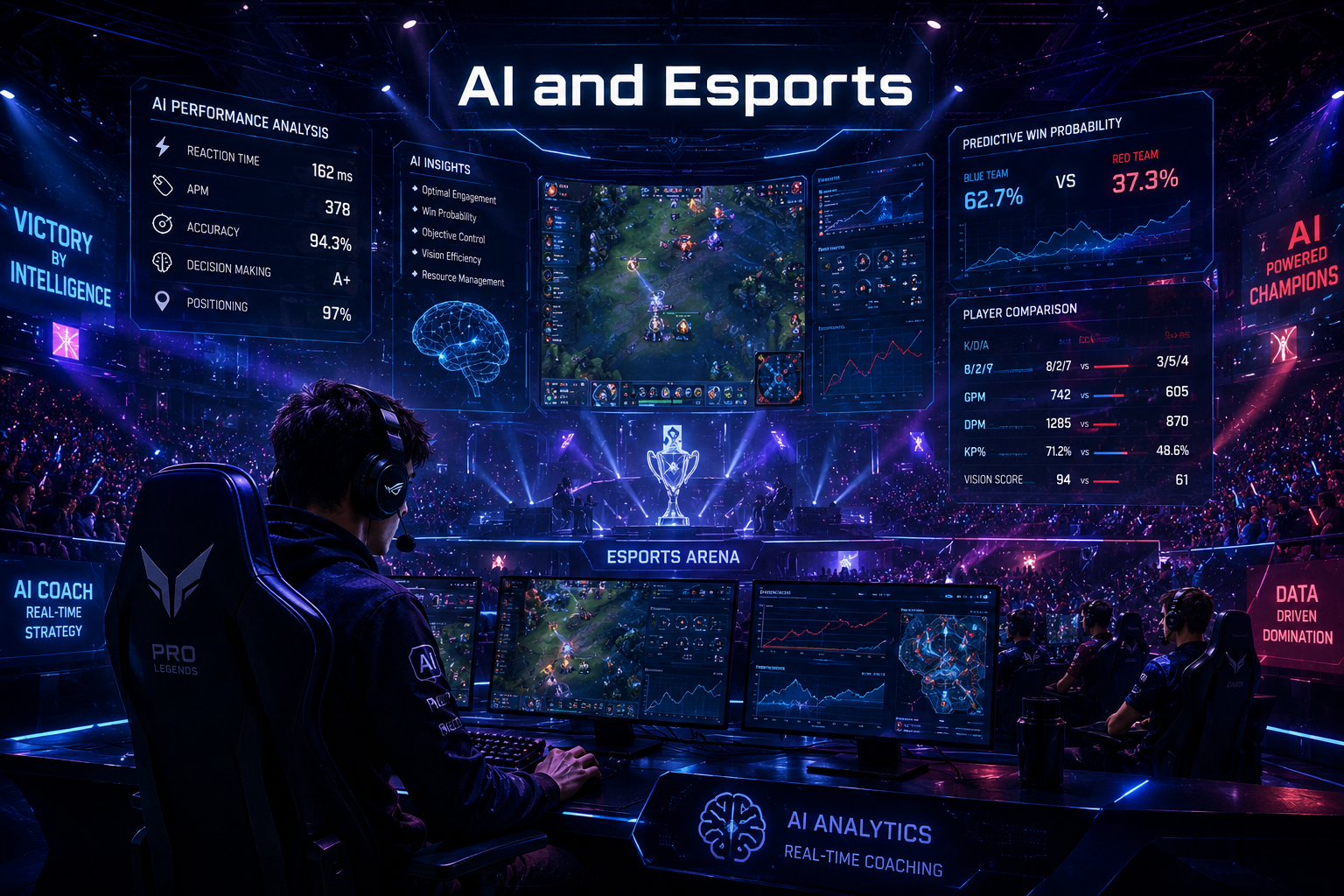
AI is also transforming competitive gaming and esports.
AI Coaching Systems
Professional gamers use AI tools to:
- Analyze gameplay
- Improve strategies
- Detect weaknesses
- Track performance metrics
AI coaches can provide personalized training recommendations.
Anti-Cheat Technology
Cheating remains a major issue in online gaming. AI-powered anti-cheat systems can detect suspicious behavior and identify hackers more effectively than traditional systems.
Matchmaking Improvements
AI helps create balanced multiplayer matches by analyzing player skill levels, playstyles, and behavior patterns.
This improves fairness and player satisfaction.
7.AI + Virtual Reality + Metaverse Gaming
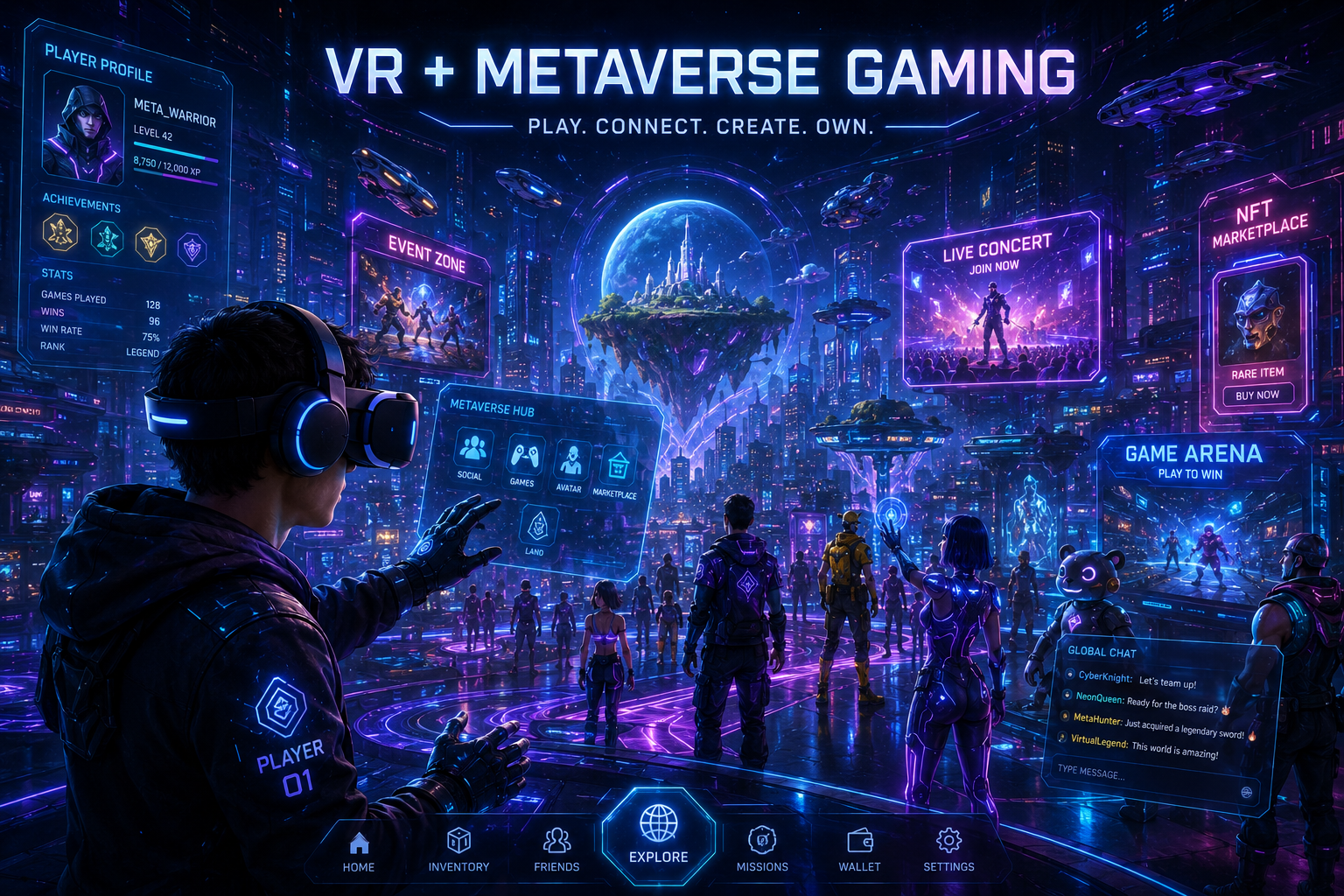
The combination of AI, Virtual Reality (VR), and the Metaverse may define the future of gaming.
Immersive VR Worlds
AI can make VR experiences more realistic through:
- Intelligent NPCs
- Realistic voice interactions
- Dynamic environments
- Natural body movement analysis
Metaverse Integration
Future metaverse platforms may feature AI-powered virtual societies where players interact with intelligent digital characters and environments.
Players may:
- Attend virtual concerts
- Work in virtual offices
- Explore AI-generated worlds
- Build digital businesses
Gaming may eventually merge with social interaction, education, and digital economies.
8.AI-Generated Game Worlds
One of the most futuristic trends is fully AI-generated games.
Instead of developers manually designing everything, AI could create:
- Entire maps
- Storylines
- Character designs
- Missions
- Voice acting
Players may eventually describe the type of game they want, and AI could generate it instantly.
For example:
“Create a futuristic cyberpunk survival game set in Mumbai with realistic weather and multiplayer support.”
AI could potentially build the experience automatically.
9.Challenges of AI in Gaming
Despite its advantages, AI in gaming also brings challenges.
Expensive Development
Advanced AI systems require powerful hardware, large datasets, and significant development costs.
Privacy Concerns
AI systems collect player data to personalize experiences. This raises concerns about:
- Data security
- User privacy
- Behavioral tracking
AI-Generated Cheating
Hackers may use AI to create sophisticated cheating tools that are difficult to detect.
Reduced Human Creativity
Some critics worry that overreliance on AI-generated content could reduce human creativity in game design.
Developers must balance automation with artistic creativity.
10.The Future of AI Gaming
The future of gaming with AI looks incredibly exciting.
Future Predictions
By the next decade, games may feature:
- Fully intelligent NPCs
- Real-time AI storytelling
- Emotion recognition systems
- AI voice-controlled gameplay
- Hyper-realistic graphics
- Infinite procedural worlds
- Self-evolving game environments
Gaming experiences may become almost indistinguishable from reality.
AI could also make game development more accessible, allowing independent creators to build professional-quality games using AI tools.
Conclusion
Artificial Intelligence is transforming the gaming industry faster than ever before. From smarter NPCs and adaptive gameplay to AI-generated worlds and immersive virtual experiences, AI is redefining what games can become.
The future of gaming with AI promises limitless creativity, realistic simulations, personalized storytelling, and entirely new forms of interactive entertainment. While challenges related to privacy, ethics, and development costs remain important, the potential benefits are enormous.
As technology continues to evolve, AI will not replace gaming creativity — it will enhance it. The next generation of games may offer experiences that feel alive, emotional, and completely unique for every player.
The future of gaming is not just about better graphics or faster hardware. It is about intelligent worlds powered by AI that respond, evolve, and grow alongside players.