Introduction
The financial world is changing rapidly because of modern technologies, and one of the biggest innovations leading this transformation is blockchain technology. A few years ago, blockchain was mainly associated with cryptocurrencies like Bitcoin, but today it has expanded far beyond digital coins. From international payments to smart contracts and decentralized finance, blockchain is slowly entering areas that were traditionally controlled by banks.
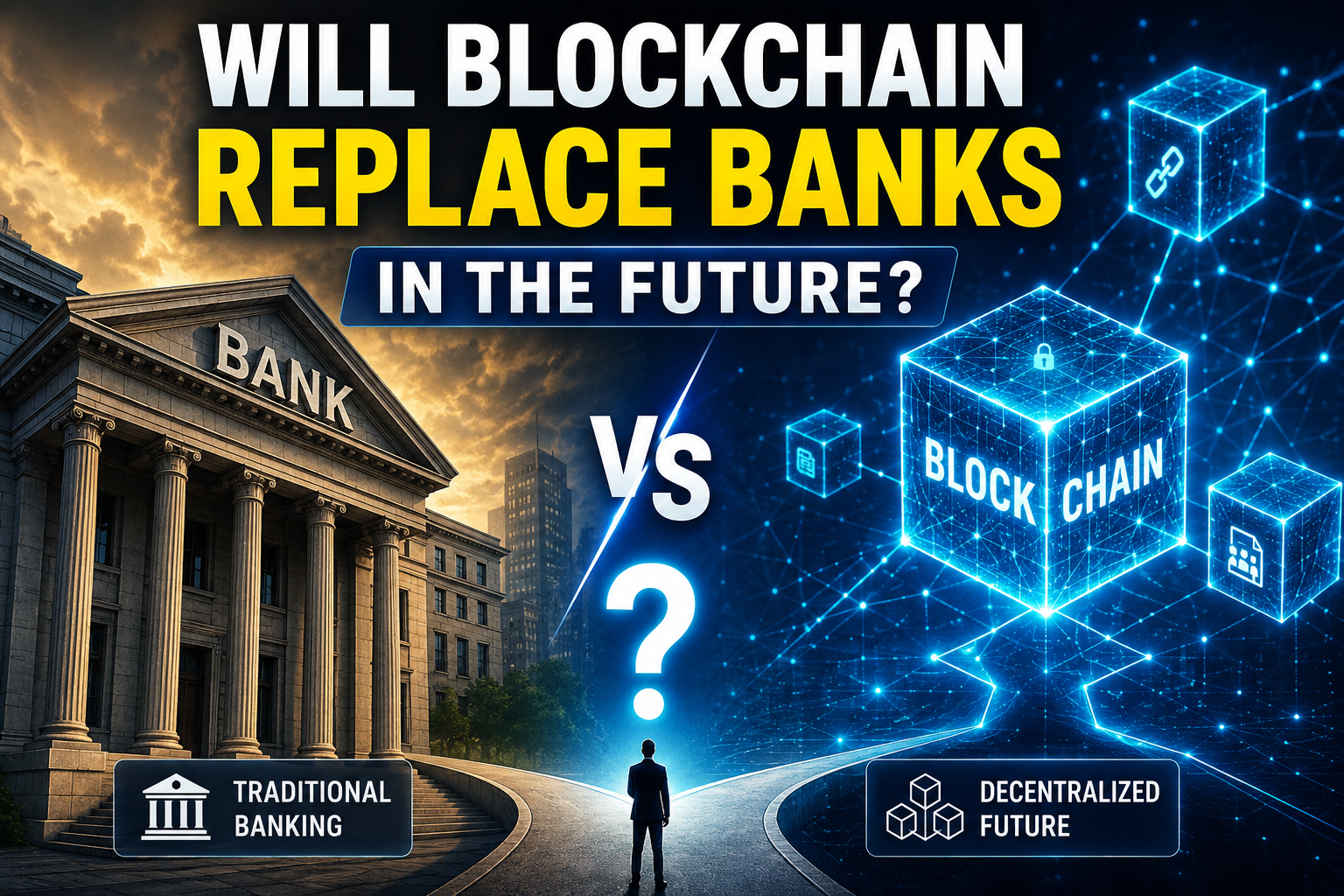
This has created an important discussion across the world — Will blockchain replace banks in the future? Many technology experts believe blockchain has the power to reduce the role of traditional banks, while others think banks will continue to exist but in a more digital and advanced form.
The reality is that blockchain is not simply a competitor to banks; it is a technology that is forcing the banking industry to evolve faster than ever before.
Understanding Blockchain Technology
Blockchain is a decentralized digital ledger that stores transaction records securely across multiple computers. Unlike traditional banking systems where data is controlled by one central authority, blockchain distributes information across an entire network. Every transaction added to the blockchain becomes permanent and extremely difficult to alter.
This technology increases transparency and security because all participants in the network can verify transactions. Blockchain also removes the need for many intermediaries, which helps reduce costs and processing time.
Traditional banks rely heavily on centralized systems to verify payments and maintain financial records. Blockchain introduces a new approach where transactions can happen directly between users without requiring constant involvement from banks.
Because of these advantages, blockchain is becoming one of the most important technologies in the modern financial sector.
Why People Believe Blockchain Can Replace Banks
One of the main reasons people believe blockchain can replace banks is because it enables peer-to-peer financial transactions. Users can send money directly to anyone across the world without depending entirely on banking institutions.
For example, international bank transfers often take several business days and include processing fees, currency conversion charges, and verification delays. Blockchain-based transfers can happen within minutes with lower fees and without complicated approval systems.
Another major reason is the rise of Decentralized Finance (DeFi). DeFi platforms allow people to lend, borrow, trade, and invest using blockchain networks instead of traditional banks. Platforms built on Ethereum and Polygon are already offering financial services to millions of users globally.
This creates a future where financial systems may become more open, digital, and decentralized.
Advantages of Blockchain Over Traditional Banking
Blockchain offers several advantages that make it attractive compared to traditional banking systems.
One major benefit is transparency. Every blockchain transaction is recorded publicly and cannot easily be changed. This reduces corruption and unauthorized manipulation of records.
Another advantage is lower transaction costs. Traditional banks charge fees for account maintenance, transfers, and international payments. Blockchain reduces the involvement of middlemen, which helps lower operational expenses.
Security is also a strong feature of blockchain technology. Blockchain networks use advanced cryptography, making them difficult to hack compared to centralized databases.
Blockchain can also improve financial inclusion. Millions of people worldwide still do not have access to banking services, especially in rural areas. However, many of them have smartphones and internet access. Blockchain wallets allow users to participate in digital finance without needing a traditional bank account.
Because of these benefits, blockchain is becoming increasingly important in the future of finance.
Why Banks Still Remain Important
Despite the growth of blockchain, banks still provide many services that blockchain alone cannot fully replace.
Banks offer legal protection and customer trust. If money is stolen from a bank account or fraudulent activity occurs, banks often provide support and recovery systems. In decentralized blockchain systems, users are usually responsible for protecting their own assets and passwords.
Governments also regulate banks strictly to prevent money laundering, fraud, and illegal activities. Most countries do not want completely uncontrolled financial systems, which is why regulations around cryptocurrencies continue to increase.
Another challenge is cryptocurrency volatility. Digital assets like Bitcoin can experience massive price fluctuations within short periods. Traditional banks, on the other hand, provide stability that most businesses and individuals still prefer.
Public understanding is another issue. Many people still find blockchain technology confusing, especially concepts like private keys, crypto wallets, and gas fees. Banks remain easier and more comfortable for everyday users.
Because of these reasons, blockchain may reduce the dependence on banks, but eliminating banks completely is unlikely in the near future.
How Banks Are Adopting Blockchain
Interestingly, many banks are now integrating blockchain technology into their systems instead of rejecting it. Financial institutions understand that blockchain can help improve speed, security, and efficiency.
Banks are experimenting with:
- Blockchain-based payment systems
- Faster international transfers
- Smart contracts
- Digital identity verification
- Asset tokenization
Several countries are also developing Central Bank Digital Currencies (CBDCs) such as the Digital Rupee and Digital Yuan. These government-backed digital currencies combine blockchain-inspired technology with regulated banking systems.
This indicates that the future financial system may involve collaboration between blockchain and banks rather than direct replacement.
The Future of Banking in the Blockchain Era
The future banking industry will likely become more digital, automated, and technology-driven. Artificial Intelligence, blockchain, and smart contracts may work together to create smarter financial systems.
Future banks may provide:
- Instant global payments
- Crypto asset management
- AI-powered customer support
- Blockchain security systems
- Digital investment platforms
Traditional banks that adopt innovation and modern technology are more likely to survive and grow stronger in the coming years.
At the same time, decentralized finance platforms may continue expanding and provide alternative financial services to people who prefer digital independence.
Conclusion
Blockchain technology is transforming the financial industry at a very fast pace. It offers faster transactions, lower costs, greater transparency, and decentralized financial systems that challenge traditional banking methods.
However, banks still play an essential role in providing trust, regulation, customer protection, and financial stability. Because of this, blockchain may not completely replace banks anytime soon.
Instead, the future will probably be a combination of traditional banking and blockchain technology working together to build a more efficient and secure financial ecosystem.
One thing is clear — blockchain is no longer just the technology behind cryptocurrency. It is becoming one of the biggest innovations shaping the future of global finance and digital banking.